

FCC formalizes coordination procedures between the birds, the B’s and the C’s
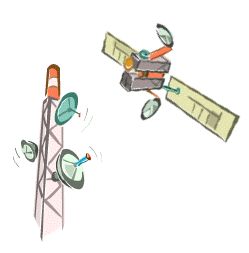 The FCC has issued a Report and Order adopting new rules formalizing frequency coordination requirements between Earth Stations in the Geo- and Non-Geostationary Orbit Satellite Services (GSO/NGSO) and Broadcast Auxiliary and Cable Television Relay Service (BAS/CARS) Stations in the 7, 10 and 13 GHz frequency bands.
Satellite operators use these bands to talk to their “birds” (satellites) through uplink and downlink earth stations. The same bands are used by BAS/CARS stations for fixed and mobile microwave feeds to TV stations and cable systems (such as studio-transmitter links and relays for news and other remote programming). The FCC normally requires interference mitigation through a coordination process prior to filing for a new license. That process involves sending notices to anyone in the FCC’s license database who might be affected, waiting 30 days for responses, and resolving any objections. The process is complicated enough that most applicants farm it out to an engineering firm (such as Comsearch, Inc.),
Formal procedures have been in effect for some time for coordination between GSO/NGSO applicants and existing GSO/NGSO operations. Ditto for coordination between BAS/CARS applicants and existing BAS/CARS operations. But the Commission has not previously formally adopted any procedure for coordination between the two types of services. The FCC has now decided that the same “notice and response” rules and procedures will be in effect for coordination between as well as within the various services, when BAS/CARS stations are at fixed locations.
While the notice and response system works fine for fixed stations, it is not so simple for stations which move around, because you can’t coordinate if you don’t know where your station will be located at any given time. Therefore, the FCC has permitted mobile or temporary fixed BAS/CARS applicants to coordinate on an ad hoc informal basis, often through a third party like the local chapter of Society of Broadcast Engineers (SBE), which keeps track of who is doing what around town and when they plan to do it. The FCC has decided that all GSO/NGSO earth station applicants must use the notice and response system to coordinate with all BAS/CARS licensees, but temporary fixed and mobile BAS/CARS applicants may choose between notice and response and ad hoc coordination with GSO/NGSO entities.
When responding to a coordination request, temporary fixed and mobile BAS/CARS licensees are expected to seek protection only for frequently used locations and not for the entirety of a wide geographic area. The receive location for a temporary fixed or mobile system may be protected, as may frequently used program origination venues such as arenas, stadiums, and convention centers.
The FCC also looked at coordination in the 10 GHz band, used by terrestrial fixed microwave services and NGSO satellite links. A while back, terrestrial operators proposed a “Growth Zone” policy, under which they could ask satellite operators to protect not only an existing path but also an anticipated future growth path. The FCC neither accepted nor rejected the idea but declined to adopt it at this time on the ground that the satellite parties who originally supported it are no longer pursuing 10 GHz licenses. If the issue is raised again in the future, the FCC will take a new look at it.