

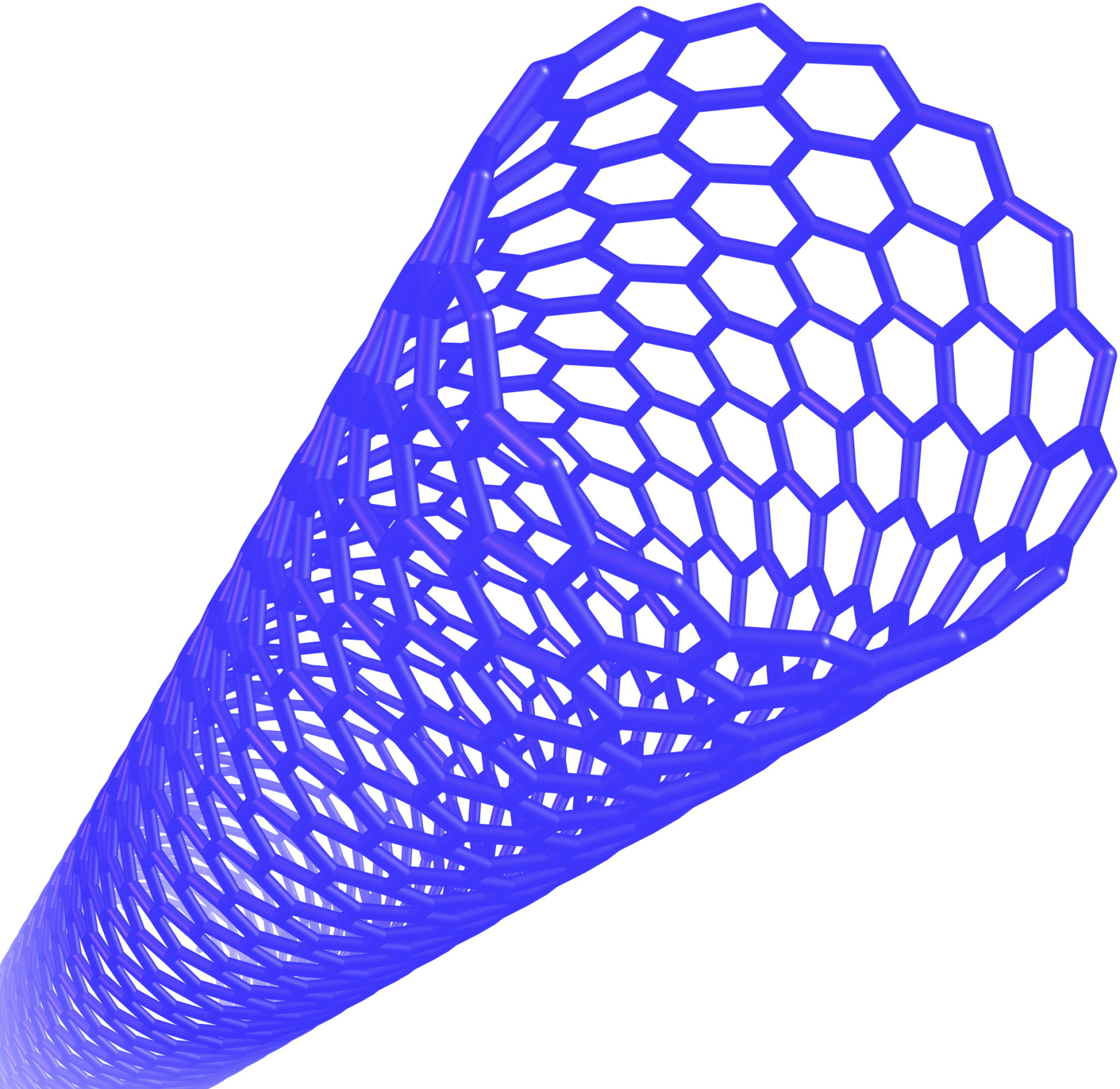
Are carbon nanotubes helping to cause cancer, cure cancer, both, or neither? Several years ago, carbon nanotubes shot to mainstream consciousness in large part due to concerns that they may present health risks similar to asbestos fibers. A 2010 study published in The Journal of Toxicology and Environmental Health found that carbon nanotubes can induce apoptosis, DNA damage, and initiate biological responses. In 2010, and again in 2013, the National Institute for Occupational Safety and Health (NIOSH) issued a Current Intelligence Bulletin recommending exposure limits for carbon nanotubes and carbon nanofibers based on the concerns over possible adverse health effects. A 2013 study, however, suggested that concerns about the similarities of bio-reactivity and pathogenicity between asbestos fibers and carbon nanotubes may be alleviated through modification of length and chemical modification of the nanotube surface.
While those issues continue to be analyzed, studied, and debated, research addressing the utility of carbon nanotubes in the possible detection and treatment of cancer have been published recently. A study reported in the June 2014 edition of Nature Nanotechnology identified a novel, key mechanism for nanoparticle uptake into tumors. See Selective Uptake of Single-Walled Carbon Nanotubes by Circulating Monocytes for Enhanced Tumor Delivery; Smith, et al. More specifically, the study demonstrated that single-walled carbon nanotubes (SWNTs) conjugated with a targeting ligand are almost exclusively taken up by a single immune cell subtype in the blood that ultimately increases the delivery of those cells, and the SWNTs, into tumor sites – – effectively programming the cells to enter the tumor like a modern day, high-tech, Trojan Horse. The study’s authors reported that “[u]nlike other studies that have shown deleterious effects of nanotubes [] on monocytes” their study did not.
In fact, the authors noted that “[n]ot only do SWNTs appear to be non-toxic to monocytes and mice in general, but they can be protective/therapeutic to tissues as sensitive as the brain.”
Nanotechnology is a generic phrase for manufacturing, science, and engineering conducted at the 1 to 100 nanometer scale. A nanometer is a billionth of a meter, and there are more than 25,000,000 nanometers in an inch. A single page of newspaper is roughly 100,000 nanometers thick. To further appreciate the scale of nanotechnology, consider that if a marble was the size of one nanometer, then the earth would be one meter. For more basic information about nanotechnology click here.