Skip to content

Menu

LexBlog, Inc. logo
NetworkSub-MenuBrowse by SubjectBrowse by PublisherJoin the NetworkGet StartedSubscribeSupportContact
Search
Close

Federal Court Finds Plaintiffs Likely to Prevail in Denver Courthouse Free Speech Case

By Brian J. Connolly on March 30, 2016
Email this postTweet this postLike this postShare this post on LinkedIn
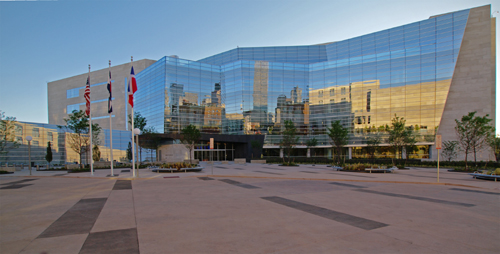
The Lindsey-Flanigan Courthouse plaza should be open to expressive activity, at least according to the federal district court in Colorado. Source: Glass Magazine.

In a case close to home (for us, at least), a group of citizen pamphleteers sued the City and County of Denver and the Colorado Second Judicial District court, claiming that prohibitions on expressive activity in the plaza outside of Denver’s Lindsey-Flanigan Courthouse violated the First Amendment.  The group intended to pass out leaflets regarding jury nullification and the judicial process.  The Second Judicial District, which operates out of the courthouse, issued an order prohibiting expressive activities in the plaza, which included:

Demonstrating; picketing; protesting; marching; parading; holding vigils or religious services; proselytizing or preaching; distributing literature; or other materials, or engaging in similar conduct that involves the communication or expression of views or grievances; soliciting sales or donations; or engaging in any commercial activity; unless specifically authorized in writing by administration.

The citizen group filed suit seeking a preliminary injunction against the City and County of Denver’s enforcement of the restriction on expression in the plaza.  The city and the Second Judicial District, both defendants in the case, disagreed on the nature of the plaza as a public forum or non-public forum, however, the federal court analyzed the plaza as a traditional public forum.   In granting the plaintiffs’ motion for a preliminary injunction, the federal court found that the restriction on expressive activity was content neutral and that the restriction served the significant governmental interests of minimizing disruption of court business, providing for fair hearings and trials, and promoting the free flow of pedestrian traffic in the plaza area.  The federal court went on to find, however, that the restriction was not narrowly tailored—a ban on all expressive activity was not necessary to serve the cited governmental interests.  The court elected not to reach the question of whether the order left ample alternative channels.

Verlo v. City and County of Denver, 124 F. Supp. 3d 1083 (D. Colo. 2015)

Photo of Brian J. Connolly Brian J. Connolly

Brian Connolly represents public- and private-sector clients in matters relating to zoning, planning, development entitlements and other complex regulatory issues.  Brian’s practice encompasses a broad range of land use matters including zoning compliance, rezonings and other regulatory amendments, planned-unit developments, development agreements, private…

Brian Connolly represents public- and private-sector clients in matters relating to zoning, planning, development entitlements and other complex regulatory issues.  Brian’s practice encompasses a broad range of land use matters including zoning compliance, rezonings and other regulatory amendments, planned-unit developments, development agreements, private covenants and restrictions, land use and zoning litigation, initiatives and referenda associated with land use approvals, and real estate transactions.  Brian additionally specializes in the First Amendment and land use issues associated with outdoor sign and advertising regulation, and fair housing matters in local planning and zoning.

Read more about Brian J. ConnollyEmail
Show more Show less
  • Posted in:
    Government and Public Policy
  • Blog:
    Rocky Mountain Sign Law Blog
  • Organization:
    Otten Johnson Robinson Neff + Ragonetti PC
  • Article: View Original Source

Call us at 1-800-913-0988 or email sales@lexblog.com.

Facebook LinkedIn Twitter RSS
The Library at LexBlog
  • About LexBlog
  • The Field We Built
  • Library at LexBlog
  • Our Beliefs
  • Our Team
  • Contact LexBlog
  • Disclaimer
  • Editorial Policy
  • Terms of Service
  • Get Started
  • Publishing Solutions
  • Compass
  • Submit a Request
  • Support Center
  • System Status
Copyright © 2026, LexBlog, Inc. All Rights Reserved.
Law blog design & platform by LexBlog LexBlog Logo