

It’s a common question. A company creates a product with a competitive advantage; it takes steps to substantiate a superiority claim; and, satisfied that it has met the legal standard, it bases an advertising campaign on that claim. Then, a competitor comes along with a new product, and the superiority claim is no longer accurate. How soon must the company change its claims? According to a Massachusetts federal court, the answer may be “immediately.”
In July 2013, Dyson launched a campaign advertising that its DC41 vacuum had “twice the suction of any other 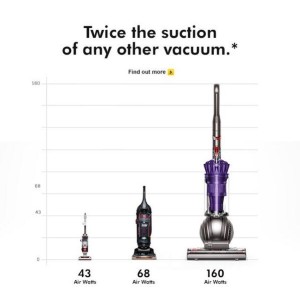 vacuum.” One year later, SharkNinja released its Shark Powered Lift-Away vacuum and contacted Dyson to let them know the claim was no longer accurate. Dyson conceded that, and took steps to remove the claim from the marketplace. SharkNinja, though, claims that Dyson dragged its feet. For example, Dyson didn’t begin stickering over the claim on packages until November 2014, and some claims remained on the market until early 2015.
SharkNinja sued Dyson for false advertising under the Lanham Act. Dyson moved for summary judgment, arguing that an advertiser can’t be held liable if it uses “commercially reasonable efforts” to remove claims from the market once they become stale. The court disagreed, holding that the law doesn’t exempt a company from liability just because it takes steps to remove a claim after learning that it’s no longer true. Instead, the court held that “an advertiser that puts a claim into the marketplace bears all of the risk of the claim being false or becoming stale.” As a result, the court denied Dyson’s motion.
The decision suggests that an advertiser can be liable the moment a claim can’t be substantiated, even though the claim was previously true. It doesn’t seem to matter to the court how fast an advertiser moves to change a claim, once it becomes stale. The creates a strong disincentive for any company to make a comparative claim, especially on packages or in stores, where the claim cannot be changed quickly.
We’ll be watching this case closely to see if Dyson appeals and the appellate court takes a more measured approach.