

The FTC released last week a paper summarizing and reflecting on its October 30, 2015 public workshop, “Follow the Lead,” which we previously discussed here and focused on lead generation practices and related privacy and consumer protection issues. The paper expands upon many of the same principles addressed at the workshop, including how lead generation works and what benefits and risks arise from lead generation. Notable takeaways include the following:
- What is lead generation? The paper defines lead generation broadly as “the process of identifying and cultivating individual consumers who are potentially interested in purchasing a product or service.” A lead may consist of only the consumer’s name and contact information, or may involve more detailed and potentially sensitive information such as Social Security or consumer account numbers.
- How does lead generation work?
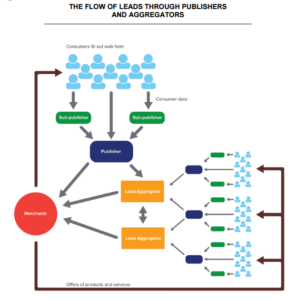 The common thread of lead generation involves the collection of consumer information, typically on a website operated by a publisher or an affiliate. From there, any number of things can happen. The publisher or affiliate may sell the lead to another publisher or affiliate, to an aggregator, or to a merchant. The FTC provided the adjacent figure to show some possible flows of leads.
 - What are the potential benefits of lead generation? The FTC acknowledged that lead generation, when practiced ethically and consistent with consumer protection principles, can efficiently connect consumers with merchants they are interested in and promote competition. Staff also noted that the sale of consumer leads could have positive effects on price and competition, as found in a research study discussed at the workshop in the mortgage lending context.
- What are the potential concerns of lead generation? The report noted that the lead generation and lead selling process is often hidden from consumers, which can lead to consumers providing information without knowing how and by whom their information will be used. The FTC recommended that companies collecting information clearly and conspicuously disclose how the personal information will be used to facilitate informed consumer choice about when and how to share personal information. In other cases, even where information is appropriately collected, it may be subsequently sold for nefarious purposes or purposes not authorized by the initial collection. Staff recommended that companies involved in the lead generation process take steps to ensure that consumer information is used for legal and authorized purposes throughout the life of the lead.
Staff also highlighted recent enforcement actions against lead generators for using leads for unauthorized and illegal purposes and signaled that it could take action against entities even if they aren’t directly responsible for the problematic practice. As noted in the report, “[i]gnoring warning signs that third parties are violating the law and pleading ignorance will not shield companies from FTC actions.” Entities involved with lead generation should take note and ensure that they have considered the full life cycle of a lead before using or selling it.