

Skip to content

Menu

LexBlog, Inc. logo
NetworkSub-MenuBrowse by SubjectBrowse by PublisherJoin the NetworkGet StartedSubscribeSupportContact
Search
Close

‘Pokémon GO’ and Privacy Issues

By Benjamin Beck & Laura Melina Rácz on November 16, 2016
Email this postTweet this postLike this postShare this post on LinkedIn

According to press reports, German car giant Volkswagen has banned its employees from using the wildly popular smartphone app Pokémon GO during work hours. Reportedly, the company cited impaired attention and distraction from work as the primary grounds for the prohibition, but data security and privacy issues are supposedly involved as well. Volkswagen has not yet made an official statement on the ban.

This app in particular and augmented reality in general pose many legal questions, especially, in the field of privacy law. The most pressing privacy issue with Pokémon GO seems to be the constant tracking of geolocation data. By agreeing to the Pokémon GO Privacy Policy, the user allows Niantic, the company behind the app, to track the user’s “device location […] and some of that location information, along with [the] user name” any time he or she uses the app.

The Concept of Augmented Reality

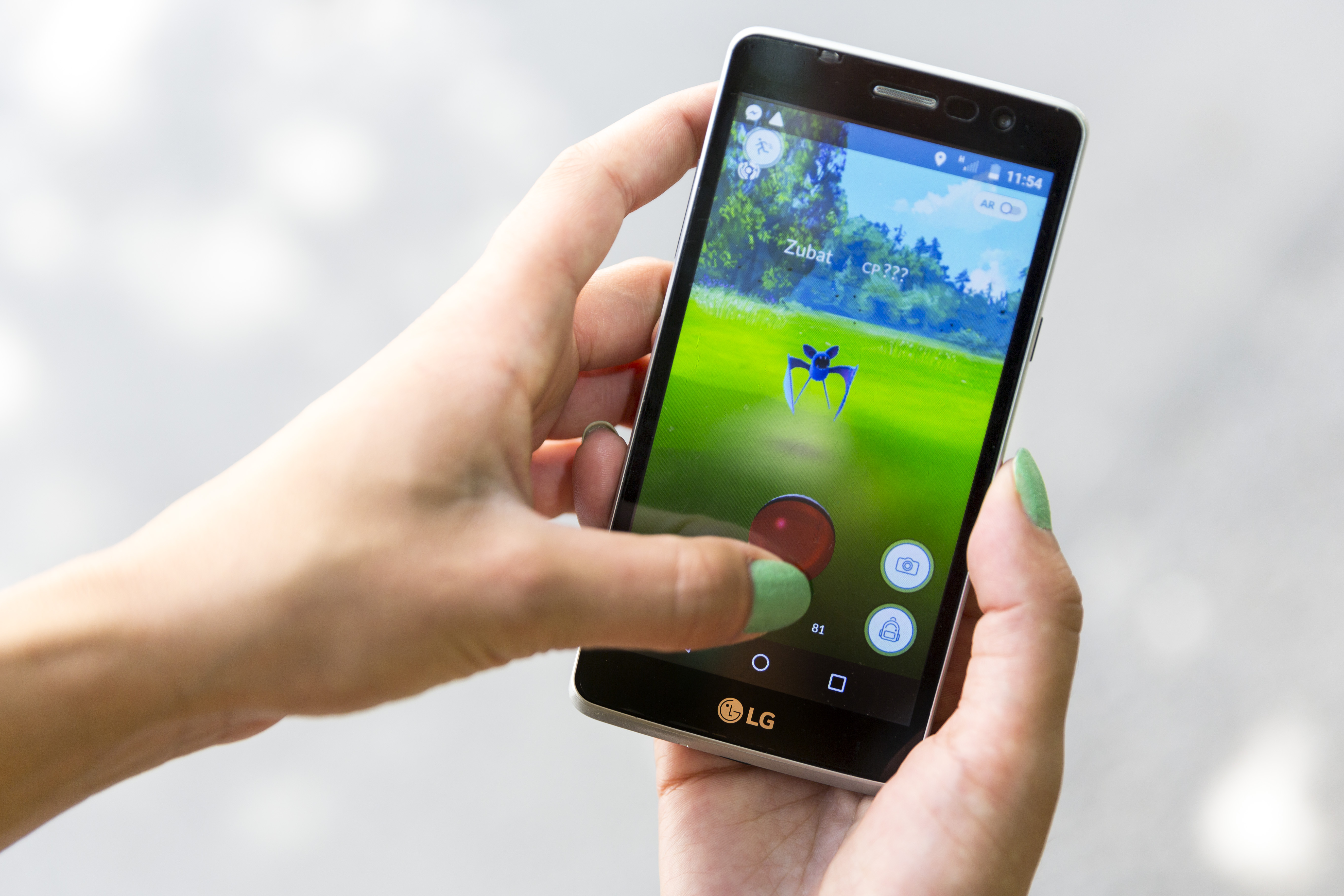
The app is based on the concept of “augmented reality,” meaning that the real world environment is “augmented” with virtual elements. The app relies on the users’ GPS location data and images taken by their smartphones’ camera devices to let them catch virtual Pokémon monsters on a map overlaying their real surroundings. The real world is used as the setting for the chase.

Data Protection and Privacy Concerns

All gathered data is processed at Niantic’s headquarters in San Francisco, California, United States. While, according to the privacy policy, “information that can be used to identify or recognize [the user]” will, in principle, not be shared, there are still concerns in the Pokémon community regarding the extent to which third parties can access that information. The users’ tracking data could provide information not only on their residency or workplace but also, for example, on their preferred mode of transportation, walking speed and frequency of smartphone use. This information could, by itself or in combination, be considered personal data.

The rules on the collection, use and disclosure of personal data differ among jurisdictions. For example, pursuant to section 3 para. 1 of the German Federal Data Protection Act, personal data is defined as “any information concerning the personal or material circumstances of an identified or identifiable individual.” Within the territory of application of that act, the collection, processing and use of personal data is only permissible in rare prescribed circumstances (see section 4) or with the consent of the data subject. The requirements might be significantly lower in other countries.


This article was originally published on AllAboutIP – Mayer Brown’s  blog on relevant developments in the fields of intellectual property and unfair competition law. For intellectual property-themed videos, Mayer Brown has launched a dedicated channel available here.

Photo of Benjamin Beck Benjamin Beck

Benjamin Beck is an associate in Mayer Brown’s Düsseldorf office and a member of the Intellectual Property practice.

Publications

Post GDPR Enforcement in Germany — A Sneak Peek, in: Privacy & Data Protection Journal (PDP), 2019, No. 5, p. 16-17, with Dr. Ulrich…

Benjamin Beck is an associate in Mayer Brown’s Düsseldorf office and a member of the Intellectual Property practice.

Publications

Post GDPR Enforcement in Germany — A Sneak Peek, in: Privacy & Data Protection Journal (PDP), 2019, No. 5, p. 16-17, with Dr. Ulrich Worm

Annotation to Higher Regional Court of Berlin (Kammergericht Berlin), Germany, Judgment of 25 September 2018 — (4) 161 Ss 28/18 (35/18), in: Europäische Zeitschrift für Wirtschaftsrecht (EuZW), 2019, No. 1, p. 42-46, with Dr. Dominik König

Die Wirksamkeit von sog. „Nicht-Einsatz-Klauseln“ für den Wettbewerb der Fußball-Bundesliga, in: Zeitschrift für Sport und Recht (SpuRt), 2019, No. 1, p. 2-6, with Patrick Schulz

Bitcoin and Money, in: Leslie Thompson, Jean-Toussaint Pindi, Stephanie Amar-Flood (ed.), Anglais appliqué: Economie, Gestion, Droit, AES, 4th ed. 2018, p. 44-45

GDPR Implications for Blockchain and Distributed Ledger Technologies, in: SA Financial Regulation Journal, 19.06.2018, with Dr. Ulrich Worm

Yoga and Copyright, in: WIPO Magazine, 2017, No. 3, p. 44-45, with Konstantin von Werder

Annotation to Administrative Court of Frankfurt am Main (Verwaltungsgericht Frankfurt), Germany, Judgment of 31 October 2016 — 1 K 2903/15.F, in: Kommunikation & Recht (K&R), 2017, No. 2, p. 142-144, with Dr. Dominik König

IP scenarios in a Brexit world, in: World Intellectual Property Review (WIPR), 18.07.2016, with Dr. Ulrich Worm

Судебная практика в Германии / Court practice in Germany, in: Интеллектуальная собственность Казахстана (Intellectual property of Kazakhstan), 2016, No. 1, p. 13-16, with Ana Elisa Bruder and Konstantin von Werder

Oktoberfest for the UPC?, in: World Intellectual Property Review (WIPR), 24.03.2016, with Dr. Ulrich Worm

Die immaterialgüterrechtliche Schutzfähigkeit von „Affen-Selfies“, in: Zeitschrift für Urheber- und Medienrecht (ZUM), Vol. 60 (2016), No. 1, p. 34-38, with Dominik König

Bitcoins als Gegenstand von sekundären Leistungspflichten. Erfassung dem Grunde und der Höhe nach, in: Archiv für die civilistische Praxis (AcP), Vol. 215 (2015), No. 5, p. 655-682, with Dominik König

Annotation to CJEU, Judgment of 22 October 2015 — C‑264/14 — David Hedqvist, in: Umsatzsteuer-Rundschau (UR), 2015, No. 22, p. 864-871, with Dominik König

Court considers likelihood of confusion between word marks using same letters in different order, in: World Trademark Review Daily, 25.09.2015, with Konstantin von Werder

Do Bitcoins Fulfil the Classic Economic Functions of Money? An Analysis and its Legal Implications, published online on lichter-filmfest.de on 09.03.2015

Bitcoins als Geld im Rechtssinne, in: Neue Juristische Wochenschrift (NJW), Vol. 68 (2015), No. 9, p. 580-586

Bitcoin: Der Versuch einer vertragstypologischen Einordnung von kryptographischem Geld, in: JuristenZeitung (JZ), Vol. 70 (2015), No. 3, p. 130-138, with Dominik König

Klinische und rechtliche Aspekte einer Abstinenzkontrolle unter besonderer Berücksichtigung kontinuierlicher transdermaler Alkoholmessung, in: Blutalkohol – Alcohol, Drugs and Behavior (BA), Vol. 50 (2013), No. 4, p. 153-167

Elektronische Fußfessel – Fluch oder Segen der Kriminalpolitik?, in: Schriftenreihe der Stiftung der Hessischen Rechtsanwaltschaft, Vol. 2 (2011), p. 65-94

Read more about Benjamin BeckEmail
Show more Show less
  • Posted in:
    Privacy and Cybersecurity
  • Blog:
    All About IP
  • Organization:
    Mayer Brown

Call us at 1-800-913-0988 or email sales@lexblog.com.

Facebook LinkedIn Twitter RSS
The Library at LexBlog
  • About LexBlog
  • The Field We Built
  • Library at LexBlog
  • Our Beliefs
  • Our Team
  • Contact LexBlog
  • Disclaimer
  • Editorial Policy
  • Terms of Service
  • Get Started
  • Publishing Solutions
  • Compass
  • Submit a Request
  • Support Center
  • System Status
Copyright © 2026, LexBlog, Inc. All Rights Reserved.
Law blog design & platform by LexBlog LexBlog Logo