

In a recently released report, TRACE International, an international anti-bribery business association, ranked 199 countries based on the risk of encountering bribery within the country’s public sector.
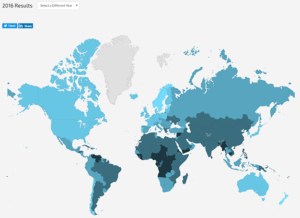
Go to Interactive Map (credit: TRACE International)
The TRACE Matrix’s rating are based on four core domains: business interactions with government, anti-bribery laws and enforcement, government transparency, and capacity for civil oversight. As part of the part of the business interactions with government domain, the report examines the extent to which business must interact with government officials and weight of regulatory burden which may increase the number of bribery opportunities as well as the reported expectation of businesses that they will have to pay a bribe somewhere along the way. As part of the second domain, the report considers both enacted anti-bribery laws as well as the actual level of enforcement of any anti-bribery statutes. Government transparency is measured by indicators such as the public availability of government budgets and conflict of interest training conducted with civil servants. Finally, the civil oversight domain examines the freedom of the press and social development.
Topping the list of least-bribery-prone countries were: (1) Sweden, (2) New Zealand, (3) Estonia, (4) Hong Kong, and (5) Norway. The United States ranked 20th on the list, just behind Australia and Luxembourg and just ahead of Mauritius and Latvia. Nigeria was ranked the most bribery prone country with Angola (198) and Yemen (197) rounding out the bottom three.
Assessing the potential risk of conducting business or routing supply chains through certain countries is the first step in managing potential liability under the Foreign Corrupt Practices Act. Even in the least risky countries, training and compliance programs are a necessity. However, in high risk countries, trainings must be tailored to anticipate the level of bribery and other corruption pressures which officers and employees will face with regularity.