

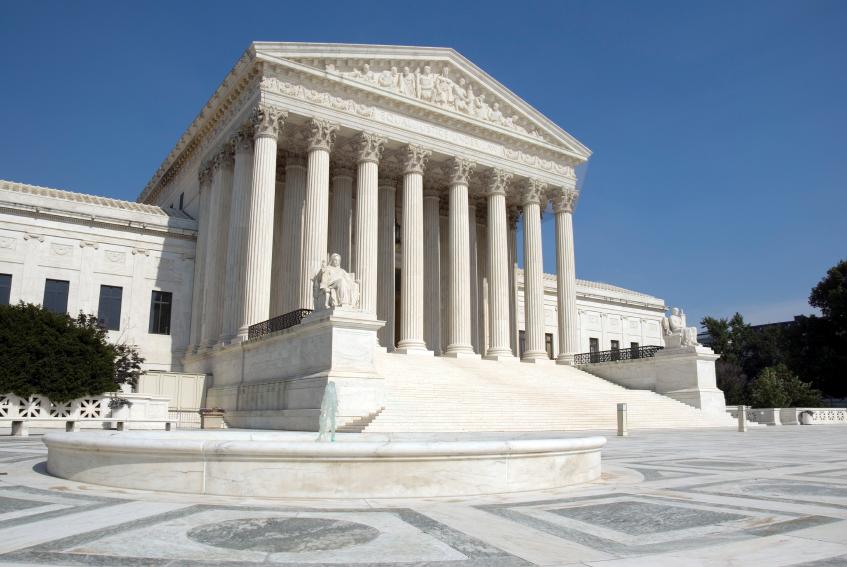
 Health care fraud prosecutions in the Second Circuit and throughout the country have typically sought forfeiture money judgments against all defendants for the proceeds of the fraud obtained by all members of a health care fraud conspiracy. The Supreme Court recently curtailed these efforts in Honeycutt v. United States. In Honeycutt, the Court held that the forfeiture statute only permits a forfeiture money judgment for property a defendant actually acquired as part of the crime, not all proceeds of the conspiracy.
In Honeycutt, defendant Terry Honeycutt managed sales and inventory at his brother’s hardware store. The brothers were prosecuted for conspiring to sell iodine with the knowledge that it was being used to manufacture methamphetamine. The government sought a forfeiture money judgment of $269,751.98, constituting the hardware store’s profits. The defendant’s brother pled guilty and agreed to forfeit $200,000. The government sought and obtained a forfeiture money judgment against defendant Terry Honeycutt for $69,751.98, even though he did not personally benefit from the hardware store’s profits. The Sixth Circuit held that the conspiring brothers were “jointly and severally liable for any proceeds of the conspiracy,” joining several circuits, including the Second Circuit, in an expansive view of criminal forfeiture.
Justice Sotomayor’s decision in Honeycutt strictly followed the language of the statute, 21 U.S.C. § 853, which mandates forfeiture of “any property constituting, or derived from, any proceeds the person obtained, directly or indirectly, as the result of” certain crimes. The Court concluded that the provisions of the statute limit forfeiture to property the defendant himself actually acquired, not property obtained by other conspirators. The Court held that the plain text of the statute and the limitation of forfeiture to property acquired or used by the defendant “foreclose joint and several liability for co-conspirators.”
Prosecutors have routinely sought to forfeit all proceeds of health care fraud and other conspiracies from all co-conspirators. Thus, minor players in a conspiracy with significant assets could find themselves liable for a forfeiture money judgment well in excess of the proceeds they actually received from their crime. In Honeycutt, the Supreme Court refused to apply the tort concept of joint and several liability to the forfeiture statutes, and has taken a sweeping tool away from the government.