

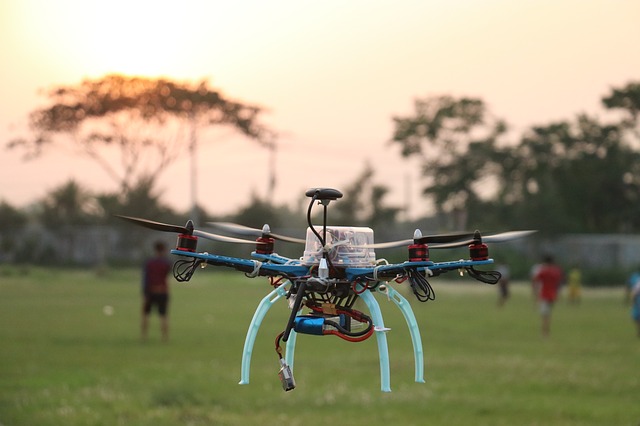
As drone sales in the United States continue to grow, the legal issues they present are likely to induce new attempts to regulate drone flights at the state and local level. As the legal framework allowing drones to fly within our communities develops, the resulting laws will impact the ability of local communities to control drone use within their borders and restrict landowners’ property rights. As shown by Newton’s recent foray into municipal drone regulation, the role local communities can play in this legal framework remains unclear.
The recent federal District Court decision in Singer v. Newton[1] held that Newton’s 2016 drone ordinance was preempted by federal legislation directing the Federal Aviation Administration to incorporate drones into the national airspace. However, the decision did not consider important questions concerning drone use and private property rights, which remain a stumbling block in the development of drone laws across the country.
Among other things, Newton’s ordinance banned drone flights over private property below 400 feet without the express consent of landowners beneath the flight path and banned drone flights over city property without Newton’s prior permission. The 400-foot limit is significant because the Federal Aviation Administration limits drones to a 400-foot altitude to avoid interference with commercial air traffic. Therefore, Newton’s ordinance effectively banned drone flights without permission from landowners beneath the flight path.
Newton resident and drone enthusiast Michael Singer sued, arguing that the federal government has exclusive jurisdiction over the national airspace and, as a result, municipal attempts to regulate drones were prohibited. The District Court agreed, saying Newton’s ordinance “thwarts” Congress’s objective to integrate drones into the national airspace. According to the decision’s rationale, the ordinance essentially fails because it did not allow any drone flights below 400 feet without prior permission from landowners.
However, neither the District Court, Singer, nor Newton considered the possibility that landowners already have an inherent right to prevent drone use above their properties. In the 1946 case United States v. Causby, the Supreme Court said a landowner owns at least as much of the space above the ground as he or she can use in connection with the land, and that landowners have the power to prevent intrusions into the airspace above their property that would subtract from the landowner’s full enjoyment of the property.[2] The Singer decision, however, fails to consider the extent to which any federal, state, or local rule that would require landowners to permit drone flights over their property could impact the use and enjoyment of land and thus constitute a taking for which the landowner must be compensated.
While the Singer decision voids Newton’s drone ordinance, it seems unlikely this decision will deter municipalities from attempting to regulate drone use within their borders. Whether due to privacy, noise, or safety concerns, as the use of drones continues to increase, local governments and landowners will increasingly seek to limit access to the skies.
[1] Singer v. Newton, D. Mass., No. CV 17-10071-WGY (Sept. 21, 2017)
[2] 328 U.S. 256, 264-65 (1946)