

So you are a party to a new civil litigation case, which means you have either sued someone or just been sued. Your lawyer sends you an email that the Court has just set your case for a non-jury trial for a date in the future. In the same email, your lawyer asks if you want to pay the jury fee, which usually is nominal, and have the matter set for jury trial, or whether you prefer to have the case remain as a non-jury trial. It is, after all, the client’s decision on whether to have a jury trial or a non-jury trial. What do you do?
Both types of trials – jury and non-jury – have advantages and disadvantages. A non-jury trial, also known as a bench trial or a trial before the Judge, generally is more informal than a jury trial, shorter than a jury trial, and less expensive to prepare for and conduct. For example, in a non-jury trial, the lawyers do not have to draft a jury charge (the questions the jury will answer, such as who was responsible for the accident, and the percentage of responsibility each party), or have a “charge conference” with the Judge where each side argues that its proposed jury questions should be included in the jury charge. The charge conference is conducted outside of the presence of the jury, and can last from several hours to an entire day or more, depending on the case. After the jury charge is finalized, the Judge will read the jury charge to the jury, the lawyers will make closing arguments, and then the jury will retire to the jury room to deliberate.
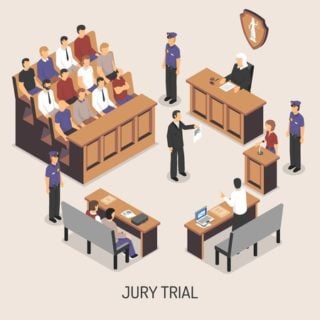 None of these time-consuming jury charge issues are present in a bench trial. However, one of the disadvantages of a non-jury trial is that one person – the Judge – hears all the evidence, weighs the credibility of the witnesses, decides which facts are true and not true, rules on evidentiary issues and objections, applies the law to the facts, decides who should win, and the amount of damages awarded, if any. In a jury trial, the jury hears the evidence, weighs the credibility of the witnesses, decides which facts are true and which are not, decides who should win, and whether any damages should be awarded. In a jury trial, the Judge’s role is to preside over the trial, rule on evidentiary objections, and apply the law to the facts after the jury has answered the questions on a jury charge – but in most cases, the Judge does get to decide by his-or-herself which party should win.
There are lots of other issues to be considered in deciding whether to have a jury trial or a non-jury trial. Additionally, a litigant does not always have a choice regarding which type of trial. We will discuss the additional factors in upcoming posts in this series.