

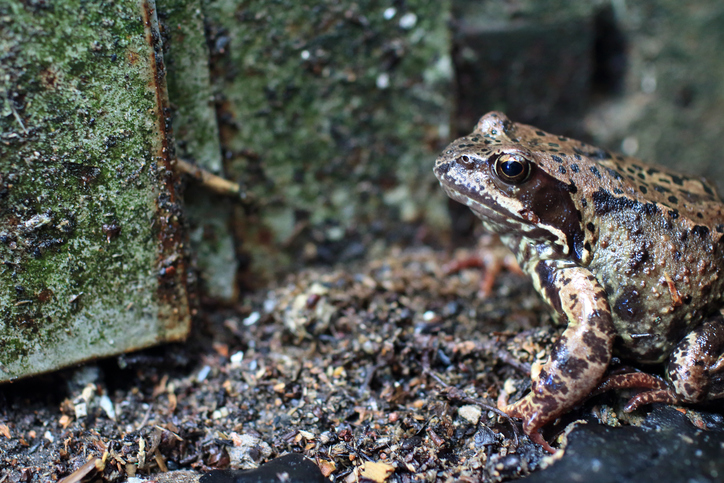
We have discussed deference in past posts and, this past month, the Supreme Court granted certiorari in Weyerhaeuser Co. v. U.S. Fish & Wildlife Service, Case No. 17-71. The case may focus the Court’s attention on deference and other issues. Specifically, the case addresses whether the U.S. Fish & Wildlife Service’s (FWS) interpretation of the Endangered Species Act (ESA) was appropriate.
The Dusky Gopher Frog and Case Background
The case involves dusky gopher frogs. Dusky gopher frogs spend most of their lives underground in canopied pine forests, only migrating to certain seasonally flooded “ephemeral” ponds to breed. When dusky gopher frogs were listed as an endangered species, only 100 adult frogs were known to live in the wild and the frogs’ range had shrunk from Louisiana, Mississippi, and Alabama to just Mississippi. To address this problem, FWS published a proposed rule in 2010 to designate 1,957 acres in Mississippi as “critical habitat” for these frogs. In response to comments, the FWS final designation expanded this area to 6,477 total acres spread across four counties in Mississippi and one parish in Louisiana.
The appeal focuses on a 1,544 acre portion of this land in Louisiana where the dusky gopher frog species had not lived for decades. The land, however, had both historical breeding sites as well as the ephemeral ponds the dusky gopher frog needed to survive. The uplands associated with the ponds were no longer suitable to support dusky gopher frogs. A divided panel of the Fifth Circuit upheld this designation, and property owners in the protected area appealed, citing as their basis for appeal that the FWS exceeded its statutory authority.
The landowners – whose use of the tract of land would likely be fundamentally altered by any ESA designation – sought certiorari on two grounds:
- The FWS’s authorization to designate land is limited to “any habitat of [an endangered species] which is then considered to be critical habitat.” 16 U.S.C. § 1533(a)(3)(A)(i) (emphasis added). The landowners contend that, without dusky gopher frogs or the upland features necessary to support them, the Louisiana land is not appropriate “habitat.”
- The appropriateness of the FWS’s actions hinges on whether the involved land contains “physical or biological features” “essential for the conservation of the species.” See 16 U.S.C. § 1532(5)(A)(ii). “Essential” is undefined in the statute. The landowners argue that, as the uplands around the ephemeral ponds are no longer suitable to support dusky gopher frogs, the FWS erred in designating the lands “essential.”
What these Questions Mean
The dusky gopher frogs will certainly find this case of interest. However, we turn back to Chevron deference, which is a core tenet of administrative law. Past blog posts have touched on the issue of Chevron administrative deference. In a nutshell, Chevron deference means that agencies are entitled to deference unless they ignore plain statutes. Where agencies’ decisions fail to address how statutes are actually worded, that is, where decisions go beyond filling in statutory gaps or reasonably interpreting statutes, courts may step in.
Issues important to the dusky gopher frog, private property rights, and the Endangered Species Act may be addressed by the Court. We also anticipate possible new insight into whether the Supreme Court may revisit – or at least revise – its past history of deferring in large part to “expert” agencies. Keep an eye on this blog for further updates.