

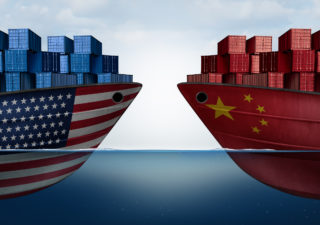
 Last month’s back-and-forth between the United States and China resulted in a flurry of proclamations establishing tariffs on imports from the respective countries. We’re here to help boil it down so you know whether your business is directly or indirectly impacted.
What are Tariffs and Why are They Important?
Tariffs are nothing more than a tax on imports coming into a country. This drives up the price of the imported goods, making them less attractive to buyers. And this is the whole point of a tariff – to make a country’s alternative domestic product look more attractive.
The U.S. Government’s March 8 Tariff Proclamation
On March 8, President Trump issued a proclamation establishing a 25% tariff on all steel imports except those coming from Canada and Mexico, effective March 23, 2018.
China’s Response
Not unsurprisingly, China was angry over this news. So, it retaliated by issuing a 25% tariff on 128 different goods from the United States. Fruits and nuts accounted for almost 2/3rds of the list. But it also included wine, other alcohols of any concentration, modified ethanol, ginseng, stainless steel pipes, pork, and aluminum scrap.
The U.S. Reply
Not to be outdone, the U.S. issued another tariff announcement, this time intending to place a 25% tariff on more than 1,300 different goods from China. Some of the more amusing items on the list are nuclear reactors (?!?!), bakery ovens – including “biscuit ovens,” ski chair lifts, snowplows/snowblowers, textile machines, sewing machine needles, cash registers, hand-held blow torches, chain saws, parts for trash compactors, non-recording cassette players, phonograph records, flight data recorders, commercial use balloons, “air combat ground flying simulators,” other military weapons, hearing aids, and pacemakers. There is a comment period through May 22.
China’s not finished.
Just a day later, China announced another round of tariffs on $50 billion of U.S. goods. These tariffs covered mostly soybeans, aircraft, and automobiles. But just a few days later, China’s President Xi Jinping announced China would reduce the tariffs on auto imports.
What Does it All Mean?
Although the U.S.’s latest list excludes many consumer products, like toys and clothing, if your company relies on any parts or fully assembled products from China, you’re most likely going to be paying more for those goods in the second half of 2018. It is possible that instead of continuing to escalate this trade war, the U.S. and China may come to the bargaining table and work out an agreement to reduce tariffs even below the levels that existed before this latest spat occurred.
Tilting the Scales in Your Favor
It seems like every day is a wait and see approach on whether these new tariffs will actually go into effect. But companies can be proactive. If you are forced to pay more, directly or indirectly, on Chinese imports subject to the new tariffs should begin looking alternate suppliers in other countries. If those do not exist, then it’s time to buckle up for higher prices, with plans to pass those on to consumers. For those companies whose business is directly impacted by the tariffs China is imposing on your goods, it’s time to begin looking for alternate buyers in other markets.