

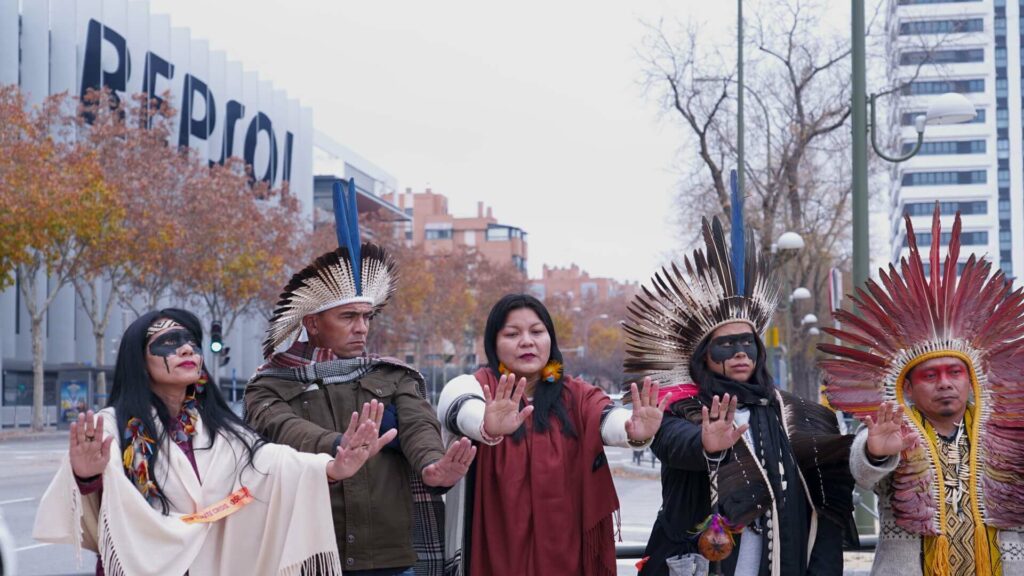
Indigenous representatives from five different peoples and
activists from 350.org held a protest on Sunday in front of the headquarters of
REPSOL in Madrid, Spain. The protest was meant to draw attention to an oil leak
that has been polluting the beaches and contaminating sea life across 11 states
in Brazil since October
REPSOL is a global company operating in all areas of the oil and gas industry. The business is one of Spain’s largest and iconic to the fossil fuel industry which the protestors felt was wreaking havoc worldwide. In a statement, the protestors stated that whether through oil spill disasters or through the end-use of the fossil fuels, companies like REPSOL were the main culprits of the climate crisis.
They stated that operations from large companies threaten
ecosystems, livelihoods and the health of indigenous communities worldwide. The
government of Brazil has reportedly been insisting on expanding the oil
frontier.
The protestors emphasised their cultural links to the
environment. One of the protest leaders, Andreia Takua, President of the National Council of
Indigenous Health said, “We indigenous people feel that fossil fuels
expansion needs to be stopped. Fossil fuels pollute the soil, the water, the
air. They turn nature into a commodity. For us indigenous people, our
environment is sacred, it cannot be sold. So, when a part of our land or our
ocean is auctioned off to the highest bidder, it feels as if a part of us was
removed. It feels as if we had lost part of our spirit. We need our oceans
clean and our forests intact. We want fossil fuel companies to stop drilling
off the coasts of Brazil and we want the Brazilian government to immediately
stop auctioning off new oil fields for exploration”
The protest also highlighted challenges faced by water
sources in Latin America. Ninawa Huni Kui
President of the Huni Kui Peoples Federation and member of the Council
of the Indigenous peoples of the Brazilian Amazon remarked, “Oil drilling contaminates
groundwater. In the state of Acre, like in many other regions where people live
on the river banks or close to them, the contamination of fish ends up making
people sick. Water becomes undrinkable, not only for people, but for animals as
well. But even if you didn’t eat fish or drink water, in the Amazon, because of
the humidity, the air itself brings down the contaminated water through the
rain. Over the past three months only, 12 children died of water contamination.
The same way they pollute the environment, fossil fuels are also a source of
corruption for communities everywhere they are found. When oil companies start
drilling, the first thing that happens is that members of the community are
co-opted. Fossil fuel companies try to get the support of our communities,
saying they will create jobs for young people, with support from the state
administration. This creates conflict in the community. It’s what fossil fuels
do, they disarticulate communities”.
CoP25 has seen
protests from indigenous groups, environmental activists such as Extinction
rebellion as well as youths under the Fridays For Future banner.
Nicole Oliveira the Managing Director of 350.org Latin
America added, “Indigenous leaders and young activists from Latin America are
present in Madrid to remind governments of the world that our fight for climate
justice is stronger and more urgent than ever. As the momentum for a transition
to socially fair energies keeps growing, it becomes harder and harder for
politicians and fossil fuel companies to ignore the pressure. COP25 needs to be
another important milestone on this journey.”
The post Indigenous people protest Brazil’s oil and fossil industry appeared first on Africa Legal News.