

 In the rainforests of Guatemala, Honduras and Nicaragua, the fires often start when drug traffickers try to clear large swaths of land. Due to the dry bush and lack of rainfall, the flames often spread out of control, but in the end, the result is the same: oaks, palms, acacia and mahogany trees are replaced with bases, airstrips, and clandestine roads, and money is laundered through newly established ranching operations.
According to researchers at Texas State University, and what amounts to the first attempt to quantify the role “narco-cattle ranching” plays in the deforestation of such places as the Maya Biosphere Reserve in Guatemala, “anomalous” patches of deforestation are taking place by use of fire, at an unusually large scale, and at a much faster pace than typically found. While cocaine is surely the culprit, it is not the cultivation of the plant itself that is causing these tropical forests to disappear. The study, published in the June 2020 edition of Land Use Policy, calculates that up to 87 percent of the deforestation in the Maya Biosphere Reserve is the result of illegal cattle ranching. The researchers’ interviews with local officials, activists and others with knowledge of the area reveal that about two-thirds of this deforestation is directly funded by what are known locally as “narco-ganadero,” or narco-ranchers. Invariably, this activity leads to money laundering. Indeed, money laundering appears to be the ultimate point.
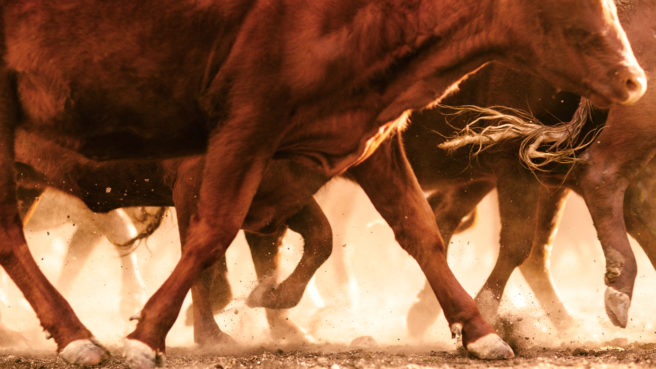
While clearing of forest for cattle may not be the sort of activity that one associates with drug traffickers, it is believed to be a highly efficient mechanism for laundering illicit proceeds. In the Maya Biosphere Reserve in Guatemala, for example, there are “extensive zones without [state] presence or control;” meanwhile, there is very little control over the sale of cattle within Central America more generally (the cattle industry is one of the few agro-industries that does not require itemized receipts). In other words, buying and clearing land for this purpose allows funds to be untraceably converted into private assets. While the clearing of protected land is itself illegal, in practice, these “ranchers” operate and bring their goods to market just like legitimate ranchers outside the forest.
This recent study is the latest to confirm the relationship between deforestation and narco-cattle ranching. It is also likely to signal what many had feared would be a devastating accounting of the environmental impact these operations are having on some of the world’s forests – in 2017, for example, researchers at The Ohio State University estimated that cocaine trafficking accounts for between 15% and 30% of annual forest loss in Honduras, Guatemala, and Nicaragua over the past decade.
It is a hard truth that drug trafficking takes advantage of weak environmental regulation and government, and even if the fight is won in the Maya Biosphere Reserve, it seems likely that trafficking will move ever deeper into the forest. As an alternative to militarized interdiction, the study suggests that directing funding to strengthening environmental governance at the local level, through community-based resource and land management, may prove effective.
If you would like to remain updated on these issues, please click here to subscribe to Money Laundering Watch. Please click here to find out about Ballard Spahr’s Anti-Money Laundering Team.