

Skip to content

Menu

LexBlog, Inc. logo
NetworkSub-MenuBrowse by SubjectBrowse by PublisherJoin the NetworkGet StartedSubscribeSupportContact
Search
Close

District Court Denies Preliminary Injunction in Philadelphia Homeless Encampment Case

By Brian J. Connolly on September 10, 2020
Email this postTweet this postLike this postShare this post on LinkedIn
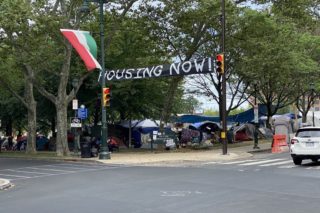
A housing encampment along Ben Franklin Parkway in Philadelphia. Source: Philly Voice.

Late last month, a district court in Pennsylvania entered an order denying preliminary injunctive relief in a First Amendment case filed by a group of homeless advocates seeking to raise awareness of homelessness in Philadelphia.

The case involves three homeless encampments at locations on city- and state-owned properties near Philadelphia’s Center City.  The encampments started in the summer of 2020, and over 200 people reside in them.  The plaintiffs in the case alleged that the encampments are protests relating to city policies toward the homeless.  In July, the city provided notice that it would sweep and remove the encampments on or before August 18.  On August 17, the plaintiffs filed their claim in federal district court and moved for a temporary restraining order and preliminary injunction.

The district court denied the motion for preliminary injunctive relief.  The court sidestepped the question of whether the camping was expressive activity.  Nevertheless, analyzing whether the plaintiffs were likely to succeed on the merits of their claims, the court first assumed that the property on which the encampments were located constituted public fora, requiring any regulation of speech to be a content neutral time, place, and manner regulation.  The court then went on to conduct its tailoring analysis, determining that the city’s interest in public health and safety was a significant governmental interest, and that the city’s prohibition against camping on city property was sufficiently tailored to serve that interest.  The court appeared to have heavily weighed the fact that campers in the encampments had stolen power from the city power grid, used city-owned fountains for bathing and other illegal purposes, and the encampments’ presence had denied public access to park spaces.

Murray v. City of Philadelphia, ___ F. Supp. 3d ___, 2020 WL 5006046 (E.D. Pa. Aug. 25, 2020)

Photo of Brian J. Connolly Brian J. Connolly

Brian Connolly represents public- and private-sector clients in matters relating to zoning, planning, development entitlements and other complex regulatory issues.  Brian’s practice encompasses a broad range of land use matters including zoning compliance, rezonings and other regulatory amendments, planned-unit developments, development agreements, private…

Brian Connolly represents public- and private-sector clients in matters relating to zoning, planning, development entitlements and other complex regulatory issues.  Brian’s practice encompasses a broad range of land use matters including zoning compliance, rezonings and other regulatory amendments, planned-unit developments, development agreements, private covenants and restrictions, land use and zoning litigation, initiatives and referenda associated with land use approvals, and real estate transactions.  Brian additionally specializes in the First Amendment and land use issues associated with outdoor sign and advertising regulation, and fair housing matters in local planning and zoning.

Read more about Brian J. ConnollyEmail
Show more Show less
  • Posted in:
    Other
  • Blog:
    Rocky Mountain Sign Law Blog
  • Organization:
    Otten Johnson Robinson Neff + Ragonetti PC
  • Article: View Original Source

Call us at 1-800-913-0988 or email sales@lexblog.com.

Facebook LinkedIn Twitter RSS
The Library at LexBlog
  • About LexBlog
  • The Field We Built
  • Library at LexBlog
  • Our Beliefs
  • Our Team
  • Contact LexBlog
  • Disclaimer
  • Editorial Policy
  • Terms of Service
  • Get Started
  • Publishing Solutions
  • Compass
  • Submit a Request
  • Support Center
  • System Status
Copyright © 2026, LexBlog, Inc. All Rights Reserved.
Law blog design & platform by LexBlog LexBlog Logo