

 On November 19, the FCC issued a Report and Order for which the Wi-Fi community can be justly grateful at their Thanksgiving celebrations. For some years the Federal Communications Commission (“FCC” or the “Commission”) has been concerned that the potential for Intelligent Transportation Systems (ITS) in the 5.85 – 5.925 band has never panned out. The automobile manufacturing and public safety communities had touted the ability of this band to provide inter-vehicle and vehicle-infrastructure communications which would significantly improve vehicle safety and traffic management. The band was therefore allocated for use on a licensed basis for DSRC (Dedicated Short Range Communications) about 20 years ago. Despite the continued suggestions by the industry that wide-spread rollout of in-care devices that could put the technology to use was imminent, the DSRC plane has continually taxied along the runway at low speed but never taken off. With Wi-Fi proponents clamoring, as always, for more and more midband spectrum for unlicensed use, the FCC finally decided that a change was needed.
The Order released last week takes the lower 45 MHz of the ITS band and reallocates it to unlicensed indoor use at relatively low power levels (20dBm/MHz). This power level is sufficient to allow our toasters and vacuum cleaners to instantly exchange mission-critical data in real time but not so powerful as to interfere with Department of Defense radars and incumbent DCRS licensees who will continue to operate in the band, at least temporarily. This reallocation will have the salutary effect of allowing very wide bandwidth applications (40, 80 or even 160 MHz wide) to be deployed in conjunction with the immediately adjacent unlicensed band which the Commission has previously made available. Once this new band (now dubbed U-NII4) is cleared of the existing licensees, power levels will be increased to conform to normal Part 15 rules. In the meantime, users can seek to increase power immediately by requesting waivers or Special Temporary Authorities. Existing non-Federal incumbents have a year to clear the band.
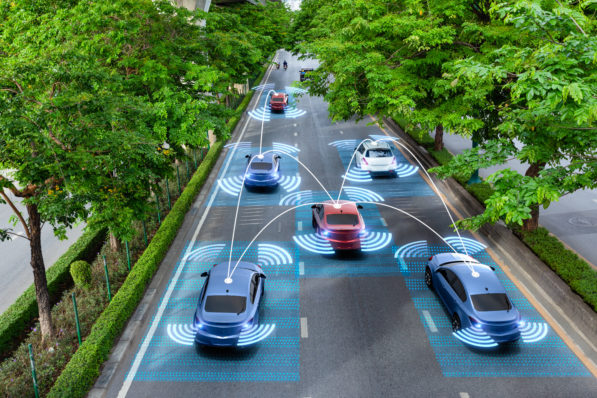
The FCC has not given up on vehicular use of the band altogether, however. Rather, it has recommissioned the remaining 30 MHz of the band (5.895 – 5.925 MHz) for C-V2X (Cellular Vehicle to Everything) technology. This technology is expected to deliver the main features of the old DSRC technology while expanding its potential. C-V2X proponents anticipate that it will serve as the foundation for vehicles to communicate with a wide range of other vehicles and infrastructure around them, providing non-line-of-sight awareness, providing their operators with notice of changing driving conditions with a high level of predictability for enhanced road safety, and engaging in automated driving. To enable this brave new world of highly intelligent vehicles, the Commission is requiring the incumbent DCRS licensees in the lower band to vacate it within one year from the effective date of the Report and Order. Once they have relocated to the upper band, they will have a period of time (two years is proposed in a Further Notice of Proposed Rulemaking) to convert to C-V2X operation. There are only a handful of incumbents in the band (116) most of whom are in developmental phases in limited geographic areas, so the small burden on them was deemed a small price to pay for the increased access to Wi-Fi by the general public. The Commission also seeks comment on numerous technical aspects of the C-V2X in the FNPRM. Precise dates for comments will be established when the FNPRM is published in the Federal Register.