

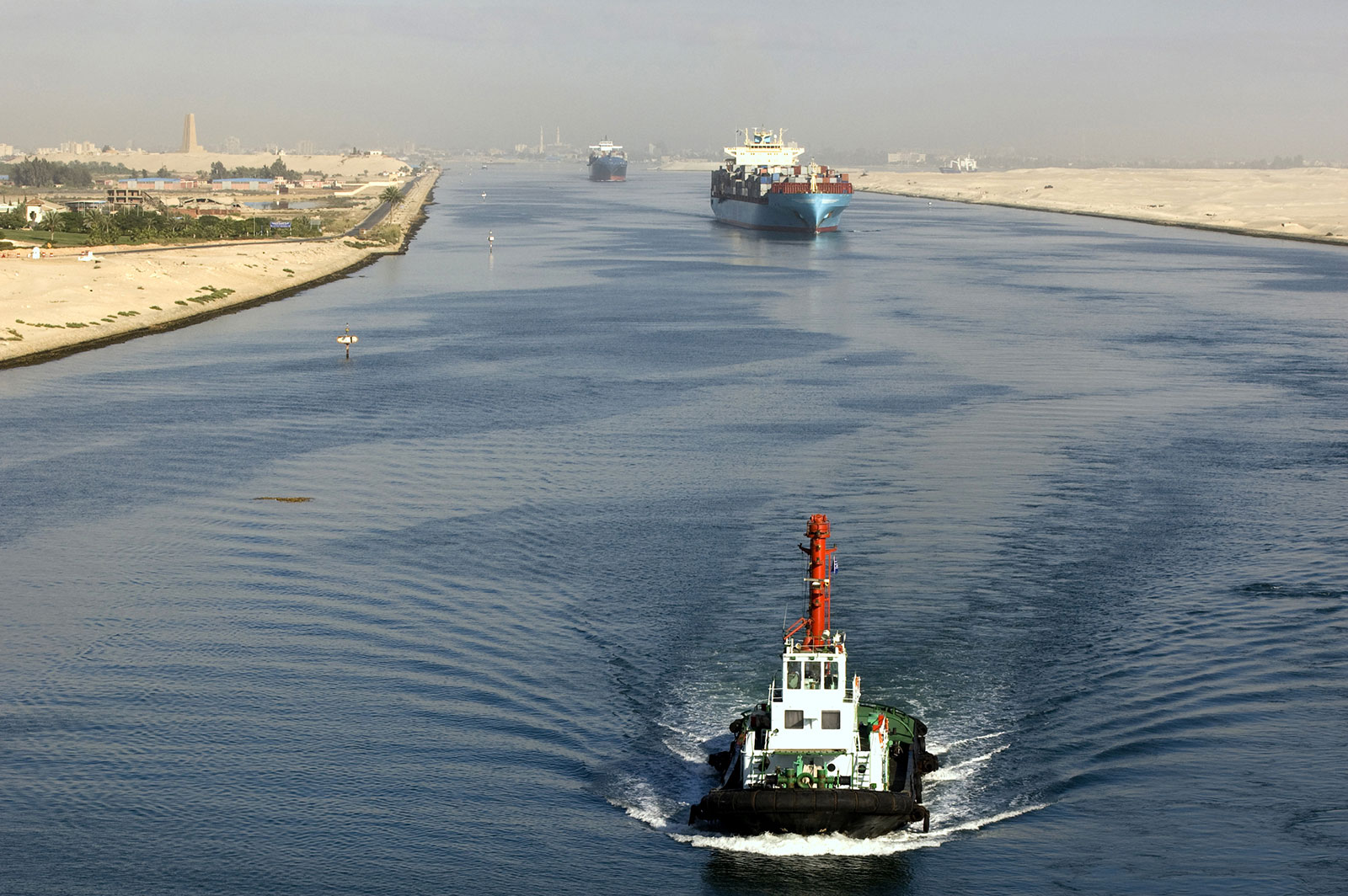
According to media reports, a massive 400-meter container ship operated by Evergreen Marine Corp. in Taiwan, the Ever Given, became stuck in the Suez Canal after apparently running aground due to high winds from a sandstorm. As a result, potentially hundreds of ships cannot pass on either side of the Suez Canal, traditionally an important trade route for north bound cargo, mainly oil from the Arabian Gulf to Western Europe but also manufactured goods from Asia. South bound trade routes mainly carry manufactured goods and grain from Europe and North America to Asia.
Container ships have become stuck in the canal in the past, but not during such a critical moment for international trade and for logistics companies, when the costs of insurance and containers have increased dramatically, and for the global economy which is recovering from the pandemic-related downturn. Ship operators have the option to reroute their ships around the Cape of Good Hope in South Africa to service Europe, but such a detour adds significant time and costs. A major concern is that the Suez Canal blockage, if prolonged, could lead to shortages of goods and increased costs being passed on to consumers.
Supply chain disruption due to the canal blockage will be felt most acutely in Europe, but U.S. importers and distributors should prepare for potential disruption as well. According to the Annual Report 2019 data from Egypt’s Suez Canal Authority, the U.S. mainly exports products through the canal, but does import significant quantities of oil and chemicals through the canal. For these products especially, which are critical to the supply chains of many products downstream, importers and other companies should prepare for the possibility of further congestion and delays at U.S. ports in Long Beach and Newark. We also suggest keeping an eye on increased routing, for at least the short term, via the Panama Canal where feasible.
Long before vessel congestion began to cripple U.S. West Coast port productivity, and shippers started diverting cargo to the U.S. East Coast, the Suez Canal was slowly stealing market share away from its Central American competitor, the Panama Canal. The Panama Canal, with its massive expansion and renovation project, may see a definite bump in the near term from cargo currently transiting the Suez, and the question will be whether the Panama Canal can retain and build on this turn of events. Cargo originating from ports in Southeast Asia could continue to transit the Suez, or perhaps the Panama Canal will offer a long-term viable alternative for shippers from Asia to Europe and North America. It is likely that vessel operators of the larger container vessels might be sensitive to the innovations of the Panama Canal to safely handle these larger vessels in more adverse weather environments.
Should you have any questions or concerns regarding this situation, please contact Carlos Rodriguez of Husch Blackwell’s International Trade & Supply Chain team.