

Skip to content

Menu

LexBlog, Inc. logo
NetworkSub-MenuBrowse by SubjectBrowse by PublisherJoin the NetworkGet StartedSubscribeSupportContact
Search
Close

FDA Denies Authorization to Market JUUL ENDS Products; Company Intends to Seek Stay of the Marketing Denial Orders

By Azim Chowdhury, LieAnn T. Van-Tull & Josephine Hsu on June 24, 2022
Email this postTweet this postLike this postShare this post on LinkedIn
106228128-1573056000592rtx77fmf

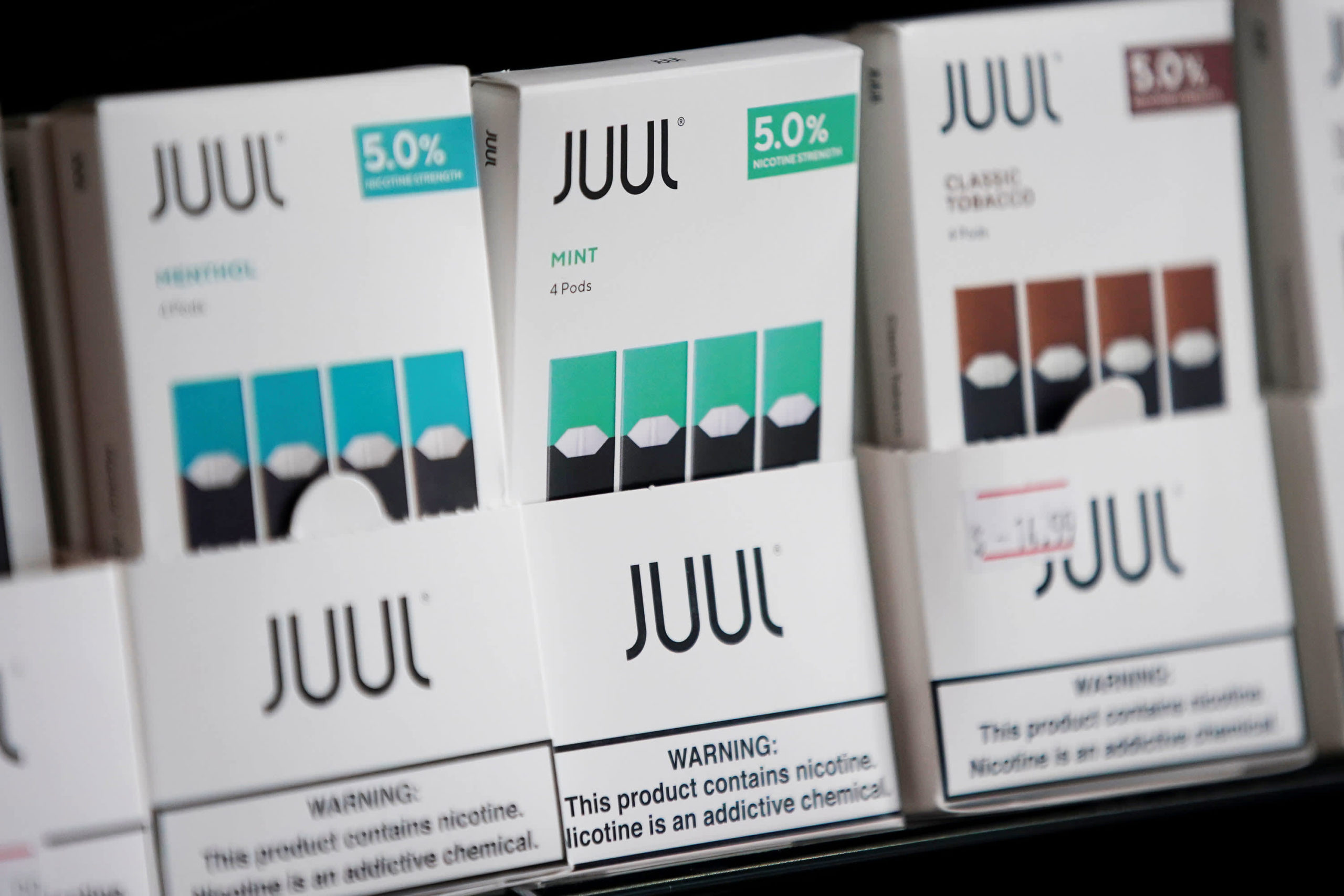
On June 23, 2022, the U.S. Food and Drug Administration (FDA) issued marketing denial orders (MDOs)[1] to Juul Labs Inc. for all of the company’s JUUL electronic nicotine delivery system (ENDS) products currently marketed in the United States. After review, FDA determined that Juul’s Premarket Tobacco Product Applications (PMTAs), submitted more than two years ago, contained insufficient data for the Agency to assess the potential toxicological risks of using JUUL products. As a result, according to FDA, Juul did not show that permitting the marketing of its products would meet FDA’s “appropriate for the protection of the public health” (APPH) standard.

FDA’s issuance of the MDOs to Juul prohibits the commercial distribution, importation, and retail sales of all JUUL ENDS products, including:

  • JUUL device
  • Virginia Tobacco flavored JUULpod (3% nicotine)
  • Virginia Tobacco flavored JUULpod (5% nicotine)
  • Menthol flavored JUULpod (3% nicotine)
  • Menthol flavored JUULpod (5% nicotine)

FDA indicated that although it had not received clinical information to suggest that there is an immediate hazard associated with the use of JUUL products, the Agency determined that the company’s PMTAs lacked sufficient evidence regarding the toxicological profile of the products to demonstrate that the APPH threshold standard was met. Specifically, FDA indicated that:

  • The information and data contained within Juul’s PMTAs precluded FDA from completing a toxicological risk assessment to determine whether the APPH standard had been met;
  • There was “insufficient and conflicting data – including regarding genotoxicity and potentially harmful chemicals leaching from . . . [Juul’s] e-liquid pods;” and
  • The Agency is concerned about the potential harm from mixing the use of third-party e-liquid pods with the JUUL device, as well as the use of JUULpods with non-JUUL devices.

FDA’s Acting Director for the Center for Tobacco Products (CTP), Michele Mital, noted that the responsibility of demonstrating that a particular tobacco product meets the relevant standards ultimately falls on the manufacturer and not on FDA, which is tasked with ensuring that the products meet the relevant standards.[2] As such, FDA has, to date, only authorized 23 tobacco-flavored ENDS products under the PMTA pathway.[3]

As a result of the MDOs issued, Juul must remove all of its products from the U.S. commercial market immediately or be subject to enforcement action. FDA has noted that one of its highest enforcement priorities is for unauthorized ENDS products and that its enforcement action is applicable to not only commercial distribution and sales by Juul but also by third-party distributors and retailers of JUUL products.

In a statement posted on its website, Juul maintained that it believes it provided FDA with sufficient information and data based on high quality research and that it “appropriately characterized the toxicological profile of JUUL products, including comparisons to combustible cigarettes and other vapor products, and believe this data, along with the totality of the evidence, meets the statutory standard of being ‘appropriate for the protection of the public health.’” The company further noted that it intends to seek a stay of the MDOs and that it is “exploring all of our options under the FDA’s regulations and the law, including appealing the decision and engaging with our regulator.”

The company’s initial PMTA submission included detailed scientific data from over 110 studies totaling over 125,000 pages evaluating the JUUL products’ impact on both current users of tobacco products and nonusers, including those who are underage. Last year, the company had a number of its long-term perception and behavioral studies published in a special edition of the American Journal of Health Behavior. Those studies estimated, among other things, the prevalence of ENDS and JUUL use among young and older adults and documented the 12-month smoking trajectories of adults who purchased a JUUL Starter Kit. Overall, cigarette smoking prevalence was halved, with most smokers switching completely as dual use declined.

FDA has issued MDOs for over 99% of the non-tobacco flavored ENDS products that it has reviewed thus far. As noted above, FDA has issued marketing granted orders (MGOs) for 23 ENDS products, including tobacco-flavored ENDS products from the R.J. Reynolds Vapor Company, Logic Technology Development LLC, and NJOY LLC.


[1] See Food and Drug Administration, Marketing Denial Orders, available at: https://www.fda.gov/tobacco-products/market-and-distribute-tobacco-product/tobacco-products-marketing-orders#Marketing%20Denial.

[2] See Food and Drug Administration, “FDA Denies Authorization to Market JUUL Products” (June 23, 2022), available at: https://www.fda.gov/news-events/press-announcements/fda-denies-authorization-market-juul-products.

[3] Id.

Photo of Azim Chowdhury Azim Chowdhury

Azim Chowdhury is a regulatory and public policy attorney with a focus on vapor, nicotine and tobacco product regulation. He is a Partner in Keller and Heckman’s nationally-ranked food and drug law practice.

Mr. Chowdhury advises domestic and foreign corporations in matters of…

Azim Chowdhury is a regulatory and public policy attorney with a focus on vapor, nicotine and tobacco product regulation. He is a Partner in Keller and Heckman’s nationally-ranked food and drug law practice.

Mr. Chowdhury advises domestic and foreign corporations in matters of Food and Drug Administration (FDA) and international regulatory compliance. In particular, he has developed expertise in tobacco and vapor product regulation relating to the implementation of the Family Smoking Prevention and Tobacco Control Act, and spearheaded the Tobacco and E-Vapor practice at Keller and Heckman. Specifically, Mr. Chowdhury has experience representing tobacco, e-cigarette and e-liquid manufacturers, distributors, retailers, suppliers and trade associations in matters of FDA, state and global regulatory compliance. He also assists corporations in establishing clearances for food and drug additives in the U.S., Canada, and European Union, with an emphasis on indirect additives used in food-contact materials.

Mr. Chowdhury has authored and edited numerous articles and publications, including Tobacco Regulation and Compliance: An Essential Resource, FDA Regulation of Tobacco: A Comprehensive Guide – An FDLI Primer and Tobacco and Nicotine Delivery: Regulation and Compliance, 2nd Edition. He is a frequent contributor to the Food and Drug Law Institute’s (FDLI) Update Magazine and has served on the Editorial Advisory Board of the Food and Drug Law Journal.  In addition, he has been interviewed in the U.S. News and World Reports Best Lawyers Edition (2016) and was named one of “10 Names to Know in the Vape World” in the October 2015 issue of Vape Magazine. Mr. Chowdhury received the 2018 National Law Review Go-To Thought Leadership Award for his consistent coverage of the emerging issues surrounding vaping and e-cigarettes on Keller and Heckman’s law blog, The Continuum of Risk.  As an industry leader, Mr. Chowdhury frequently speaks at industry conferences and events.

Mr. Chowdhury also has an active pro bono practice through Keller and Heckman’s Pro Bono Program, and has been featured in the Baltimore Sun for successfully obtaining asylum in the United States for a family who fled their home country of El Salvador because of violence they faced from an international gang.

Prior to entering private practice, he served as a judicial law clerk on the Court of Special Appeals of Maryland. Mr. Chowdhury received a B.A. and B.S. from Johns Hopkins University, a MBA from the University of Maryland Robert H. Smith School of Business, and a JD, cum laude, from the University of Maryland School of Law.

Education: Johns Hopkins University (B.A., B.S., 2003); University of Maryland Robert H. Smith School of Business (M.B.A., 2006); University of Maryland School of Law (J.D., 2006, cum laude).

Admissions: District of Columbia; Maryland

Read more about Azim ChowdhuryEmailAzim's Linkedin ProfileAzim's Twitter Profile
Show more Show less
Photo of LieAnn T. Van-Tull LieAnn T. Van-Tull

LieAnn Van-Tull practices in the area of food and drug law, as well as tobacco and e-vapor regulation. She advises domestic and foreign clients on compliance with global food and drug packaging requirements. Ms. Van-Tull also provides state and federal legislative counsel to…

LieAnn Van-Tull practices in the area of food and drug law, as well as tobacco and e-vapor regulation. She advises domestic and foreign clients on compliance with global food and drug packaging requirements. Ms. Van-Tull also provides state and federal legislative counsel to tobacco and e-vapor suppliers and manufacturers.

Prior to joining Keller and Heckman, Ms. Van-Tull served as regulatory counsel for the Food and Drug Administration (FDA). While at FDA, she was on the lead counsel team on enforcement actions against companies that produce electronic nicotine delivery systems. Ms. Van-Tull also developed policies and programs involving matters affecting the regulation of the tobacco industry. Ms. Van-Tull also has a background in chemistry.

Admitted to practice in Maryland only. Practice limited to matters before the FDA and matters ancillary thereto.

Read more about LieAnn T. Van-TullEmailLieAnn T.'s Linkedin Profile
Show more Show less
Photo of Josephine Hsu Josephine Hsu
Read more about Josephine HsuEmailJosephine's Linkedin Profile
  • Posted in:
    Food, Drug & Agriculture
  • Blog:
    The Continuum of Risk
  • Organization:
    Keller Heckman
  • Article: View Original Source

Call us at 1-800-913-0988 or email sales@lexblog.com.

Facebook LinkedIn Twitter RSS
The Library at LexBlog
  • About LexBlog
  • The Field We Built
  • Library at LexBlog
  • Our Beliefs
  • Our Team
  • Contact LexBlog
  • Disclaimer
  • Editorial Policy
  • Terms of Service
  • Get Started
  • Publishing Solutions
  • Compass
  • Submit a Request
  • Support Center
  • System Status
Copyright © 2026, LexBlog, Inc. All Rights Reserved.
Law blog design & platform by LexBlog LexBlog Logo