

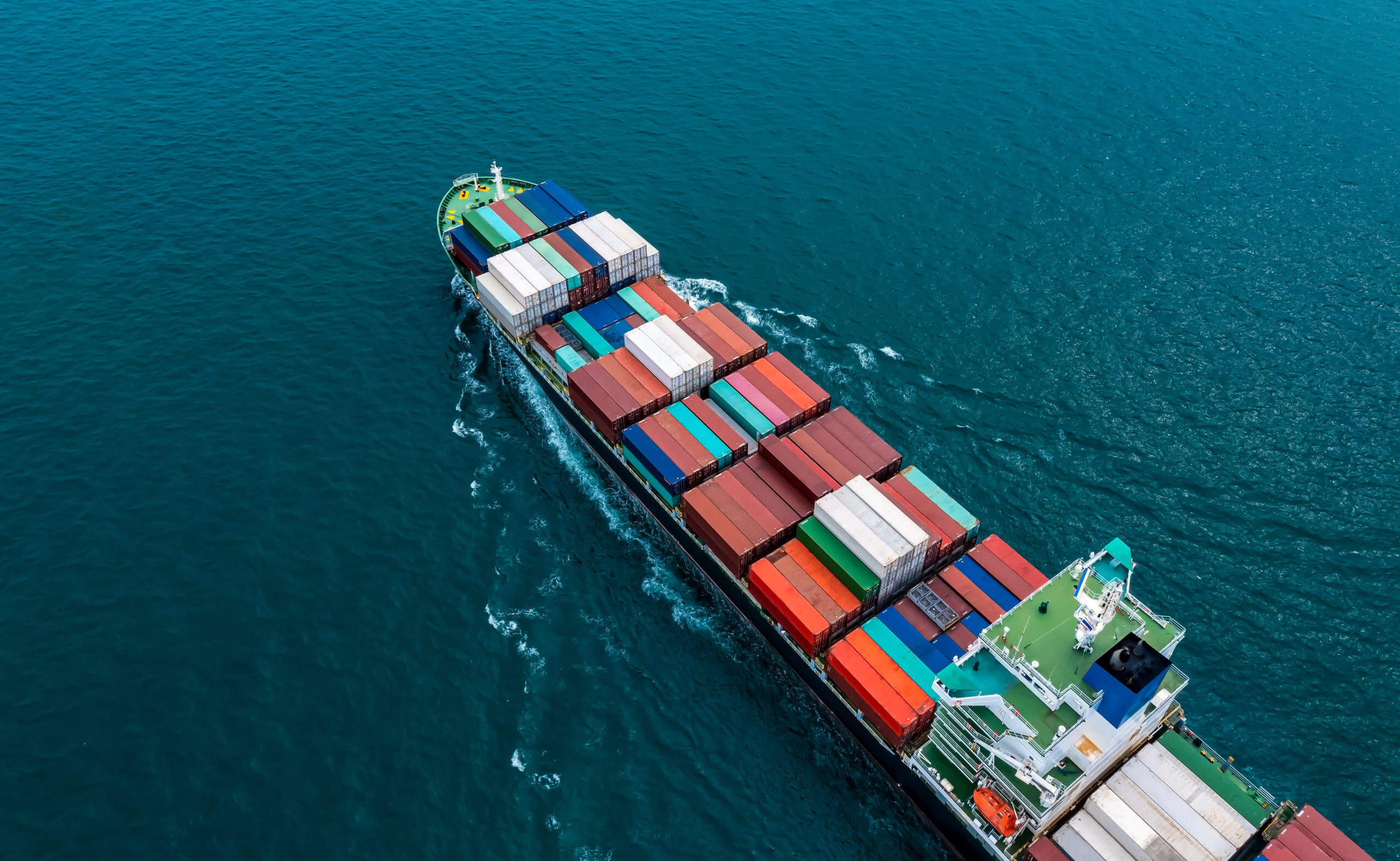
Force majeure contract provisions are potentially coming into play as Maersk, Hapag-Lloyd, and other ocean carriers divert ships around geopolitical trouble spots in the Red Sea.
Beginning in mid-November 2023, container ships transiting the Red Sea/Gulf of Aden region have been the target of attacks or have been involved in near-miss incidents. On January 2, 2024, A.P. Moller – Maersk announced that it intends to “pause all vessels bound for the Red Sea/Gulf of Aden” and that all Maersk vessels bound for the region “will be diverted south around the Cape of Good Hope for the foreseeable future.” German carrier Hapag-Lloyd has gone a step further, declaring that the ongoing hostilities and threats to the safety of vessels in the region are sufficient to invoke the Matters Affecting Performance—i.e., the force majeure clause—of its Sea Waybill Terms and Conditions. Hapag-Lloyd is likewise routing its vessels around the Cape of Good Hope.
What is a force majeure event?
Liability for breach of a contract is strict; however, force majeure clauses serve to relieve a party from its non-performance based on certain specified reasons. The typical force majeure clause excuses the affected party from events beyond its control. The most common events contained in force majeure clauses include civil unrest, strikes, “Acts of God,” war, and the like.
In the case of Hapag-Lloyd’s Terms and Conditions, its Matters Affecting Performance clause includes “any hindrance, risk, danger, delay, difficulty or disadvantage of any kind including but not limited to labor disruption such as strike and lock-out, war, civil commotion, political unrest, piracy, act of terrorism and threat thereof ….” The clause further provides that if one of these events occurs, the carrier can take various measures including “carry[ing] the Goods to the contracted port of discharge or place of delivery … by an alternate route.”
How do courts apply and interpret force majeure clauses?
But whether a court will consider an event—including the attacks in the Red Sea described above—to be a force majeure event under a contract depends on one of several factors. First, it depends heavily on the language of the contract itself. In Hapag-Lloyd’s case, the Terms and Conditions specifically referred to “act[s] of terrorism,” which is an apt description of the Red Sea attacks. But the result might be different—or at least less clear—if the clause referred only to “hostilities” or “civil unrest,” for instance. Application of a force majeure clause may also depend on the law of the jurisdiction under which the dispute is decided. For example, under California law, it is not enough that an event be enumerated in the force majeure clause. Rather, the event must also be “unforeseeable” to the breaching party (see Watson Labs., Inc. v. Rhone-Poulenc Rorer, Inc., 178 F. Supp. 2d 1099, 1113 (C.D. Cal. 2001)). Finally, force majeure clauses sometimes place additional obligations on the party invoking the clause. For example, some clauses require prompt notification of a force majeure event and for the invoking party to make reasonable efforts to eliminate or abate the force majeure (see Wisconsin Elec. Power Co. v. Union Pac. R. Co., 557 F.3d 504, 506 (7th Cir. 2009)). In short, the application of force majeure clauses is a multifaceted and evolving legal issue. We expect to see courts grappling with these provisions as events unfold in the Middle East.
We will continue to monitor developments in the Red Sea/Gulf of Aden and the application of force majeure clauses in disputes involving goods transported through the region. For questions, please reach out to Julie Maurer, Aaron Schepler, or Husch Blackwell’s International Trade and Supply Chain team.