

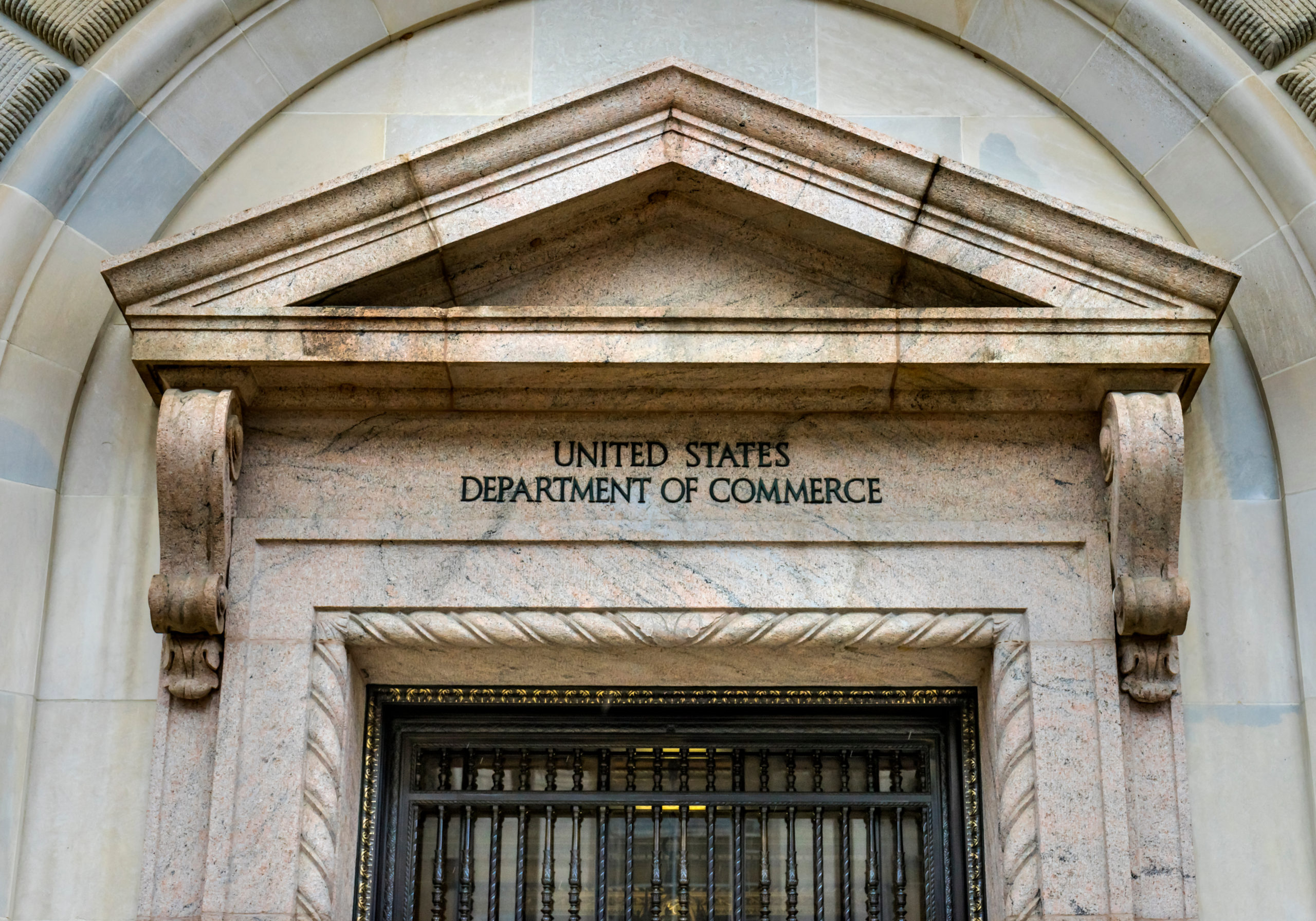
On March 22, 2024, the Department of Commerce (“Commerce”) released its anticipated new final countervailing duty regulations authorizing the agency to investigate subsidies provided by third country governments to manufacturers in the country under investigation. From 1997 to the present, Commerce limited its examination of subsidies to those programs and benefits provided by the investigated country to exporters within that investigated country. This new provision grants leeway to examine “transnational subsidies,” which casts serious uncertainty as to what constitutes a “countervailable” subsidy, as the regulations lack procedural and other specific factual guidance on how these third-party government subsidies will be examined and addressed as part of investigations and reviews. Commerce’s new rules will go into effect on April 24, 2024.
Up until now, a subsidy provided by the investigated government to the investigated company would be countervailable if it provided a financial contribution from the government to a producer and/or exporters that was specific, in that it provided the company, a group of companies, or an industry an unfair advantage to enable it to produce, and consequently export, more goods.
By effectively eliminating a nearly 30-year-old regulation that restricted Commerce’s examination of benefits to a single country and single government, the agency has left its new definition of specificity uncertain, which leaves trade lawyers uncertain as to what subsidies to examine and report while providing Commerce more opportunities to make assumptions based upon adverse inferences when responding companies attempt to report programs, and benefits received. The new rules also have implications for the conduct of parallel antidumping duty proceedings in that the receipt of subsidies for raw material inputs, etc., could lead to an increased use of Commerce’s unique “particular market situation” (“PMS”) analysis and further increase the burden on responding companies in reporting sales and production costs to the agency.
Some of these concerning issues were raised by interested parties in the comments submitted on the proposed regulations when they were released in May 2023, however Commerce’s responses to the comments dismissed several of these concerns as premature.
It is important to note that the agency also received comments arguing that the change in regulations would violate the Tariff Act as well as the WTO Agreement on Subsidies and Countervailing Measures. Commerce in its responses justified its decision to permit the investigation of transnational subsidies by stating that changes in the global economy necessitated the revision to the regulations. Specifically, Commerce discussed China’s Belt & Road Initiative as one of its key areas of concern, under which China has invested of over $1 trillion to create a web of dependencies encompassing over 150 countries. The agency’s supplementary reasoning was that the basis for the previous moratorium on investigating transnational subsidies stemmed from a now repealed section of the Tariff Act and therefore, Commerce now has the authority to modify its regulations to address these growing concerns.
While transnational subsidies are the biggest change stemming from the new regulations, other changes include a clarification of Commerce’s practice with regard to PMS. Of key import is that Commerce has now articulated and listed twelve (12) examples of instances where it would find that a PMS exists. While these twelve instances are not exhaustive, they shed additional light on how broadly the agency intends on finding that a PMS exists. The agency’s intent was evidenced by the fact that key terms such as “distinct” and “considerably” were eliminated between the preliminary and final rules. Commerce’s reasoning was that it removed the word “distinct” because there was nothing in the governing statute requiring a market situation to be “distinct” from situations/circumstances in other countries. Removing the word “considerably” also eliminates the risk of courts imposing additional quantitative tests on Commerce for making PMS determinations.
The third significant change in the regulations involves the treatment of weak intellectual property rights, labor and environmental protections in antidumping and countervailing duty proceedings. Commerce, in its comments, indicated that this will be a factor to consider when using surrogate value and benchmark value calculations and gives the agency leeway to disregard data from countries with weak protections in any of these areas.
Finally, in addition to a myriad of minor changes, the new regulations also state that a facts available rate in countervailing duty proceedings must now be above de minimis.
Husch Blackwell continues to monitor developments. In the meantime, for guidance or questions relating to U.S. antidumping and countervailing duties, companies can contact Nithya Nagarajan, Dan Wilson, Stephen Brophy, and Jamie Shookman.