

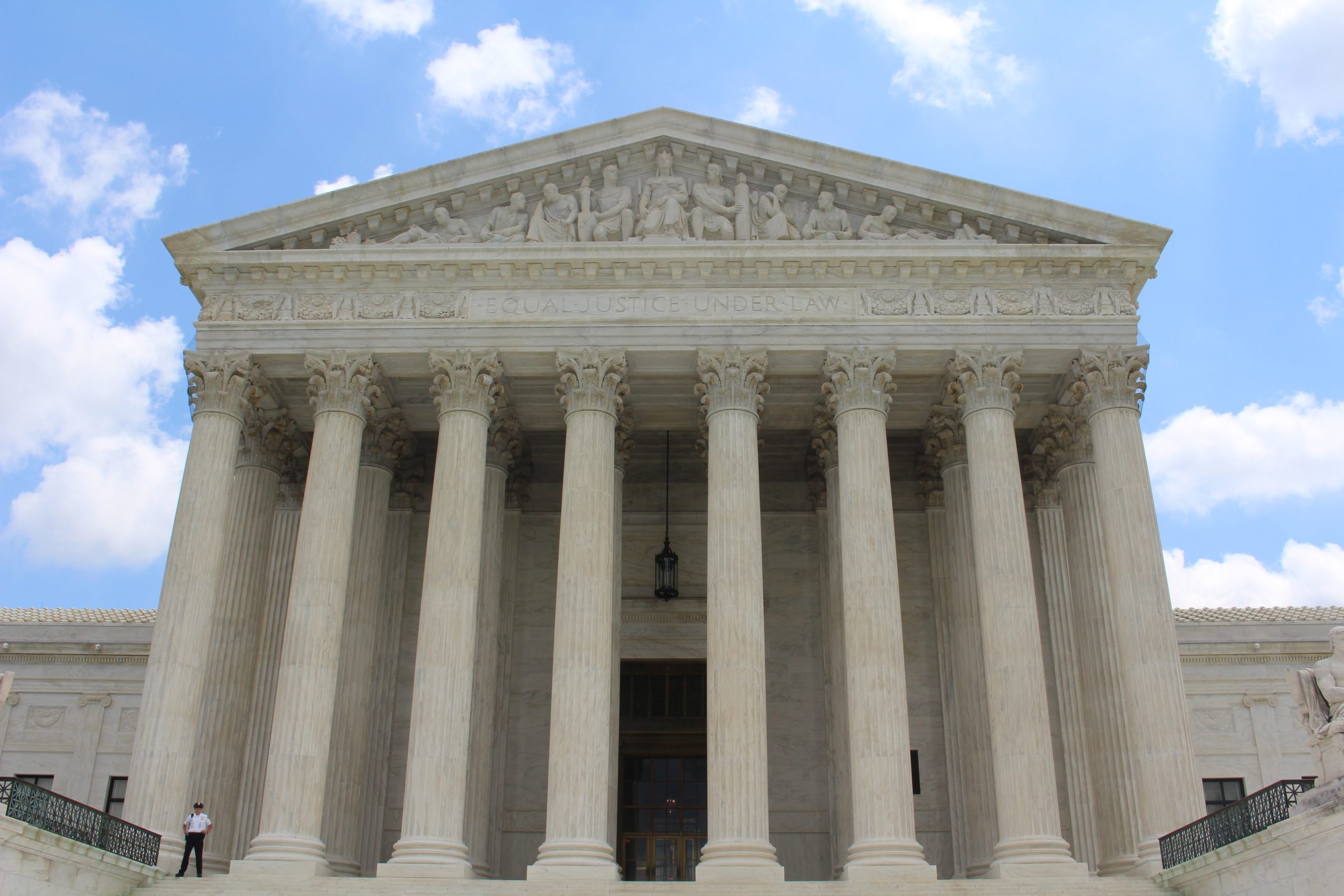
On Friday, June 28, 2024, the United States Supreme Court overturned the Chevron doctrine in Loper Bright Enterprises v. Raimondo, 603 U.S. __ (2024), ushering in a new era of judicial review of agency action.
The Chevron doctrine, which was established by the Supreme Court in 1984, used a two-step process to determine whether an agency’s statutory interpretation was to be afforded deference by the courts—(1) using traditional tools of statutory interpretation to determine if Congress clearly addressed the issue in the statute; and (2) determining whether the agency’s interpretation of an ambiguous provision was reasonable. Chevron U.S.A. Inc. v. Natural Resources Defense Council, Inc., 467 U.S. 837 (1984). For decades, the Supreme Court has slowly chipped away at the doctrine, imposing additional limits on when to employ it and when deference is warranted. Its recent opinion in Loper Bright took the final step and eliminated the agency deference afforded under Chevron.
The consolidated cases arose from challenges to the National Marine Fisheries Service implementation of the Magnuson-Stevens Fishery Conservation and Management Act, challenging the agency’s decision to charge certain costs to fishing vessels. The lower courts had applied Chevron, giving deference to the agency’s statutory interpretation, and dismissed the fishermen’s challenges. Friday’s decision overturned Chevron and vacated the lower courts’ decisions. The Court gave several reasons for this departure from precedent, including:
- The Constitution vests the judiciary with the authority to interpret statutes;
- The Administrative Procedure Act gives courts the power to decide all questions of law and interpret statutory provisions;
- Agencies do not have a special expertise in statutory interpretation, which is better left to the courts;
- The courts are equipped to handle technical statutory questions;
- There is no presumption that Congress’ silence in a statute equates to an intent to defer to agency interpretation on the issue; and
- The doctrine has not been a consistent tool, with courts arriving at conflicting opinions on what was “ambiguous” and what was “reasonable.”
The Supreme Court remanded the merits of the cases to the lower courts, directing the courts to conduct their own statutory construction analysis, without giving Chevron deference to the agency’s interpretation.
Importantly, while this opinion has great implications for agencies’ legal interpretations, the Loper Bright decision does not:
- Overturn caselaw or decisions that were made based on the Chevron doctrine, including the underlying decision of Chevron itself.
- Strip away all agency deference. First, agencies will still be given deference over findings of fact. Second, to the extent that a statutory text gives the agency discretion to define terms, or create a regulatory scheme, etc., an agency will still be given deference on implementations of statutory requirements explicitly reserved to the agency by Congress.
- Automatically mean that an agency’s interpretation of a statute is wrong. A court’s interpretation should give due respect to an agency’s views, and a court may agree that an agency has correctly interpreted a statute under the principals of statutory construction. However, agencies must now establish that their interpretation is the best interpretation under legal construction cannons, not merely that the interpretation is reasonable.
- Necessarily modify deference standards applied by state courts to state agencies. For example, the Loper Bright decision may not have a large impact on Louisiana state court decisions because Louisiana jurisprudence clarifies that while an agency interpretation may be persuasive, the court has the duty to interpret the statute.
Because, under Loper Bright, agency interpretations are persuasive only, increased litigation challenging those interpretations can be expected from both industry and opposition groups alike – particularly where an interpretation may affect the outcome of a commercial or industrial project. Because questions of agency interpretation will often involve technical or specialized issues with which a court may not be familiar, all parties to such a suit should be prepared to robustly educate the judiciary on these aspects of the subject matter at issue.
As regulatory litigation evolves, industry should maintain familiarity with legal disputes surrounding current agency practice and with respect to regulatory ambiguities that affect their operations. In the long term, agency practice may become more predictable and could provide more stability to industry with respect to compliance and permitting actions. The ability of courts to scrutinize agency actions more closely will likely encourage agencies to maintain consistency in their application of the laws.
Liskow routinely advises clients on wide-ranging and unique regulatory matters and will be closely monitoring regulatory developments resulting from Loper Bright. For further questions, contact Liskow attorneys Clare Bienvenu, Louis Buatt, Greg Johnson and Emily von Qualen.
Disclaimer: This Blog/Web Site is made available by the law firm of Liskow & Lewis, APLC (“Liskow & Lewis”) and the individual Liskow & Lewis lawyers posting to this site for educational purposes and to give you general information and a general understanding of the law only, not to provide specific legal advice as to an identified problem or issue. By using this blog site you understand and acknowledge that there is no attorney-client relationship formed between you and Liskow & Lewis and/or the individual Liskow & Lewis lawyers posting to this site by virtue of your using this site. The Blog/Web Site should not be used as a substitute for legal advice from a licensed professional attorney in your state regarding a particular matter.
Privacy Policy: By subscribing to Liskow & Lewisʼ E-Communications, you will receive articles and blogs with insight and analysis of legal issues that may impact your industry. Communications include firm news, insights, and events. To receive information from Liskow & Lewis, your information will be kept in a secured contact database. If at any time you would like to unsubscribe, please use the SafeUnsubscribe® link located at the bottom of every email that you receive.