

Fresno Criminal Lawyer
Fresno Criminal Lawyer – Criminal Defense Lawyer Rick Horowitz
The story of Stephanie, an individual who came forward with allegations of childhood sexual abuse, shows us the shift in our focus on understanding and addressing sexual abuse claims from immediately dismissing them to just “we believe”. While her decision to speak out is significant, it also underscores a critical issue: the misuse of the term “science” in the legal arena, particularly when dealing with highly emotional and complex cases. Not everything labeled “science” in these discussions is rooted in rigorous methods or evidence—a problem that can have serious consequences for everyone involved.
The Wannabe “Science” of Sex Crimes
One phrase from the article stands out: “The science shows us that most individuals don’t report in a timely way. They wait years, even decades, and some of them don’t report at all.”
At first glance, this seems useful, a helpful way of explaining why people might delay reporting: it’s “the science.” However, upon closer examination, such statements often stem from completely unscientific “frameworks” like Child Sexual Abuse Accommodation Syndrome (CSAAS).
Why CSAAS Isn’t Real Science
But CSAAS is not scientific; it is junk science. It is a “theory” that has faced significant criticism for lacking the strong, reliable evidence true science requires.
About the pseudoscience of CSAAS, I’ve written elsewhere.
What Is Science, Really?
I hope you’ll forgive me if I break this down to basics, but I’m assuming it’s possible a judge may stumble across this article, so I assume nothing more than a third-grade level of knowledge about science.
Science is not a set of beliefs or conclusions. It is a method—a process of observation, hypothesis, experimentation, and verification.
When you observe something in the world, and you wonder why is it the way it is? — or perhaps you go even deeper and wonder why is it at all (that is, why does it exist) — you may come up with a guess or three. Those “guesses” are your hypotheses.
For a hypothesis to be supported by science, it must be testable, repeatable, and falsifiable. And as to that last word, things like CSAAS fail. (Again, for details, see my previous article.)
True science — the kind that real scientists discuss — must also withstand scrutiny, peer review, and replication.
CSAAS and Its Legal Misuse
The problem arises when theories like CSAAS are introduced in legal contexts. CSAAS purports to explain why individuals delay disclosure or exhibit behaviors that might otherwise seem inconsistent with abuse. While this theory may provide a lens through which some experiences can be understood, it is not based on science, despite the claims of psychologists and news reporters trolling for clickbait.
Instead, it often relies on retrospective accounts and anecdotal observations, which are inherently subjective and prone to confirmation bias.
This would not be a problem if CSAAS had not been improperly imported into criminal law. You see, CSAAS was never designed to be used in legal settings.
Not all “science” belongs in the courtroom. This is especially true of many psychological theories, which are goal-oriented. The goal? Convicting people, innocent or not.

CSAAS Was Never Meant for Courtrooms
The “inventor” (because CSAAS really is a kind of invention), Dr. Roland Summit, originally intended it as a tool for therapists to keep an open mind when working with individuals who might have been abused, especially in cases where behaviors like delayed disclosure might otherwise seem counterintuitive.
As a tool of “therapeutic guidance,” CSAAS (perhaps) does little harm; it is when it is elevated to the status of a “scientific theory” and improperly brought into the courtroom that all hell breaks loose.
The McMartin Preschool Trials
Unfortunately, CSAAS was soon imported into the courtroom — with the claim that it was a scientific theory — where it has been used to explain away inconsistencies in allegations and strengthen weak cases. In fact, Dr. Summit himself made the mistake of helping to import it during the McMartin Preschool trials.
A Cautionary Tale of Pseudoscience
This shift—from therapeutic guidance to evidentiary support—has had disastrous consequences. It has likely sent many innocent people to prison. Some with life sentences.
Thus, the McMartin Preschool trials serve as a cautionary tale. During this infamous case, CSAAS was invoked to explain the behavior of children who alleged abuse, despite the lack of physical evidence and growing concerns about suggestive interviewing techniques. The reliance on CSAAS in this context not only prolonged one of the most expensive and controversial trials in U.S. history but also highlighted how pseudoscience can twist justice, turning it into injustice.
Dr. Summit later admitted the mistake, and said that CSAAS was not meant to be used the way it is being used in criminal cases.
The Misuse of “Science” in Legal Cases
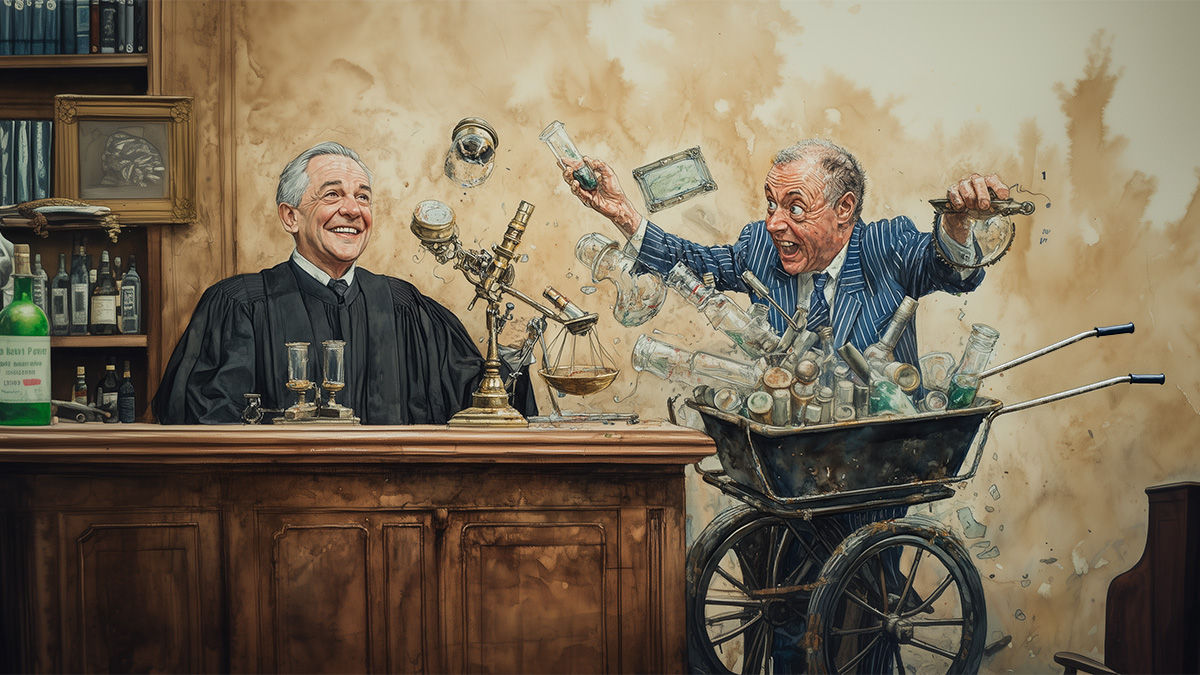
Statements like “science shows” carry significant weight, particularly in the courtroom. For jurors and judges alike, the term “science” implies credibility and objectivity. But when these claims are based on unverified theories or “expert” testimony rooted more in belief than fact, the justice system—and those it serves—suffers.
The Danger of Junk Science in Court
For example, the claim that “studies show people often wait until middle age to report abuse” might describe common trends, but it doesn’t prove that this always happens or explain why. The problem is twofold: first, it treats people like numbers in a statistic rather than unique individuals; second, it risks using questionable science to strengthen weak cases that lack solid evidence.
This, of course, is exactly why prosecutors and judges love CSAAS: it makes convictions much easier to obtain, even in the weakest of cases. It’s why, even though numerous courts have admitted that CSAAS is not admissible because it is garbage, prosecutors (and most judges, especially in California) have fought back. In fact, even in those states where CSAAS was deemed unscientific and inadmissible, legislators, prosecutors, and judges have often managed to erase those cases, and allow CSAAS. (This California case explains that.)

“Science” — more specifically, junk science, or pseudoscience — is favored in courtrooms because it helps get convictions. A good defense attorney can help.
Therapeutic Assumptions vs. Legal Standards
When someone is in therapy, assuming the truth of an individual’s account can be beneficial. Therapists want to create a safe space where people feel believed and supported, even if their memories are fragmented or potentially influenced by confabulation (in other words, making shit up and “remembering” things that never happened).
Healing vs. Convicting
This approach makes sense in the pursuit of healing. However, when this assumption is transplanted into criminal cases, it becomes dangerous. Courts require evidence, not guesses or assumptions, to uphold the rights of both accusers and the accused.
The presumption of innocence means that the burden is always on the prosecution to prove their case beyond a reasonable doubt. It is not the job of the accused person to prove their innocence. Allowing pseudoscience — junk science — into the courtroom undermines this essential principle.
The accused and their families bear the brunt of this misuse. When pseudoscience like CSAAS is presented as fact, it risks leading to wrongful convictions, ruining lives based on theories that were never meant to be used to convict.
The Consequences of Pseudoscience
The stakes could not be higher. For people making accusations, relying on pseudoscience transforms them from someone needing help after they mistakenly believe they were abused to becoming the abusers who ruin another family’s life.
For the accused, it creates a situation where convictions are sometimes based on the false belief in junk “science” rather than solid evidence.
And for society — at least among those who stand for justice and not just “she said it; I believe it; and that settles it for me” — it erodes trust in the legal system, which must balance compassion with a steadfast commitment to truth.
Empathy with Integrity
Challenging the misuse of science isn’t about doubting those who report abuse. It’s about making sure justice is fair and honest. Support for allegations should be based on solid evidence, not on theories that might sound good but are basically fairytales labeled as “science.”
Real science, focused on finding the truth, helps everyone in a legal case.
Moving Forward
To improve the use of real science and to eliminate junk “science” or pseudoscience — and to achieve true justice — we must:
- Demand Higher Standards: Legal practitioners, advocates, and policymakers should critically evaluate the basis of claims presented as “scientific.” Courts must require evidence that meets rigorous standards before admitting testimony based on psychological theories.
- Educate Stakeholders: Judges and jurors need better tools to discern credible scientific evidence from pseudoscience.
- Demand Fairness: The legal system must protect the rights of the accused while ensuring that individuals who bring allegations are listened to, and properly evaluated by jurors whose job it is to decide “guilt beyond a reasonable doubt.” This requires rejecting the false idea that questioning pseudoscience undermines the pursuit of justice.
Conclusion
Stephanie’s story highlights the importance of making sure we work for justice with integrity and respect for fundamental legal principles. A criminal trial is not about fairness for all parties; it is about protecting the presumption of innocence and requiring the prosecution to prove charges beyond a reasonable doubt.
This insistence on the presumption of innocence and proof beyond a reasonable doubt is not a legal technicality; it’s the very foundation of our justice system. Without it, we risk convicting innocent people based on accusations alone, rather than evidence that meets the highest standard of proof.
This means using science as a tool for seeking truth, not as a way to bolster weak cases or bypass these critical safeguards. By keeping to these standards, we keep the integrity of the legal system and uphold the rights of the accused, hopefully ensuring justice is achieved and not just “conviction at any cost.”
The post Science, or Just “We Believe”? appeared first on Fresno Criminal Lawyer. It was written by Rick.