


E. Mastagni, a partner at Mastagni Holstedt and counsel for the Peace Officers Research Association of California (PORAC), testified before the California
Senate Public Safety Committee in opposition to Senate Bill 627 along with Jonathan
Feldman, lobbyist for the California Police Chiefs Association. Despite opposition highlighting the bill’s dangers, Governor
Gavin Newsom signed S.B. 627 into law on September 20, 2025. They explained how dangerous last minute amendments make the bill detrimental to public safety, by stripping important immunity protections for local officers who unintentionally violate the statute. Mastagni pointed out that because of the Supremacy Clause, this bill will not apply to federal officers, yet its severability clause means its restrictions and legal jeopardy will fall solely on California’s local peace officers, who don’t enforce federal immigration laws.
Scope and Purpose of S.B. 627
S.B. 627, authored primarily
by Senator Scott Wiener, prohibits local and federal law enforcement officers
from concealing their faces with coverings during the performance of
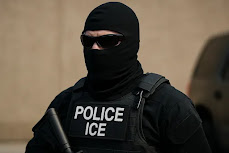
their duties. Senator Wiener described the bill as targeting secret police tactics, particularly by federal Immigration and Customs Enforcement (ICE) agents. He argued that routine masking fosters mistrust, instills fear, and emboldens officers to violate civil rights with impunity.
any opaque mask, garment, helmet, headgear, or other item that obscures facial
identity, such as balaclavas, tactical masks, or ski masks. The law includes narrow exceptions for certain safety equipment and circumstances, but they are vague and open to conflicting interpretations. Violations
constitute infractions or misdemeanors, with additional penalties including loss of immunities and statutory liability of $10,000.00 for
tortious conduct committed while masked. Under the bill, enforcement agencies must develop policies to ensure officers adhere to these provisions by July 2026.
Risks to Officer Safety and Operational Efficiency
In his testimony, Mastagni
that facial coverings serve crucial safety functions for law enforcement officers and federal agents. Masks and helmets are often integral to protecting identities during sensitive, undercover, or tactical operations. Such protective gear shields officers and agents from retaliation, threats, or targeted harassment.
He pointed out how the overly narrow and vague exceptions in the bill endanger officer safety and operational effectiveness.
For example, the bill’s prohibition on motor officers wearing helmets unless using a motorcycle contradicts
standard training and roadside safety protocols. An officer could be exposed to fentanyl or other dangerous chemicals during a routine search of a car or home and need to cover their face with anything available in order to survive.
The bill also imposes burdens on local
agencies by requiring them to develop compliant policies by July 2026. Law enforcement groups, such as PORAC and CPCA, fear that theses heightened safety risks and exposure to liability will exacerbate California’s police staffing crisis.
The Law Contradicts Established Federal and State Precedents: The Supremacy Clause
Mastagni addressed the bills
application to federal officers, citing Supreme Court precedent under the
Supremacy Clause, including Cunningham v. Neagle (1890), which protects federal
agents from state criminal prosecution when acting within their official
duties. In Arizona v. United States (2012), the Court invalidated state laws
intruding on federal immigration enforcement. The same applies here. States cannot second guess
federal policies, such as ICE directives authorizing masks for officer
protection. The bill creates conflict preemption, as officers cannot comply
with both state and federal rules without compromising safety or mission
effectiveness.
Senator Wiener and supporters
of S.B. 627 often refer to an op-ed by Erwin Chemerinsky, dean and professor of
law at the UC Berkeley School of Law, to support the bill’s constitutionality.
This argument fails. Professor Chemerinsky contends that S.B. 627 can regulate
federal agents’ mask wearing because it is a law of general applicability that
applies to all law enforcement officers rather than specifically targeting
federal operations. Notably, he omits reference to the exclusion of California state peace officers. He compares the bill to federal agents’ compliance with everyday
state laws like traffic rules.
Flawed Legal Justifications and Misinterpretations
Although written as a “general” law, it cannot be applied to federal officers if it interferes with federal operations. While appearing facially neutral, its
practical effect substantially interferes with federal law enforcement
operations in ways that traffic laws do not. Federal immigration enforcement
involves unique considerations, including officer safety from targeted
retaliation and protection of sensitive investigations that local law
enforcement typically does not face. This creates an undue burden on federal
operations that triggers intergovernmental immunity principles, protecting federal
activities from state interference even when laws appear neutral on their face.
Chemerinsky further asserts
that requiring officers not to wear masks does not constitute a significant
burden on federal activities and does not impede federal agents’ performance of
their duties. This overlooks the fundamental differences between local policing
and federal immigration enforcement. Federal agents frequently operate in
sensitive contexts where identity protection is critical for both officer
safety and operational success. Even if only 10 percent of operations require
face coverings, that represents thousands of high risk federal operations
annually where agent safety would be compromised.
Courts typically defer to
federal determinations that prohibitions on face coverings create substantial
burdens on operations by compromising officer safety, operational security, and
effectiveness. The legislation seeks to second guess policy determinations that
federal agents, particularly in immigration enforcement, face unique threats
from targeted retaliation against them and their families through doxing and
harassment. The inability to protect their identities would significantly
impair their ability to conduct sensitive operations, gather intelligence, and
work undercover. These burdens are concrete operational impediments that
directly interfere with federal law enforcement functions.
Chemerinsky cites Ninth
Circuit precedent that states can prosecute federal agents criminally if their
actions are objectively unreasonable, suggesting this provides a pathway for
enforcement of S.B. 627 against non compliant federal officers. He primarily
relies on the vacated Ninth Circuit decision in Idaho v. Horiuchi, 253 F.3d 359
(Ninth Cir. 2001), vacated at 266 F.3d 979 (Ninth Cir. 2001). The Ninth
Circuit’s objectively unreasonable standard applies to federal agents who exceed
their authority or violate constitutional rights, not to agents following
lawful federal protocols. Wearing masks during legitimate operations is
standard procedure for many federal agencies based on assessed security risks
and operational needs. Criminalizing conduct that follows established federal
guidelines would allow state law to dictate federal operational procedures,
creating an impermissible state veto over federal law enforcement methods. This
directly conflicts with Supremacy Clause principles that protect federal operations
from state interference.
When asked if Legislative
Counsel had time to review S.B. 627 to determine if it would hold up in court,
Senator Wiener dodged the question. U.S. Attorney Martin Estrada for the
Central District of California stated that federal agents will not alter their
practices, calling the law unconstitutional and preempted by federal authority.
Local officers may face the impossible task of enforcing S.B. 627 against
federal personnel, risking claims of obstruction or false arrest if courts invalidate the
statute.
Threat to Immunities Local
Officers Need to Perform Their Duties
Committee hearing, Senator Wiener and his supporters erroneously claimed that the bills’ “knowing and willful” violation language shields officers who make good faith mistake regarding whether an exemption applies from the bill’s criminal penalties, including loss
of immunity. Mastagni pointed out that as drafted “knowing and willful” refer only to the intentional decision to cover an officer’s face, not intentionally breaking the law. This general intent standard exposes officers to lawsuits for assault, battery, false imprisonment, or malicious prosecution with at least $10,000 damages, even with no actual harm. The bill’s “notwithstanding any other law” clause overrides basic protections for our officers like indemnification under Government Code 825. That exposes officers to personal liability for a good faith mistake about whether an exception applies. Mistake of law, such as erroneously believing conduct fits a legal exemption, is generally not a defense, as it does not negate the intent to commit the underlying act.
The late addition of language stripping local peace
officers of immunity is the single most troubling aspect of S.B. 627. Officers
operate under carefully balanced immunities, including Civil Code section
43.55, Penal Code sections 836 and 847, and Government Code section 821.6,
which shield them from personal lawsuits when they act in good faith and within
the scope of duty. S.B. 627 overrides those protections solely because a face
covering is involved, regardless of intent.
The bill’s exemptions are too
narrow and vague to adequately protect local officers, who do not enforce
immigration laws. State officers are exempt from the bill’s provisions. The
severability clause ensures that if the law cannot apply to federal officers,
its restrictions will still bind local California law enforcement. This means
the Trump administration will likely have an easy win in court, invalidating
application of the law to federal officers through preemption challenges. The
severability clause in the bill leaves local officers bearing the full brunt of
the criminal penalties and loss of immunities.
Enforcement Concerns
California Senate Bill 627 introduces significant legal challenges for law enforcement officers, particularly concerning potential obstruction violations. The bill’s provisions aim to enhance accountability by stripping qualified immunity and good faith defenses if officers are found to have acted with masked intentions. This legislative change underscores the delicate balance officers must maintain between executing their enforcement duties and adhering to the stringent requirements set forth by SB 627.
Federal law provides comprehensive protection for Immigration and Customs Enforcement agents through multiple statutory frameworks. Under 18 U.S.C. § 111, it is a federal crime to forcibly assaults, resists, opposes, impedes, intimidates, or interferes with any person designated in section 1114 of this title while engaged in or on account of the performance of official duties. ICE agents are covered under section 1114 as federal law enforcement officers. The statute imposes escalating penalties: simple obstruction carries up to one year imprisonment, while obstruction involving physical contact or intent to commit another felony increases the maximum penalty to eight years. ICE agents are covered under section 1114 as federal law enforcement officers. The statute imposes escalating imprisonment penalties.
Ironically, federal qualified immunity doctrine would likely protect local officers from civil liability under 42 U.S.C. § 1983 for arresting masked ICE agents, even if the arrest later proves unlawful. The Supreme Court has held that qualified immunity protects government officials unless the contours of the right must be sufficiently clear that a reasonable official would understand that what he is doing violates that right. No clearly established federal law prohibits state officers from enforcing state identification requirements against individuals who refuse to identify themselves, even if those individuals are federal agents.
California immunity statutes would likely provide additional protection. California officers acting under state authority would have reasonable grounds to believe their actions were justified under California Penal Code Section 847(b)(1). The good faith immunity, which protects officers who act with a reasonable belief that their conduct is lawful, also faces limitations under the new bill. The removal of this defense in cases of masked actions places officers in a precarious position, requiring them to exercise heightened diligence and judgment in their interactions with the public.
Conclusion
The legal complexities introduced by SB 627 necessitate a thorough understanding of the bill’s provisions and the potential defenses available. Officers must navigate these challenges while ensuring compliance with the law, a task that demands both legal acumen and practical wisdom. As the legal landscape evolves, the ability to effectively balance enforcement responsibilities with the mandates of SB 627 will be crucial for law enforcement professionals in California.
Watch the full Senate Public Safety Committee hearing on SB 627 below.