

This is an article that was written by Sean Hayes and appeared in the Korean Times on 10/04/2007 concerning the jurisdiction of the Korean Constitutional Court and the Korean Supreme Court. Sean Hayes is the first non-Korean attorney to work for the Korean government.
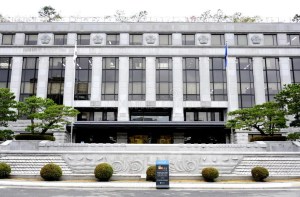
Dear Professor Hayes: I am studying Korean Law at SNU as an exchange student. I am wondering what is the difference between the function of the Supreme Court of Korea and the Constitutional Court of Korea and which court is the higher court. Student at SNU
Dear Student at SNU: Since the commencement of my relationship with the Constitutional Court in 1999, I have noticed a drastic increase in foreigner’s awareness of the Constitutional Court. News stories have been published in all major foreign publications, visitors from around the world have visited the Court, numerous law review articles have been printed in foreign journals and the Court justices and researchers have attended and actively participated in conferences throughout the world. Next week the Court will even host the 5th Conference on Asian Constitutional Court Justices.
Some, including myself, have noted that the Korean Constitutional Court is one of or maybe even the only court in Asia that has true power to declare law unconstitutional. The reason for this power stems, at least partially, from the institutional respect that people have in the Court. According to a poll by a local vernacular the Court is the most respected government institution in Korea.
Student at SNU, to answer your question, the Court is a court of limited jurisdiction. The Constitution’s article 111 creates the jurisdiction of the Court. The Court may hear cases concerning: the constitutionality of statutes upon the request of the ordinary courts; impeachment; dissolution of a political parties; competence disputes between state agencies, between a state agency and a local government, or between local governments; and constitutional complaints filed directly to the Court challenging the face of law.
The Court thus may only hear the aforementioned cases and the ordinary courts may hear all other cases. Thus, neither court is a higher court; simply, each court has its own role in the system.
However, the Korean Constitutional Court hears cases with more significance to the nation. For example, the Court ruled not to remove the current president after the National Assembly voted to impeach him; that the bill to move the nation’s capital, supported by the current president, was unconstitutional; that numerous laws restricting the right to speech and assembly were unconstitutional; that laws not providing “just compensation” for expropriation, use or restriction on property were unconstitutional; that laws limiting the access to an attorney were unconstitutional.
These cases along with the over 450 cases declaring law unconstitutional or non-conforming to the constitutional have assisted in moving Korea from authoritarian rule to constitutional democracy.