

Skip to content

Menu

LexBlog, Inc. logo
NetworkSub-MenuBrowse by SubjectBrowse by PublisherJoin the NetworkGet StartedSubscribeSupportContact
Search
Close

When Can a Defendant Immediately Appeal a Denied Defense in Federal Court?

By Jake Leahy on February 26, 2026
Email this postTweet this postLike this postShare this post on LinkedIn
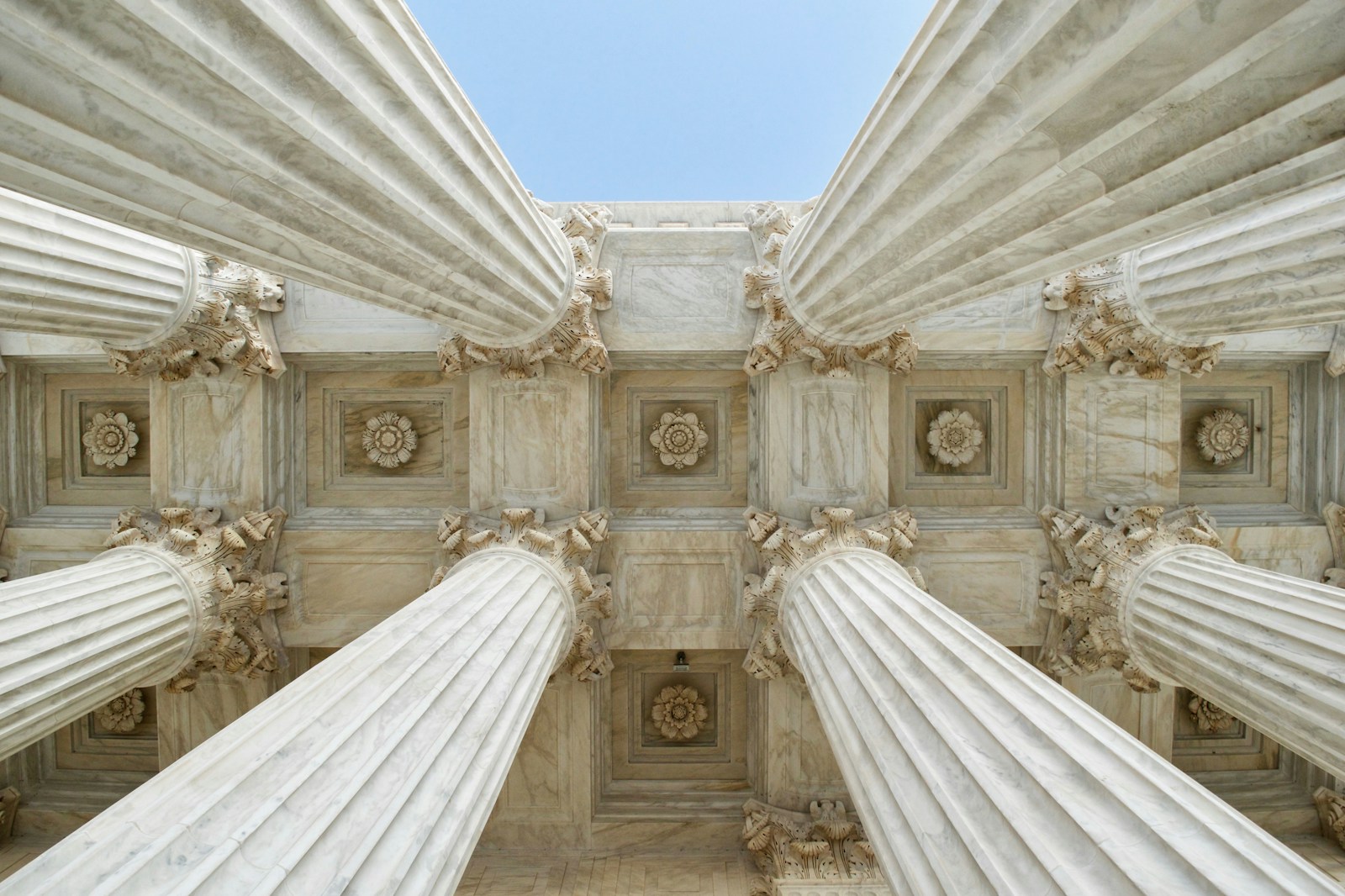
Pillars of the Supreme Court of the United States
Jesse Collins, Unsplash

Yesterday the Supreme Court decided GEO Group, Inc. v. Menocal, 607 U.S. ___ (2026), holding that the federal contractor doctrine recognized in Yearsley v. W.A. Ross Construction Co., 309 U.S. 18 (1940), is a merits defense rather than an immunity from suit. Because it is a defense to liability and not a right to avoid litigation altogether, a district court’s rejection of the defense cannot be immediately appealed under the collateral-order doctrine.

The decision is nominally about government contractors. Its real significance is about appellate timing and litigation leverage. The Court sharpened the line between arguments that defeat liability and doctrines that prevent litigation from occurring at all. That line determines whether a defendant can stop a case early through interlocutory appeal or must litigate through final judgment before obtaining appellate review.

The Court emphasized that a merits defense argues lawful conduct. An immunity does not depend on the legality of the conduct and instead protects against the burdens of litigation itself. Because immunity is an entitlement not to stand trial, denial of immunity is effectively unreviewable after final judgment. A merits defense is different. If wrongly rejected, it can still be vindicated after trial by reversal of liability. That difference controls appealability.

The Court rejected the idea that Yearsley creates “derivative sovereign immunity,” reiterating that sovereign immunity belongs to the government itself and does not transfer to private actors simply because they perform federal work.

The classification has immediate consequences. Government authorization arguments appear frequently in disputes involving contractors, grant recipients, healthcare entities, infrastructure operators, and quasi-public organizations. Those arguments often function as threshold defenses that defendants want resolved before expensive discovery. After GEO Group, courts are likely to treat them as merits defenses unless they truly confer a right not to be sued at all.

That matters because interlocutory appeals delay proceedings and often drive settlement pressure. If a defense cannot be appealed immediately, defendants must assume they will litigate through summary judgment or trial before appellate correction.

The Court also reinforced the narrowness of the collateral-order doctrine. Immediate appeals remain the exception reserved for structural protections like sovereign immunity, qualified immunity, double jeopardy, and Speech or Debate Clause immunity. Defenses that merely defeat liability do not qualify, even if they are dispositive.

The practical takeaway is that calling something an immunity does not make it one. Courts will look to whether the doctrine protects against liability or against litigation itself. If it is the former, appellate review will usually wait.

GEO Group does not change the substance of the Yearsley defense. It changes when defendants can rely on appellate courts to enforce it. And timing, in litigation, often matters as much as substance.

If you have a question about what this means in a lawsuit you are defending in federal court, feel free to contact Jake A. Leahy at Airdo Werwas, LLC. Listen to the syllabus here.

Jake Leahy

Jake A. Leahy

Attorney

Jake A. Leahy is a tax attorney at Airdo Werwas who counsels nonprofits, local governments, and businesses in tax, regulatory, and commercial matters.

He is a former Assistant Illinois Attorney General in the Revenue Litigation Bureau, where he handled…

Jake A. Leahy

Attorney

Jake A. Leahy is a tax attorney at Airdo Werwas who counsels nonprofits, local governments, and businesses in tax, regulatory, and commercial matters.

He is a former Assistant Illinois Attorney General in the Revenue Litigation Bureau, where he handled estate tax litigation, collections audits, and matters involving various state agencies. He previously served as a Judicial Law Clerk in the Circuit Court of Cook County, Law Division, Tax & Miscellaneous Remedies Section, working on administrative review actions, commercial disputes, and tax-related litigation.

Jake previously served on the Board of Education for Bannockburn School District 106 from 2017 to 2023, including as Vice President from 2020 to 2023. His experience in local government informs his work with public-sector clients, boards, and nonprofit organizations.

Jake is active in professional and bar organizations. He serves as an Assembly Member of the Illinois State Bar Association, Chair of the Chicago Bar Association’s State & Local Tax Committee and Young Lawyers Section Federal Tax Committee, and a member of the Editorial Board of the DuPage County Bar Association. He was recognized by the Illinois State Bar Association with its Law Student Public Service Award during law school, and by the Internal Revenue Service for his work with the Low-Income Tax Clinic at Holy Name Cathedral.

Jake earned his LL.M. in Taxation from Georgetown University Law Center, his J.D. from the University of Illinois Chicago School of Law, and his B.A. from the University of Illinois at Urbana-Champaign. He is admitted to practice in Illinois, the U.S. Tax Court, and the U.S. District Court for the Northern District of Illinois.

Outside of practice, Jake has completed three marathons, is a regular at Wrigley Field, and appreciates Chicago architecture.

Education

    • Georgetown University Law Center, LL.M. in Taxation, 2025

    • University of Illinois Chicago School of Law, J.D., 2023

    • University of Illinois at Urbana-Champaign, B.A. Political Science: Public Policy & Democratic Institutions, 2019

Admitted to Practice

    • Northern District of Illinois, 2025

    • U.S. Tax Court, 2024

    • Illinois, 2023

Associations

    • Illinois State Bar Association

    • Chicago Bar Association

    • American Bar Association, Tax Section

    • DuPage County Bar Association

    • Celtic Law Association

Read more about Jake LeahyEmailJake's Linkedin Profile
Show more Show less
  • Posted in:
    Government Contracts, Other
  • Blog:
    Leahy Tax Blog
  • Organization:
    Jake Leahy
  • Article: View Original Source

Call us at 1-800-913-0988 or email sales@lexblog.com.

Facebook LinkedIn Twitter RSS
The Library at LexBlog
  • About LexBlog
  • The Field We Built
  • Library at LexBlog
  • Our Beliefs
  • Our Team
  • Contact LexBlog
  • Disclaimer
  • Editorial Policy
  • Terms of Service
  • Get Started
  • Publishing Solutions
  • Compass
  • Submit a Request
  • Support Center
  • System Status
Copyright © 2026, LexBlog, Inc. All Rights Reserved.
Law blog design & platform by LexBlog LexBlog Logo