

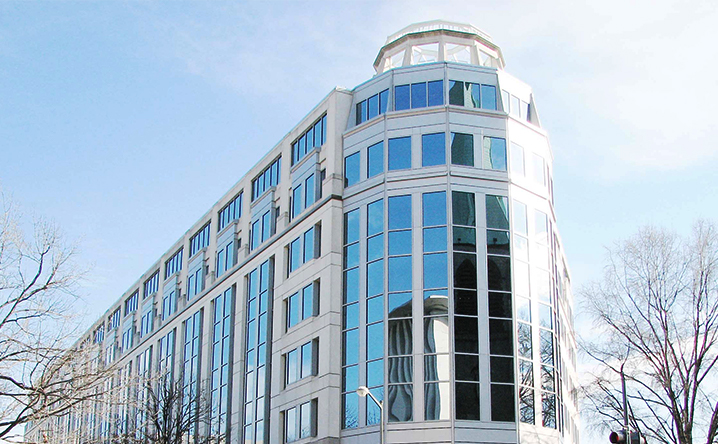
On July 16, 2026, the U.S. Senate confirmed five nominees to serve as Commissioners of the U.S. International Trade Commission (USITC or Commission) by voice vote, restoring the agency to its full six-member panel for the first time in years. The Senate Finance Committee had approved all five nominations with large bipartisan support the day prior.
Background
The USITC is an independent, nonpartisan, quasi-judicial federal agency with a central role in U.S. trade policy and enforcement. By statute, the Commission consists of six commissioners nominated by the President and confirmed by the Senate, with no more than three commissioners from the same political party. Commissioners serve staggered nine-year terms. The President designates the Chairman and Vice Chairman for two-year terms, and those roles must be held by members of different political parties.
As per the ITC Strategic Plan for 2022-26, the Commission’s work generally fell into three areas: (1) adjudication of trade disputes, including antidumping and countervailing duty (AD/CVD) injury determinations and Section 337 intellectual property investigations; (2) independent trade research and analysis for Congress and the President, including Section 332 fact-finding investigations; and (3) maintenance of the Harmonized Tariff Schedule of the United States (HTSUS).
The Confirmed Commissioners
Together with Chairman David S. Johanson (Republican, Texas), the newly confirmed commissioners complete the six-member panel.
- Brett Doyle (Republican, Connecticut) – In Senate Finance Committee responses, Doyle emphasized the integrity and effectiveness of trade remedy proceedings, highlighted illegal transshipment and circumvention of AD/CVD orders as key concerns, and noted criticism that certain Commission economic models may be “materially deficient,” committing to work with Congress on methodological improvements.
- David Foley, Jr. (Republican, Virginia) – Foley is an acquisition law attorney and U.S. Air Force Reserve officer. He emphasized intellectual property (IP) protection and, at his hearing, committed to hastening completion of IP matters—an issue of particular interest for Section 337 practitioners.
- Samuel Negatu (Democrat, District of Columbia) – Negatu highlighted experience with trade impacts on manufacturing communities and repeatedly emphasized the Commission’s independent role, adherence to the statutory framework, and analytical rigor. He also expressed support for applying adverse inferences against non-cooperating foreign producers where permitted and for continual evaluation of the Commission’s analytical tools.
- Peter-Anthony Pappas (Republican, New Jersey) – An IP attorney with substantial Section 337 experience, Pappas focused on IP enforcement and concerns about strategic exploitation of U.S. legal proceedings. He addressed the interaction of Section 337 investigations with automatic stays under 28 U.S.C. § 1659 and flagged the Commission’s proposed rulemaking on third-party litigation funding disclosure in Section 337 proceedings.
- Bartholomew Thanhauser (Democrat, New York) – A former USTR trade negotiator with experience on labor and environmental issues, Thanhauser discussed circumvention tools, committed to applying adverse inferences to the fullest extent allowed by law where foreign producers do not cooperate, and noted potential intersections between forced labor prohibitions under 19 U.S.C. § 1307 and unfair trade practices.
What This Means
With a full panel in place, there are potential impacts across the Commission’s primary workstreams:
- Several of the confirmed commissioners, particularly Foley and Pappas, signaled heightened attention to IP enforcement challenges, including those involving China-linked actors.
- All five commissioners emphasized faithful application of the statutory injury framework. Common themes included circumvention and transshipment, highlighted by Doyle, Pappas, and Thanhauser, as well as a willingness by Doyle and Thanhauser to apply adverse inferences where appropriate when foreign producers fail to cooperate.
- Each commissioner indicated support for responding to Section 332 investigation requests from the Senate Finance Committee, including on topics such as digital trade barriers, pharmaceutical pricing, and FTA partner compliance.
- Restoring all six seats returns management flexibility that was constrained under the three-member quorum. This may affect staffing, scheduling, and the Commission’s capacity to manage complex dockets
Conclusion
The confirmation of the five new commissioners comes at a time when trade enforcement and industrial policy remain central to U.S. economic and geopolitical strategy. Parties with pending or anticipated USITC proceedings, whether in Section 337, AD/CVD, safeguard, or Section 332 contexts, should take note of the new Commission and the priorities flagged by incoming commissioners.
The Husch Blackwell International Trade and Supply Chain team will continue to monitor developments at the USITC and will provide updates as they become available. If you have questions about ongoing or anticipated USITC proceedings or the implications of the newly confirmed commissioners for your matters, please contact your Husch Blackwell attorney.