

Understanding Your Fourth Amendment Rights During a Traffic Stop
This is a good question that has many possible answers…and raises the question whether that search may be legal under the law or prohibited by your 4th Amendment protection.
To answer that, we must look at why your car was stopped in the first place.
Traffic Stops for Vehicle Code Violations
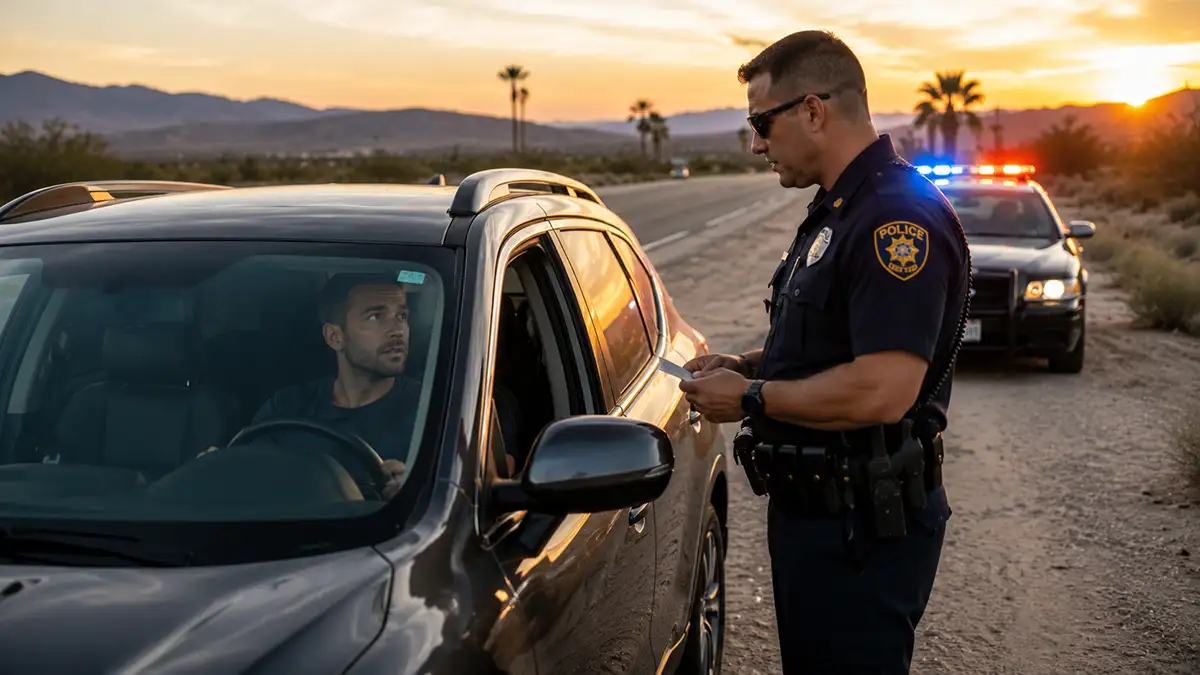
If a cop stops you for a traffic violation, something regulated by the California Vehicle Code like speeding above the posted speed limit or above the basic speed law (going too fast for the conditions and the roadway) or running a red light at an intersection controlled by signal lights, then the law says the cop is supposed to only concern himself with warning you of your violation or writing up a citation for you for that violation of the vehicle code.
The officer should not go beyond the administrative function of the citation and ask you any questions about what you have in your car or on your person that may be illegal to possess or what it is he suspects that you have been doing illegally in your car.
What the Fourth Amendment Protects
The Fourth Amendment is the part of the U.S. Constitution that protects people from unreasonable searches and seizures by the government.
This part of the Constitution sets up rules for obtaining and executing search warrants, it mandates the requirement for probable cause and protects personal privacy.
That means that if the traffic stop was only for the vehicle code violation that may have been committed, then the cop can’t go beyond the warning of the traffic violation or the writing of a citation by questioning you or searching you or your vehicle in a way that would violate your personal privacy.

When Police May Have a Legal Reason to Investigate Further
Now what happens then if you get stopped in your vehicle, because a cop sees you swerving on the roadway or driving in some unsafe erratic way.
The cop is going to investigate what may be causing that bad driving by stopping your vehicle and asking questions that will seem to invade your privacy.
But that isn’t unlawful.
He has some reasonable suspicion or probable cause to believe that you are driving poorly because you are either under the influence of a drug or alcohol or you are not competent to safely operate the vehicle.
Once he questions you and determines that a wasp was loose in the interior compartment of your vehicle and you were just trying to keep from being stung by the nasty insect, he has no reason to go further and his probable cause to investigate or search any further is gone.
What If the Officer Smells Alcohol or Marijuana?
But what if he smells alcohol or marijuana on your breath?
What can the cop do then?
He can question you further to see if he has probable cause to believe you have been driving under the influence of something that has impaired your ability to drive safely.
You may answer his questions, but you do not have to answer.
You have the right to remain silent.
If you do so, you will probably be arrested because of his suspicion based upon the bad driving and the odor of some intoxicating substance.
Then if he places you under arrest, he will have the right to do an inventory search of your vehicle to ensure that you or the cop are not leaving something valuable in the vehicle that can be lost or stolen.
He MAY also ask you for consent to search your vehicle before or after arrest.
NEVER GIVE CONSENT TO SEARCH YOUR PERSON OR VEHICLE!

If Illegal Evidence Is Found
If the cop does search and finds something illegal in your car, that illegal item you possess will lead to your arrest and charging in court for that item.
You don’t want to make it any more difficult for your attorney to get the evidence suppressed if he or she can, by consenting or agreeing to any intrusion into your personal privacy.
Experienced Help with Search and Seizure Cases
If you are arrested and charged for some unlawful item that you possessed, call or text us at 760-898-0205 immediately and we will help you with your court case.
We are very experienced with search and seizure cases and have won many motions to suppress evidence.

Call (760) 345-4777 or Text (760-898-0207) for a free consultation to discuss what your legal rights are and possible defenses in your case.
The post Can the Police Search Your Car After a Traffic Stop? appeared first on Jimenez Law Offices – Palm Desert Defense Attorney / Palm Springs DUI Attorney.