

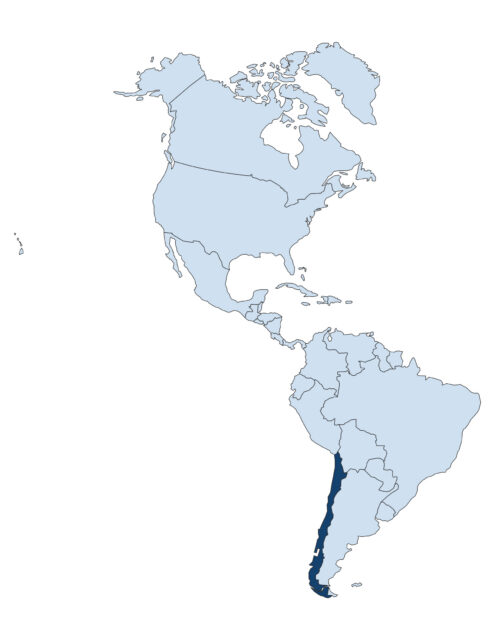
On July 29, Publix recalled every lot of GreenWise Organic Whole Blueberries and Whole Mixed Berries — 10-ounce and 48-ounce, blueberries and mixed berries alike — after a July 3 recall by the Chilean grower-packer had covered exactly one lot of one product. The bug is E. coli O145:H28. Twelve people are confirmed sick in Florida and Georgia, four of them hospitalized, and the ages run from 2 to 88.
Here is the sequence. People started getting sick on May 11. The last known onset was June 5. Florida’s health department notified CDC on July 1, Publix pulled the product from shelves internally at the end of June, and Frutas y Hortalizas del Sur S.A. of San Carlos, Chile recalled lot 60401 on July 3 — best by February 9, 2028. Seven of the nine cases interviewed said they ate frozen blueberries; five named GreenWise from Publix. Then, four weeks later, the recall grew to everything.
That expansion is the most informative thing in the file, and it deserves more attention than it has gotten. You do not go from one lot to all lots because you are confident the problem was one field on one day. You do it because you can no longer defend the boundary. Something in the traceback — shared water, a shared line, a shared freezing tunnel — told investigators the contamination was not confined to a single harvest. Publix framed it as an abundance of caution. Abundance of caution is what companies say when the alternative explanation is worse.
What makes this outbreak genuinely unusual is the food. Berries have an ugly outbreak history, but it is almost entirely viral and parasitic — Cyclospora on Guatemalan raspberries in the 1990s, hepatitis A on frozen strawberries, the German norovirus outbreak that hit roughly 11,000 schoolchildren from imported frozen strawberries, the 2013 European frozen-berry hepatitis A outbreak. FDA’s own frozen-berry sampling assignment found exactly that pattern: out of 812 domestic and imported samples, hepatitis A genetic material in five and norovirus in eight. Not one Shiga toxin-producing E. coli.
Blueberries in particular have been close to a blank page. The food science literature says plainly that blueberries are rarely implicated in outbreaks. The recent blueberry events have been test-and-recall with nobody sick — a Georgia packer pulled 12,000 pounds of organic blueberries on a Listeria finding in June 2025 and no illnesses followed.
The one real precedent for a berry carrying STEC is one I know well. In July 2011, fifteen people in Oregonwere infected with E. coli O157:H7 after eating strawberries from roadside stands and farmers markets. Six were hospitalized, four developed hemolytic uremic syndrome, and two of them died. Investigators pulled 111 environmental samples from the farm; ten came back positive, every single positive contained deer feces, and five different fields were hit. Deer wandered through a low-growing berry field, and two people died of it.
That is the template, and it is almost certainly the shape of what happened here. O145:H28 lives in the guts of cattle and other ruminants. Something carrying ruminant manure reached the fruit or the water that touched the fruit — irrigation or frost-protection water drawn downstream of grazing, runoff after rain, wildlife in the rows, a manure-based soil amendment. Then the product did the rest of the work. Blueberries headed for the freezer are machine-harvested, shaken off the bush onto catch plates and conveyors, so ground and equipment contact is routine. There is no kill step anywhere downstream. Freezing does not kill this organism; it preserves it. And a best-by date of February 2028 means contaminated fruit sits in American freezers for another eighteen months.
Which brings me to the part that should bother everyone. A confirmed STEC O145:H28 attribution to frozen blueberries would be a first — a new vehicle for a serotype that has a bad habit of causing clusters nobody ever solves. And a month into it, FDA has published no root cause, no environmental assessment, no farm or water sampling result, no explanation of what changed between July 3 and July 29. CDC’s case count has not moved since July 6.
Twelve is the number of people who got a stool culture, whose isolate got sequenced, and who landed in PulseNet. It is not the number of people who got sick. The real figure for a STEC outbreak is many multiples of that, and every one of those people bought a bag of frozen fruit at a grocery store and fed it to their family.
Tell us how it got in the berries. Tell us whether this lot retrospectively explains an earlier O145:H28 cluster that was closed as source unknown. And tell us what is being done at the border about a product with a shelf life running into 2028.