

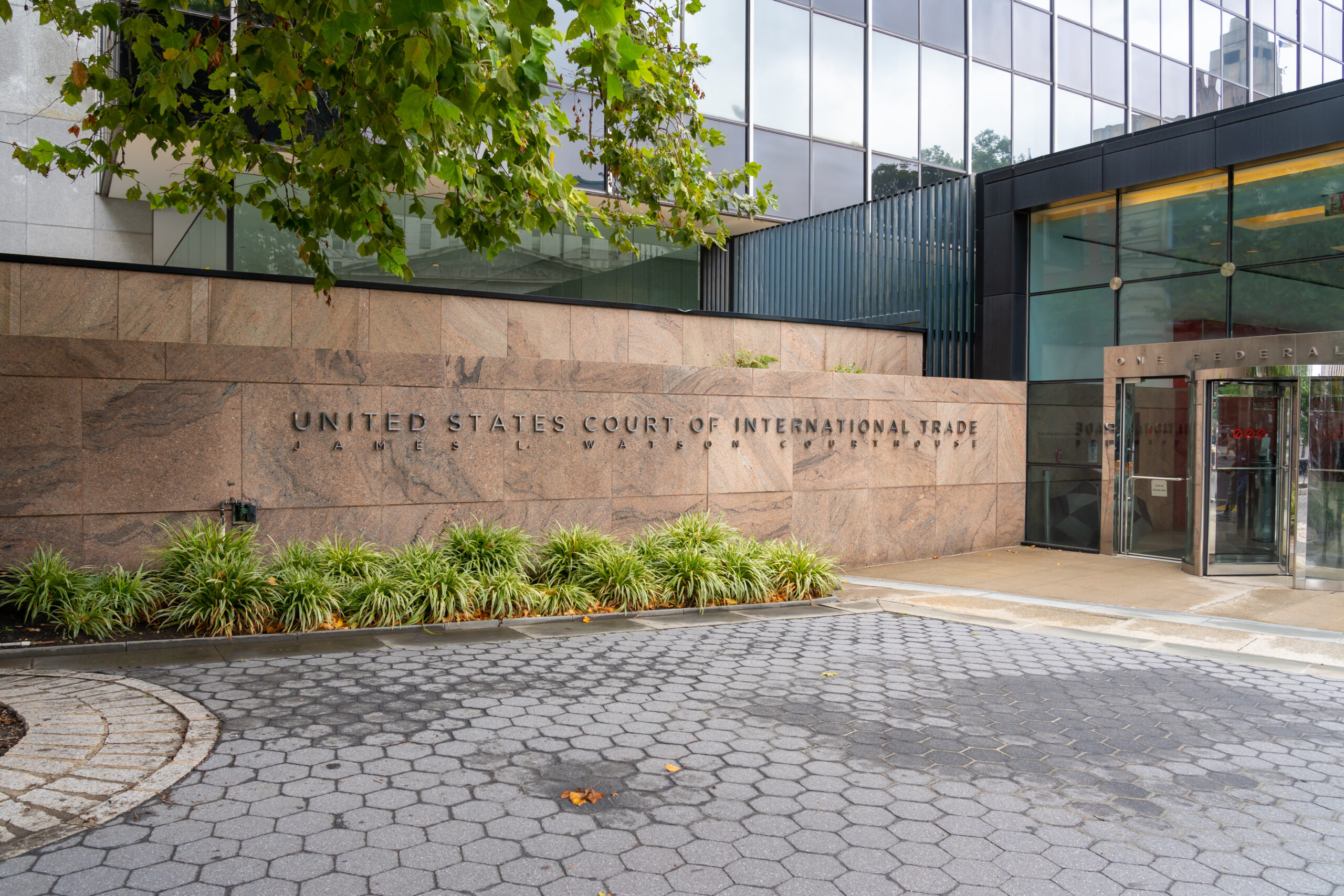
On August 3, 2026, the state attorney generals of twenty-five states (25) co-led by State of Oregon, Arizona and California filed a complaint in the Court of International Trade (CIT) challenging tariffs imposed under Section 301 of the Trade Act of 1974 (Section 301) to address forced labor. The complaint alleges that Section 301 forced labor tariffs are ultra vires, arbitrary, capricious and contrary to law.
This complaint by the 25 state attorney generals challenging the legality of the Section 301 forced labor tariffs, joins other lawsuits pending before the CIT that were filed by small business plaintiffs, Burlap and Barrel, Inc. and Collective Horology LLC.
Background
The forced labor Section 301 tariffs which took effect on July 24, 2026 followed investigations into global forced labor policies initiated by the Office of the United States Trade Representative (USTR) on March 12, 2026, which concluded that 60 economies failed to adequately impose or enforce prohibitions on the importation of goods produced with forced labor, thereby warranting tariffs. Tariffs range from 10% to 12.5% for countries and apply to nearly all goods from the affected countries save for limited exceptions such as for certain agricultural products or products subject to Section 232 national security tariffs.
The Section 301 tariffs were imposed on the same day that the administration’s tariffs under Section 122 of Trade Act of 1974 expired (“Section 122”). The Section 122 tariffs applied at the rate of 10% to nearly all imports from all countries and were limited to a statutory period of 150 days. Relatedly, the Section 122 tariffs were announced on the same day that the United States Supreme Court found that tariffs imposed by the Trump administration under the International Emergency Economic Powers Act, were unlawful.
The attorney generals allege that the Trump administration has used forced labor as a “pretext to continue its illegal tariff scheme” and that the tariffs are “so broad they defy the USTR’s own stated aims and make a mockery of the statute used to justify them.”
Claims Raised
The complaint claims that the Section 301 tariffs are a violation of the Administrative Procedure Act (APA) because USTR action is in excess of statutory authority, contrary to law and is arbitrary and capricious.
With respect to the first claim, the complaint cites to Section 301 which allows the USTR to take “all appropriate and feasible action authorized . . . subject to the specific direction, if any, of the President . . . to obtain the elimination of [the unfair] act, policy, or practice.” (original emphasis)
The complaint states that USTR acted outside statutory authority by (i) failing to engage in negotiations with concerned foreign countries as required under Section 304 of the Trade Act of 1974, (ii) imposing across-the-board tariffs that are not tied to ending or reversing the investigated conduct, (iii) imposing tariffs “en masse” and not targeting action on a selective basis and (iv) conducting a pretextual investigation and failing to explain why rates of 10%-12.5% are “appropriate” to eliminate forced labor practices or are the “appropriate” level for each of the 60 countries concerned.
As to the second claim, the complaint states that the APA requires that a court must set aside final agency action that is “arbitrary, capricious, an abuse of discretion, or otherwise not in accordance with law.” It claims USTR’s imposition of Section 301 tariffs is arbitrary and capricious because it is unsupported by a “rational connection between the facts found and the choice made” and is not “reasonable or reasonably explained.”
Specifically, the complaint alleges that USTR’s imposition of Section 301 tariffs in a nearly uniform fashion across 60 countries without an adequate rational or without consideration of relevant differences between countries is proof that the tariffs are not reasonably calculated to reduce use of forced labor and are therefore unreasonable. The complaint further alleges that USTR failed to meaningfully engage in or respond to the comments and testimony sought through the Section 301 process. By engaging in a process that was “clearly intended to arrive at a predetermined outcome”, USTR, it is claimed, engaged in capricious decision-making.
The plaintiffs claim they have directly suffered financial harm from the tariffs and have standing to bring the lawsuit. The states directly import goods that are subject of the tariffs at issue, as well as purchase imported goods subject to the tariffs from vendors that pass along the cost of tariffs to the plaintiff states.
The Husch Blackwell International Trade and Supply Chain team is continuing to monitor the litigation and will provide updates as they become available. If you have any questions or concerns, please contact your Husch Blackwell attorney.