

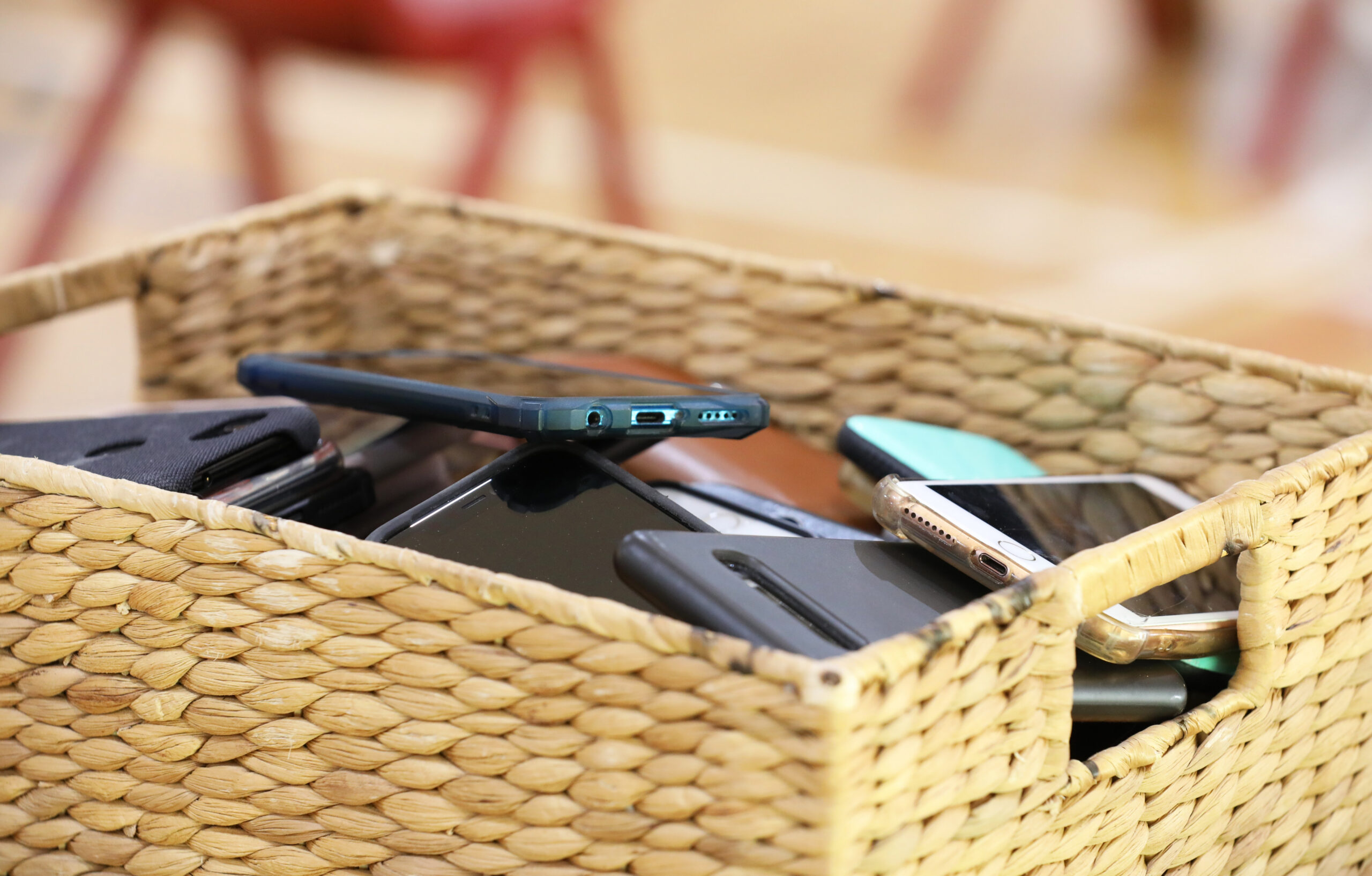
The debate over the role of technology in classrooms is not new, but the pace and scope of legislative action recently has accelerated. These actions appear to be driven by growing concerns over student mental health.
The Educational Landscape
As of June 2, 2026, 38 states and the District of Columbia require school districts to ban or restrict students’ use of cell phones in schools. Many of these states, however, carve out exemptions for students with Individualized Education Programs (IEPs) or documented health needs, for emergency situations, and for the exercise of teacher discretion.
The laws in eight states, including Delaware, Iowa, Kentucky, Michigan, Nevada, North Carolina, Tennessee, and Wisconsin, require districts to prohibit cell phone usage during instructional time.
In addition, 29 states require districts to prohibit cell phone usage during the entire school day. These states are Alabama, Arizona, Arkansas, California, Washington, D.C., Florida, Georgia, Hawaii, Idaho, Indiana, Kansas, Louisiana, Maine, Maryland, Missouri, Nebraska, New Hampshire, New Jersey, New York, North Dakota, Ohio, Oklahoma, Oregon, Rhode Island, South Carolina, Texas, Utah, Vermont, and Virginia. Of these, Florida, Hawaii, Louisiana, South Carolina, and Utah have a single state-level policy, whereas the other states require districts to adopt policies reflecting these restrictions.
Minnesota and West Virginia likewise require districts to adopt policies restricting cell phone usage but do not specify whether cell phones should be restricted during the entire school day or solely during instructional time. Accordingly, districts in these states have discretion regarding the scope of their cell phone bans.
Only 12 states do not require districts to adopt a policy banning or restricting cell phones in the classroom. These states include Alaska, Colorado, Connecticut, Illinois, Massachusetts, Mississippi, Montana, New Mexico, Pennsylvania, South Dakota, Washington, and Wyoming.
The Debate
The surge in cell phone bans comes alongside a 2026 U.S. Surgeon General’s Advisory detailing the “harms of screen use.” The Advisory recommended that schools implement “bell-to-bell” policies prohibiting students from using cell phones for the entire school day. According to the Advisory, bell-to-bell policies could reduce classroom distraction, bolster academic outcomes, and improve peer relationships.
Proponents of the bell-to-bell policies believe that the cell phone bans enhance students’ focus in the classroom, increase their mental health, and improve safety. Some administrators believe that students are happier, more engaged, and less likely to experience bullying when the distractions of cell phones are removed from the classroom.
Not everyone supports these restrictions, however. Concerned about school safety, many parents want to ensure they can reach their children in an emergency, especially given the prevalence of school shootings. Others suggest that cell phone bans carry short-term disruptive effects and do not produce any noticeable change in test scores, school attendance, classroom attention, or perceived online bullying.
What This Means for Schools
Schools should ensure that they have adopted cell phone policies that comply with the legal requirements in their state. While some states impose state-level policies, most require schools to adopt certain procedures that ban or restrict students’ cell phone usage in schools.
Contact Us
If you have questions about developing and implementing policies related to cell phone usage in schools and compliance with your state’s requirements, please reach out to the authors or your Husch Blackwell attorney.