

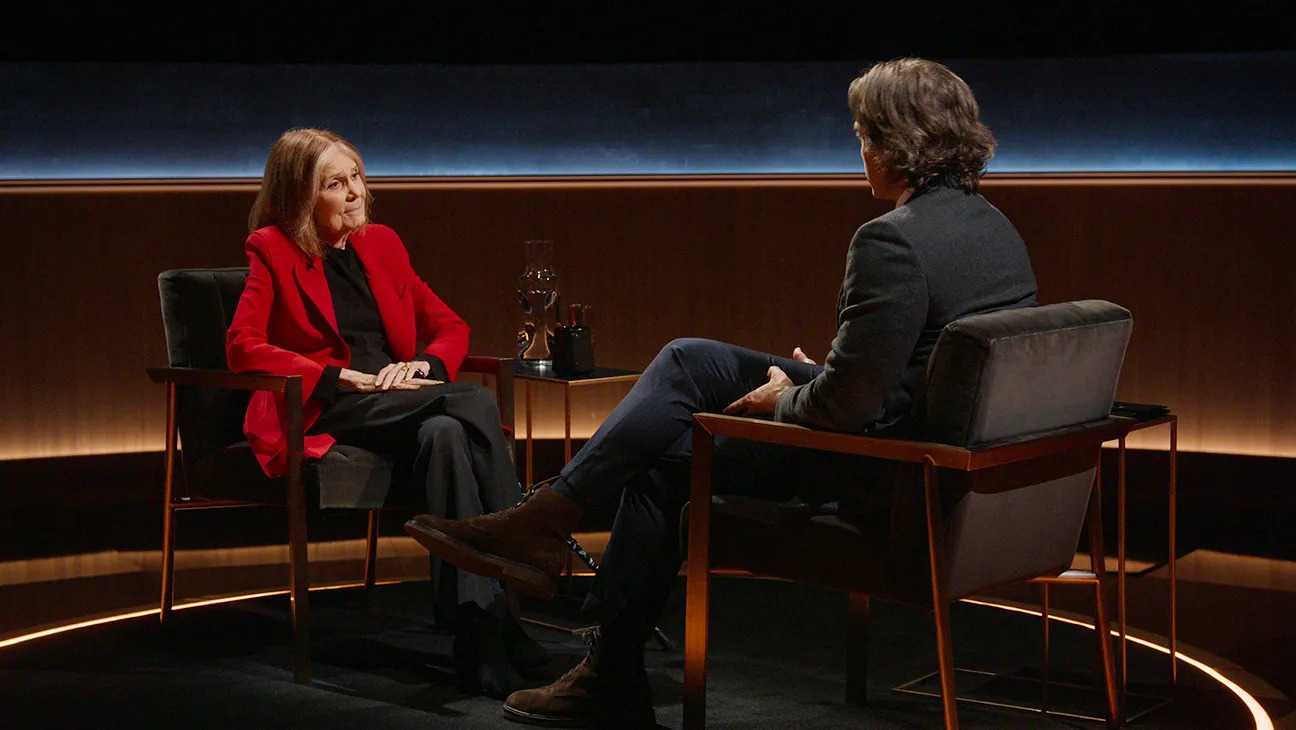
On Wednesday, September 2nd, the feminist pioneer Gloria Steinem died at ninety-two. The news broke on Thursday morning. By 5 P.M. Eastern time, Netflix had dropped a new episode of “Famous Last Words,” a fascinating series that offers celebrity postcards from the beyond. Each episode features a sit-down interview with a notable person, filmed months or years prior, with the understanding that it will not be released until after the subject’s death. Steinem’s was the third to appear; a conversation with Jane Goodall popped up within forty-eight hours of her death, last October; and another, with the TV heartthrob Eric Dane, came out right after he died, of complications from A.L.S., in February. Not even the show’s producers know the release schedule—that’s up to the chief content officer in the sky.
Each episode of “Famous Last Words” begins with his voice-over: “Imagine if we had the opportunity to hear from a cultural icon after they’ve passed away.” Then he ushers his subject into a softly lit set that looks like an empty planetarium, save for two chairs on a central platform. At the end of forty-five minutes or so of conversation, Falchuk leaves the room, and the subject delivers a final message, facing directly to camera. Fade out, forever.
Inevitably, each interview turns to mortality itself. Goodall, perhaps surprisingly, says that she believes in an afterlife, while Dane presumes that “when the lights go out, it’s over.” Steinem says that we’re alive whenever someone thinks of us, which is something of a hedge.
This has been a late-summer season of mourning: Hayden Panettiere, Dolly Parton, Tim Curry, Yayoi Kusama. The public reckonings with these figures’ legacies have come in a cascade. Often, when someone close to us dies, we feel a pang of irony: the one person we most want to talk about our grief with is the deceased. “Famous Last Words” offers a balm, along with the promise, fulfilled or not, of unguarded honesty.
Falchuk hopes to help society dispel the “taboo of death.” Look around at the billionaire biohackers trying to achieve immortality and you see that he has a point. Like a hospice nurse, Falchuk himself has had to get comfortable with mortality. “It’s been a transformative experience, because I’m intentionally bringing death into my life,” he said. The release of each new episode is bittersweet: “I’m still grieving them as people that I care about. It’s weird to think they’re gone.”
For more information see Michael Schulman “The Netflix Show That Airs from the Great Beyond” The New Yorker, September 5, 2026.