

Audio Division turns up the heat on the practice of “hopping” FM translators
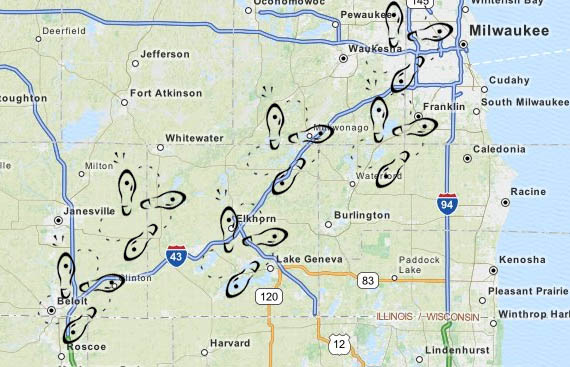 The FM Translator Tango. Always a complicated dance. Some may have figured that it was a harmless pastime, a no-lose bet with zero downside and nothing but upside.
They may have figured wrong, as a recent Audio Division letter demonstrates.
What’s the Translator Tango? It’s the dance in which enterprising FM translator owners hop their stations across significant distances to where they are more useful and more valuable. It’s a slow, gradual dance that uses a series of rule-compliant minor modification applications. The choreography: Starting with a construction permit specifying service to Nowheresville, the licensee moves the permit to Better Market. Better Market is invariably far away, so far that, under the Commission’s “major change” rules, the licensee could not ordinarily propose simply to move there in one giant leap. So the dance consists of a series of incremental steps, or hops, each moving the licensee farther away from Nowheresville and closer to Better Market.
Each incremental step involves a number of gyrations. The licensee has to file an application for a new construction permit specifying modified facilities. The Commission has to grant that permit. The licensee then has to construct the modified facilities and file a license to cover them. Then it’s supposed to go on the air from that location. The FCC follows by granting the license. Then the process starts again. Repeat as necessary to get to Better Market.
We described this process in less terpsichorean terms several months ago. As we reported then, the FCC staff had signaled its great displeasure with the process of moving translators through a series of minor modification applications. You think? In a September 2, 2011 letter, the Audio Division put it about bluntly: “We believe the filing of serial modification applications [for FM translators] represents an abuse of process.”
Harsh, but perhaps not totally daunting to the die-hard hopper.
That’s because the September, 2011 ruling technically didn’t involve a serial hopper. Rather, it involved a translator applicant’s request for waiver of the “major change” rule to allow it to make one big leap to its desired location. That waiver was granted because, among other factors, the applicant did not have a history of filing multiple minor modification applications.
But the Division’s most recent letter does involve a minor “mod” frequent filer. The target of the letter has filed a series of six applications, the overall arc of which suggests an intent to move its FM translator from Beloit, Wisconsin to the Milwaukee market. The letter uses tough language: the Media Bureau is “investigating potential statutory and rule violations and related instances of potential misrepresentation and/or lack of candor”. That’s the type of language the Commission uses when it’s gunning for someone’s license, rather than gently correcting a wayward licensee’s ways.
The letter directs the target to provide within 30 days a whole lot of information regarding its series of six modification applications – five of which had been granted previously.
For each hop, the target must state whether it had “reasonable assurance” of the availability of the transmitter site specified, and it must provide documentation backing up any claim of availability. Then it has to report, with respect to each location:
- How long the translator actually was on the air;
- What primary station was being rebroadcast and whether the primary station’s licensee had granted permission to rebroadcast; and
- The precise period of time the translator was silent for 30 days or longer at each location, the reason for that silence and an explanation for any failure to notify the Commission of the translator’s silence.
The Division’s letter also calls on the target to identify the location it ultimately intends the translator to serve and the primary station that would be broadcast. All correspondence, engineering studies and other documents regarding relocation of the translator from Beloit to that target location (or any other community) must be handed over.
Rumors abound that similar investigatory letters are in the works for other licensees who have evidenced “serial hopping” tendencies. Whether any of this sleuthing leads the Media Bureau to designate one or more translator licenses for revocation hearings remains to be seen. But the mere possibility of such a fate may have been enough to cause a number of translators applicants to leave the dance floor tout de suite: a quick look at CDBS indicates about a dozen FM translator applications have been dismissed since the date of the Division’s latest letter. Coincidence? You make the call.
Stay tuned to see if the dance continues or if the dancers call it a night.