

Regulators put the kibosh on effort to re-shuffle radio portfolio through parking trust mechanism
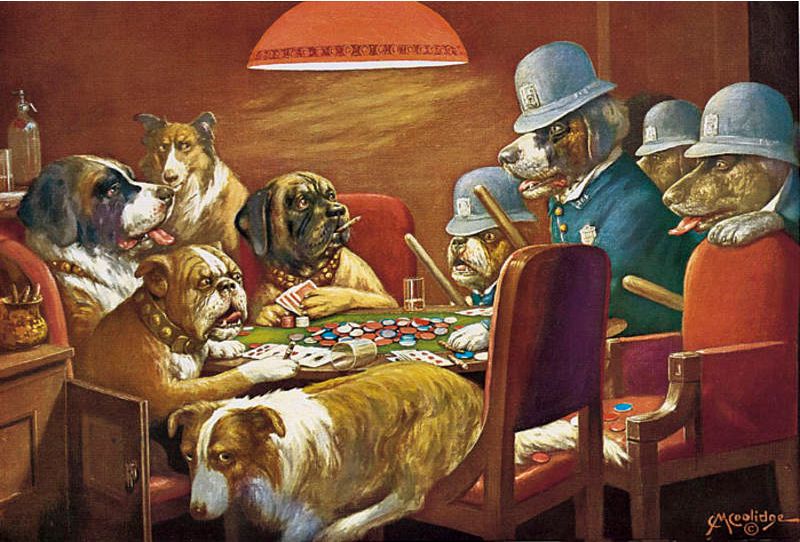 Townsquare Media (TM) thought it had a perfect, and perfectly legal, way to shuffle ownership of a bunch of radio stations in two small Washington state markets and finesse its way around the multiple ownership rules. But the only player at the table that really mattered – that would be the Media Bureau’s Audio Division – called a misdeal.
The result puts a new wrinkle in the use of “divestiture trusts”, a handy device used in large deals to address the occasional loose ownership end that does not fit comfortably within the Commission’s rules. Anyone contemplating the use of such a trust – sometimes known as a “parking” trust, because it permits the parties to “park” inconvenient stations with a trustee – should give this decision careful attention before moving forward.
As with any fancy card trick, this gets a little complicated, so keep your eyes peeled and stick with me.
New Northwest had accumulated stations in several Northwest markets, including six in the Yakima market and six in the adjacent Richland-Kennewick-Pasco (a/k/a/ “Tri-Cities”) market. But things didn’t go well financially and the company went into receivership. The Receiver was to sell the stations and pay off the creditors.
Enter TM. TM already had the maximum permissible number of radio stations in Yakima and lacked only an AM to hold a full house in the Tri-Cities. But New Northwest had a few stations that TM wanted for itself, and TM presumably wouldn’t mind getting its hooks into the rest of New Northwest’s holdings.
Time for a divestiture trust. The concept of a divestiture trust is not new. It’s been used mainly in BIG broadcast deals involving scores if not hundreds of stations. Occasionally, assignment of a very small handful of the stations in such a deal can’t be closed for various technical reasons – and the multiple ownership rules will not permit the proposed assignee to continue to hold those stations, incidental though they may be, and still acquire the additional stations proposed in the assignment. Rather than allow a huge deal to crater because of such technicalities, the Commission has permitted the problem stations to be dealt off to an independent trustee. Those stations are then beneficially owned by the buyer (even if that buyer could not own them directly under the ownership rules). If you hold beneficial ownership of a station, you still get the profits and cover the losses – but the trustee controls the operations, and is (at least theoretically) charged with selling the station off to some third party in due course.
TM sat down at the New Northwest table and agreed to take over all of New Northwest’s Yakima and Tri-Cities stations. Because of multiple ownership limits, TM would acquire in its own name only five of the stations. The other seven would be dropped into the divestiture trust along with four of TM’s less desirable stations. In other words, TM was looking to upgrade its hand from a near full house to a royal flush: TM was looking to own outright six cream-of-the-crop stations – the maximum under the rules – in each of the Yakima and Tri-Cities markets. Plus, through the divestiture trust, it would have the beneficial ownership of another six stations in Yakima and five in Tri-Cities. For those of you keeping score at home, that would give TM a stake in 23 of the 54 station in the two markets.
What a deal.
Or misdeal, as the Audio Division concluded. In the Division’s view, TM’s proposed use of a divestiture trust did not involve mere incidental aspects of a much larger transaction. Rather, TM itself was netting out, numerically, with only one more station than it started with. The trust was simply serving as a parking lot for the (presumably) less desirable New Northwest stations. Even though the court overseeing New Northwest receivership had approved the TM plan, the Division determined that the potential adverse effect of the deal on competition in the two markets was unacceptable. Accordingly, the Division eschewed the Commission’s normal policy of accommodating state court orders. The Division also noted that the proposed deal would not wrap up the receivership, since New Northwest’s Receiver would still have a herd of stations in Oregon and Alaska to dispose of. And the Division was not tickled pink with the fact that TM was using the trust to hold some of its own (again presumably) less desirable stations in order to allow TM to skim the cream from the New Northwest holdings.
And with that, the Division dismissed the various TM applications as “inadvertently accepted for filing”.
The bottom line is that a station owner will not be allowed to use a divestiture trust “to re-shuffle its radio station portfolio.” Where the line falls between (a) the permissible use of a divestiture trust to accommodate a deal and (b) impermissible re-shuffling of a station portfolio will have to be sorted out on a case-by-case basis. Parties looking to play the divestiture trust card should proceed with caution.