

Skip to content

Menu

LexBlog, Inc. logo
NetworkSub-MenuBrowse by SubjectBrowse by PublisherJoin the NetworkGet StartedSubscribeSupportContact
Search
Close

Customs Ruling of the Week – Country of Origin of an Electronic Vaping Device

By Maria Vanikiotis & Emily Devereaux on September 14, 2022
Email this postTweet this postLike this postShare this post on LinkedIn

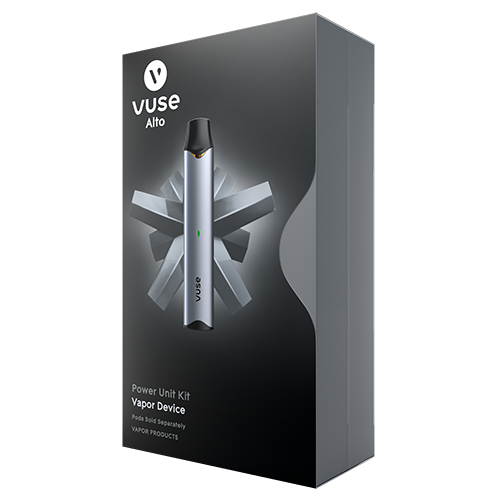
In ruling N327712 (Sept. 2, 2022), Customs and Border Protection (CBP) discusses the country of origin of an electronic vaping device.  The device under review, identified as the Vuse Alto Power Unit, is an electronic vaping device comprised of the following components:

  • Metal enclosure containing a printed circuit board assembly (PCBA);
  • Rechargeable battery;
  • Battery plugs;
  • Flexible printed circuit assembly (FPCA);
  • LED lights;
  • Neodymium magnets; and
  • Gasket.

The device allows a user to attach a cartridge with e-liquid to be vaporized at one end.  The cartridge acts as a heating element as well as a mouthpiece through which a user can draw out the vapor.  In this case, the cartridge was not imported with the device and, therefore, was not subject to the ruling. 

To determine the country of origin of the device, CBP reviewed the device’s manufacturing process.  The PCBA was manufactured in Vietnam using surface mount technology (SMT), a manufacturing method by which electrical components are mounted onto the surface of a printed circuit board, which creates a PCBA.  Afterwards, the completed PCBA was sent to China, where it was combined with the remaining components of the finished device.  All of the remaining components were Chinese origin.
Under the customs regulations, in relevant part, an article’s “country of origin” is “the country of manufacture, production, or growth of any article of foreign origin entering the United States.  Further work or material added to an article in another country must effect a substantial transformation in order to render such other country the ‘country of origin’ within the meaning of this part.” 19 C.F.R. 134.1(b).  Citing numerous court cases, CBP articulated that a substantial transformation takes place when “an article emerges from a process with a new name, character or use different from that possessed by the article prior to processing.”

Upon reviewing the manufacturing process, CBP found that the Vietnam-origin PCBA—which is the primary controlling apparatus of the vaping device—served as the essential functional component of finished device.  In addition, the secondary assembly process in China was not sufficiently complex to cause the individual components to lose their identities.  Nor did this secondary assembly process transform the Vietnamese PCBA into a new and different article with a new name, character, or use.  Therefore, CBP ruled that the country of origin of the electronic vaping device was Vietnam.

Photo of Maria Vanikiotis Maria Vanikiotis

Maria Vanikiotis is a counsel in the International Trade Group of Crowell & Moring and resident in the firm’s New York office.

Maria has experience in a variety of matters related to the movement of goods across international borders, including problem-solving for importers

…

Maria Vanikiotis is a counsel in the International Trade Group of Crowell & Moring and resident in the firm’s New York office.

Maria has experience in a variety of matters related to the movement of goods across international borders, including problem-solving for importers facing Section 232 and Section 301 tariffs, classification of merchandise under the Harmonized Tariff Schedule, first sale appraisement programs, free trade agreement origin verifications, country of origin analyses, and other regulatory issues.

Before joining Crowell & Moring, Maria worked for a boutique law firm in New York focusing on customs law and, while in law school, Maria was employed as a summer associate in the Brussels office of a large international law firm on matters related to antitrust and competition law within the European Union. As a law student, Maria published a note comparing collective action approaches to antitrust cases in the U.S., U.K., and E.U., for which she won an award for outstanding legal writing. In addition, Maria was an active and accomplished member of both the Fordham International Law Journal and the Dispute Resolution Society.

Read more about Maria VanikiotisEmail
Show more Show less
Photo of Emily Devereaux Emily Devereaux

Emily Devereaux is a senior international trade analyst I in Crowell & Moring’s Washington, D.C. office. She provides practice support to the International Trade Group on import regulatory matters pending before the Office of the U.S. Trade Representative (USTR) and U.S. Customs and

…

Emily Devereaux is a senior international trade analyst I in Crowell & Moring’s Washington, D.C. office. She provides practice support to the International Trade Group on import regulatory matters pending before the Office of the U.S. Trade Representative (USTR) and U.S. Customs and Border Protection (CBP). She works closely with attorneys developing courses of action for clients impacted by investigations under Section 301 of the Trade Act of 1974 and Section 232 of the Trade Expansion Act of 1962. She also supports unfair trade investigations, including antidumping (AD) and countervailing duty (CVD) investigations, sunset reviews, and changed circumstance reviews before the Department of Commerce and the International Trade Commission (ITC).

Read more about Emily DevereauxEmail
Show more Show less
  • Posted in:
    Other
  • Blog:
    International Trade Law
  • Organization:
    Crowell & Moring LLP
  • Article: View Original Source

Call us at 1-800-913-0988 or email sales@lexblog.com.

Facebook LinkedIn Twitter RSS
The Library at LexBlog
  • About LexBlog
  • The Field We Built
  • Library at LexBlog
  • Our Beliefs
  • Our Team
  • Contact LexBlog
  • Disclaimer
  • Editorial Policy
  • Terms of Service
  • Get Started
  • Publishing Solutions
  • Compass
  • Submit a Request
  • Support Center
  • System Status
Copyright © 2026, LexBlog, Inc. All Rights Reserved.
Law blog design & platform by LexBlog LexBlog Logo