

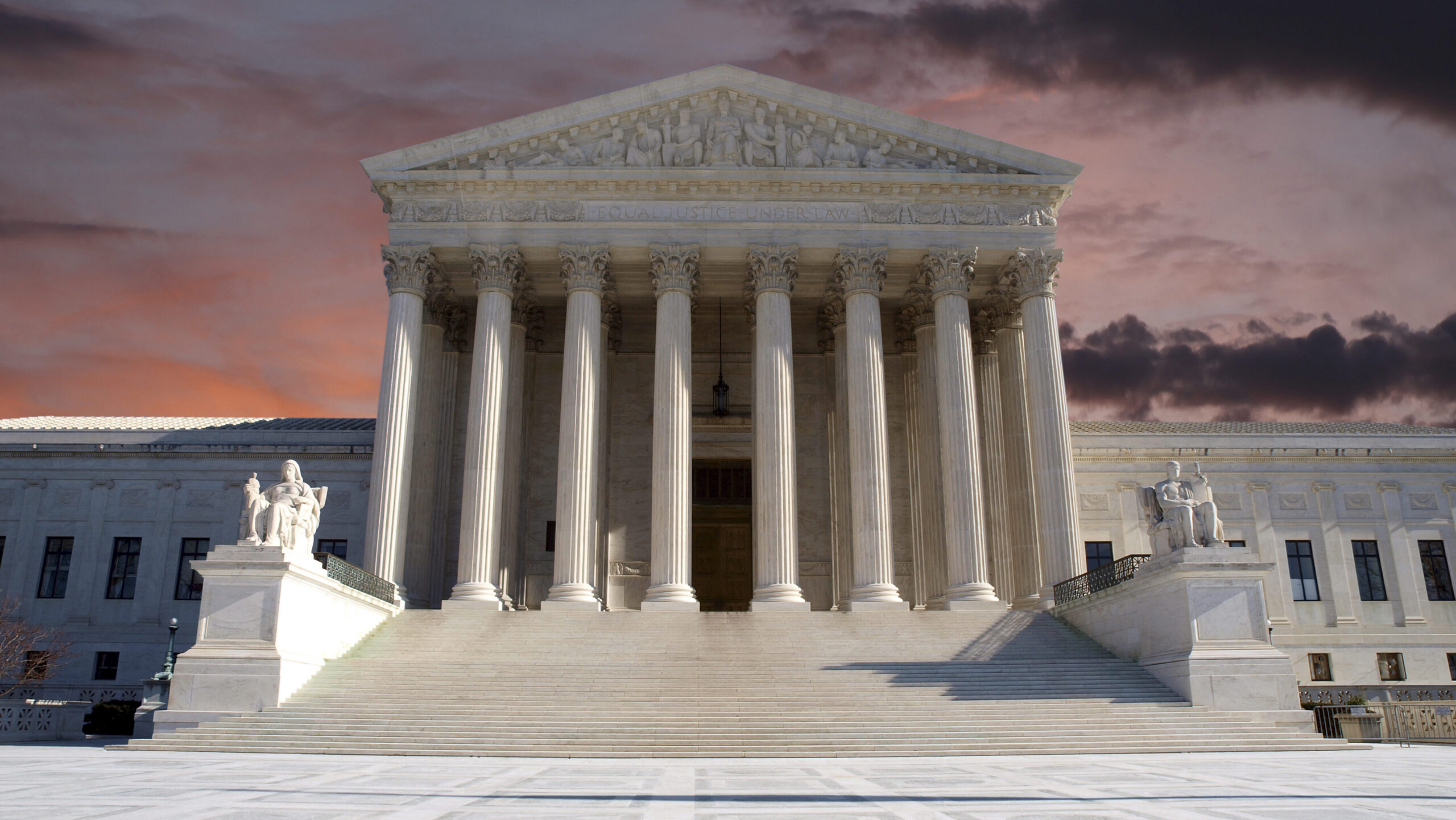
On October 31, 2022, the Supreme Court of the United States (“SCOTUS” or “the Court”) heard oral arguments in two cases challenging the race-conscious student admissions policies used by Harvard University and the University of North Carolina (“UNC”) to promote diverse school enrollments. The final decision in this case likely will be released at the end of the current term—in late June or early July 2023. It could have important implications not only for colleges and universities but also for public school districts.
Background
The case began in 2014, when Student For Fair Admissions (“SFFA”), a nonprofit advocacy organization opposed to affirmative action, brought an action alleging Harvard violated Title VI of the Civil Rights Act (“Title VI”) by implementing a race-conscious admissions program that SFFA contended discriminated against Asian-American applicants. In conjunction with this lawsuit, SFFA also brought a similar claim under the Equal Protection Clause of the Fourteenth Amendment against UNC, alleging that UNC unfairly uses race to give significant preference to underrepresented minority applicants to the detriment of white and Asian-American applicants. SFFA also claimed that Harvard and UNC ignored viable race-neutral alternatives for achieving a diverse student body.
Both cases also directly challenged the Supreme Court’s 2003 decision in Grutter v. Bollinger, 539 U.S. 306 (2003), and at least implicitly both prior and subsequent Supreme Court precedents, including Regents of the University of California v. Bakke, 438 U.S. 265 (1878), Fischer v. University of Texas at Austin, 570 U.S. 297 (2013), and Fischer v. the University of Texas at Austin, 579 U.S. 365 (2016), all of which had recognized the legality of some form of narrowly tailored, race-conscious affirmative action measures in higher education admissions.
The issues that the Court has to decide are: (1) whether to overrule existing precedent and hold that institutions of higher education cannot use race as a factor in admissions; and (2) whether Harvard and UNC are violating Title VI of the Civil Rights Act or the Equal Protection Clause of the Constitution by penalizing Asian-American applicants, engaging in racial balancing, overemphasizing race and/or rejecting workable race-neutral alternatives.
To learn more about the background of these two cases, please visit our prior blog post here.
Oral Arguments
SFFA v. Harvard
During opening arguments before the Justices, SFFA argued that Harvard discriminates against Asian-American applicants by assigning them “significantly lower personal ratings” — a score that measures applicants’ character — than to any other group. SFFA’s argument also questioned Harvard’s failure to seriously consider race-neutral alternatives, such as socioeconomic status, until 2017, three years after SFFA sued Harvard.
During SFFA’s oral argument, Justice Amy Coney Barret and Chief Justice John Roberts asked several hypotheticals regarding student essays relating to overcoming discrimination or their racial identity. SFFA responded to these hypotheticals by suggesting that if a university gave credit to a Black student who wrote an essay about overcoming discrimination and equal credit to an Asian student who wrote a similar essay, then that would not constitute an unlawful consideration of race. SFFA also claimed that Harvard awards a preference based on race alone, whether or not an applicant writes about their racial background or otherwise indicates that it’s important to them, and further argued that this practice is unlawful.
Justice Sonia Sotomayor was the only Justice to raise the issue of de jure segregation, the intentional separation of groups of people according to government-enacted laws. Her questions on de jure segregation stemmed from her disagreement with SFFA’s understanding of the District Court’s ruling. SFFA stated that it believes remedial exception, or means to stop and correct acts of discrimination, is still good law. However, Harvard has not made that argument, has no factual record of supporting that argument, and does not justify its use of race-based practices on its own prior discrimination against Blacks and Hispanics.
Several questions by different Justices were posed to Harvard regarding SFFA’s race-neutral alternatives called Simulation D. Harvard argued that Simulation D shows that “if race were eliminated, you couldn’t consider race, and you also could give none of those preferences, the racial diversity of the matriculating class would go down. The representation of African Americans, if you just stopped considering race, would go from 14 to 6 percent, but if you also stopped giving a preference to alumni, children of faculty, and staff, athletes, and other people who have found themselves on the dean’s interest list (“ALDCs”), it would go to 5 percent.”
Harvard argued that the personal rating is assigned by an application’s first reader “just as a matter of triage,” but “fades into the background” once other admissions officers review the application. Waxman responded to SFFA’s claim that Harvard has refused to consider race-neutral alternatives by arguing that Harvard does not yet have a current workable race-neutral alternative and that Simulation D would have a negative impact on Harvard. Harvard’s oral argument also focused on the importance of student body diversity and that “Harvard does not have to blind itself to race, student’s socioeconomic and family background, or the part of the country students live in.”
Justice Clarence questioned Harvard on its preference for ALDCs, stating that Harvard’s 80 percent of wealthy students do not constitute a diverse population. Harvard stated that “20 percent of all matriculants pay nothing, 70 percent of underrepresented minorities pay nothing, and well over half of all applicants get substantial financial aid.”
SFFA v. UNC
SFFA stated that “Grutter’s view that the educational benefits of diversity justify racial classifications contradicts the Fourteenth Amendment’s guarantee of equal treatment. It relied upon stereotypical assumptions that race is necessarily a proxy for one’s viewpoint, and its purported limits are empty and self-contradictory, which is why UNC simply ignores them.”
The highlights of this oral argument were questions posed by Justice Ketanji Brown Jackson, specifically the issue she raised regarding equal protection. Justice Ketanji recused herself from the SFFA v. Harvard case as a Harvard alumna to avoid a potential conflict of interest.
Justice Ketanji noted that to overrule Grutter might be to “have the potential of causing more of an equal protection problem than it’s actually solving.” To explain this point, she gave the following hypothetical:
- The first applicant says: I’m from North Carolina. My family has been in this area for generations, since before the Civil War, and I would like you to know that I will be the fifth generation to graduate from the University of North Carolina. I now have that opportunity to do that, and given my family background, it’s important to me that I get to attend this university. I want to honor my family’s legacy by going to this school.
- The second applicant says: I’m from North Carolina, my family has been in this area for generations, since before the Civil War, but they were slaves and never had a chance to attend this venerable institution. As an African American, I now have that opportunity, and given my family background, it’s important to me to attend this university. I want to honor my family legacy by going to this school.
She posed the question of whether there would be an “equal protection violation if the first applicant would be able to have his family background considered and valued by the institution as part of its consideration of whether or not to admit him, while the second one wouldn’t be able to because his story is in many ways bound up with his race and with the race of his ancestors.”
SFFA responded by stating that “there are many factors in an application like that that might be appropriate to consider, including if they are first-generation college or including if they are socioeconomically depressed, but if the only difference is between a white student and a Black student,” then Equal Protection Clause permits the admissions decision to hinge on that.
UNC focused its oral argument on three points: (1) a diverse learning environment is needed to equip students with tools to “function effectively as citizens and leaders; (2) our Reconstruction founders believed that race-conscious measures designed to promote an integrated learning environment were consistent with the original public meaning of the Equal Protection Clause; and (3) that UNC has a powerful interest in making important social policy decisions for the people of North Carolina.
Justice Ketanji and Justice Neil Gorsuch asked many questions regarding UNC’s history of exclusion and to what extent that matters with respect to the diverse interests that UNC asserted.
Several Justices also asked questions about Justice Sandra Day O’Connor’s statement in Grutter regarding the 25-year limit as an aspirational goal as the end point of using racial preferences in society. Counsel for UNC stated that it “is not pursuing any sort of remedial justification for its policy, but UNC does think that its university’s history is relevant to analyze the sort of 25-year expiration deadline.”
What this means to you
The Court’s ultimate ruling on the merits likely will either affirm, alter, or reverse longstanding Supreme Court precedent that currently allows race-conscious practices if they satisfy strict scrutiny (that is, if they are narrowly tailored to serve a compelling governmental interest, including remedying identified past discrimination or promoting the educational benefits of diversity). The Court’s ruling also could impact public school districts that employ race-conscious student assignment measures, particularly where such policies are used voluntarily to promote diverse school enrollments.
If you are a client or a member of the Council of the Great City Schools, please register to join Husch Blackwell attorneys on November 28, 2022, to explore the intricacies of SCOTUS’s future decision and the potential impact this case will have across the board in K-12 education by registering here for the webinar.