

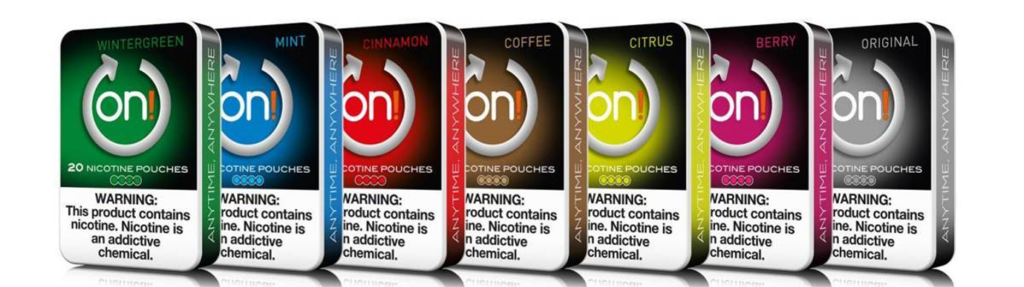
On December 19, 2025, FDA issued Marketing Granted Orders authorizing six on! PLUS oral nicotine pouches from Helix Innovations (Altria): Mint, Tobacco, and Wintergreen, each in 6 mg and 9 mg nicotine strengths. FDA framed these as the first decisions to come out of its nicotine-pouch PMTA pilot, designed to speed reviews without lowering the statutory “appropriate for the protection of public health” (APPH) standard for new tobacco products.
In its announcement, FDA explained that, compared with other oral/smokeless tobacco products, the authorized on! PLUS pouches contain lower levels of most harmful and potentially harmful constituents (HPHCs), often too low to quantify, and no measurable levels of several carcinogenic HPHCs linked to excess oral cancer risk among smokeless tobacco users. At the population level, FDA highlighted that the potential benefits to adults who switch from cigarettes or smokeless tobacco products can outweigh youth risks when combined with targeted youth access prevention and marketing guardrails. The primary package is a certified child-resistant (CR) can with a safety lid, echoing the Agency’s previous call for CR packaging across the pouch category.
How the pilot program shaped this outcome
In September 2025, FDA announced a pilot program to “increase efficiency and streamline” PMTA reviews for nicotine pouches by focusing on the most critical evidentiary elements and expanding real-time communication with applicants to shorten review cycles, reduce late-stage deficiencies and ease manufacturers’ research burden. The pilot is aimed at expediting decisions on a set of pending pouch PMTAs from major manufacturers (e.g., PMI, RJ Reynolds, Turning Point Brands, and Altria) on an accelerated timetable, with the goal of completing review of those pending applications by the end of 2025. According to media reports, the intent of the pilot is not to lower the APPH standard, but to streamline the evidence focus and improve communication between the Agency and applicants during review. Following the announcement, anti-tobacco advocacy organizations promptly urged FDA to maintain scientific rigor, requesting a public meeting to vet the pilot’s scope. Separate from the pilot program, as noted, FDA also issued a press release urging nicotine pouch manufacturers to adopt CR packaging in response to rising pediatric exposure reports—signaling that CR packaging could become a de facto gatekeeper for pouch PMTAs.
FDA credits the pilot program for accelerating review of the on! PLUS PMTAs—submitted in June 2024— and says it will consider incorporating successful process changes into the broader PMTA program once the pilot concludes.
What evidence carried the decision?
While the Agency still mandates product-specific results for pivotal data streams (e.g., HPHC yields, pharmacokinetics (PK) delivery, and abuse liability), it now permits applicants to rely on scientific bridging and category-wide literature to satisfy behavioral and toxicological endpoints (e.g., consumer perception and switching or cigarettes per day (CPD) reduction) across a product family.
FDA’s Technical Project Lead (TPL) review memo for the on! Plus pouches lays out three pillars:
- First, chemistry and product science show the new pouches’ HPHC profile is consistent with the category’s relatively low toxicant levels compared to combustible cigarettes (CCs) and smokeless tobacco. Notably, the products contained no measurable levels of several carcinogenic HPHCs (such as NNN) that are key drivers of oral cancer risk in conventional smokeless tobacco.
- Second, on nicotine PK and abuse liability, the applicant ran a randomized, crossover clinical study in adult smokeless-tobacco users. In 45 minutes of prescribed use, on! PLUS (6 mg and 9 mg) delivered a statistically significant reduction in Cmax and AUC₀–180 compared to a user’s usual-brand moist smokeless tobacco, with lower positive subjective effects (e.g., liking/satisfaction) and less craving/withdrawal relief—all consistent with lower abuse liability than moist snuff, while still providing enough nicotine delivery to support substitution for some users. FDA then bridged the tested SKUs to the rest of the family based on similar total and free nicotine.
- Third, and importantly, the population-health section documents longitudinal use data. FDA reports the applicant submitted four longitudinal studies, including a six-week actual-use study of the six authorized on! PLUS SKUs among adult smokeless users and dual users (smokeless + cigarettes). By the end of six weeks, 15% of smokeless users reported quitting dip/snuff, and among dual users, about 35% reported reducing cigarettes by 50–99% each week versus baseline. FDA weighs these outcomes alongside abuse liability/PK results and the broader literature to support the adult-benefit side of the APPH balance.
How this compares to ZYN
As previously reported on this blog, in January 2025 FDA authorized 20 ZYN pouches after an extensive scientific review (that took 4+ years). Like on! PLUS, ZYN’s package featured PK/AL evidence and real-world use data; a ten-week prospective cohort in ZYN’s record showed a meaningful share of dual users switching completely by week ten. Although the patterns of use data for ZYN supported complete switching among nearly one-quarter of study participants, the on! PLUS data relied more heavily on cigarette reduction. This shift is important because it suggests FDA may be getting more comfortable with dual use as a transitional phase, provided the reduction in combustible cigarette use is “significant” (i.e., over 50%). In addition, on balance, FDA concluded ZYN’s abuse liability is comparable to or lower than smokeless comparators at the same strengths.
Conclusion
With these six authorizations, FDA expands the number of legally marketable nicotine pouch options for adults to 26, as reflected on the Agency’s website. Critically, these decisions signal to industry that FDA is willing to authorize additional flavored, non-combusted options for adult tobacco users and smokers when applicants develop credible, product-specific evidence (e.g., robust PK/abuse-liability and comprehensive chemistry/HPHC data, supported by informative, real-world use findings) and market those products in ways that mitigate youth risk through targeted advertising, post-market monitoring, and CR packaging. In sum, the on! PLUS actions affirm that even within the accelerated pilot, FDA is still looking for coherent, product-specific evidence paired, where appropriate, with literature, to make the APPH case.
We will discuss this and other recent PMTA authorizations at Keller and Heckman’s 2026 E-Vapor, Nicotine, and Tobacco Law Symposium on May 4-5, 2026, in Las Vegas, Nevada. Register here.