

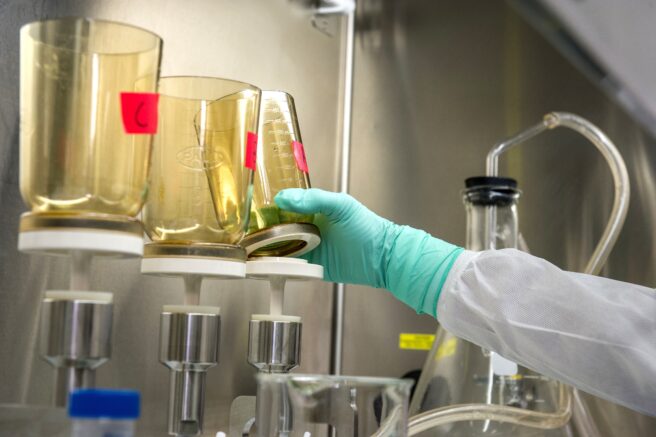
EPA has released a newly developed and validated analytical methodology for testing pesticide products for the presence of per- and polyfluoroalkyl substances (PFAS). Referred to as the ACB Method, this new PFAS-detection method was developed by EPA’s Analytical Chemistry Branch (ACB). The ACB Method primarily differs from an alternative PFAS-detection method (the Lasee Method) in its approach to sample preparation. As background, the Lasee Method was introduced by Steven Lasee in November 2022 in his co-authored study titled “Targeted Analysis and Total Oxidizable Precursor assay of several insecticides for PFAS” in the Journal of Hazardous Materials.
The Lasee Method prepares a sample through dilution in a solvent/water solution to dilute the matrix using a single instrument for analysis. The ACB Method requires a more intense extraction to isolate PFAS compounds from the sample matrix before instrumental analysis, thereby reducing matrix interference and increasing the accuracy of PFAS detection. In short, EPA’s ACB Method is designed to eliminate interference from non-volatile oils and surfactants present in pesticide formulations that can result in false positive detections of PFAS. EPA’s verification analysis contains additional scientific details on the difference between the two methods and the significance of using EPA’s ACB Method when testing specific formulations.
EPA’s verification analysis comes on the heels of a number of other recent actions taken by EPA in regards to detections of PFAS in pesticide products, including:
- March 2021 – EPA released data showing PFAS contamination from the fluorinated high-density polyethylene (HDPE) containers used to store and transport a mosquito control pesticide product (click here).
- September 2021 – EPA released an internally validated method for detecting 28 PFAS compounds in oily matrices to help pesticide manufacturers, state regulators, and other interested stakeholders test pesticide products formulated in oil, petroleum distillates, or mineral oils for PFAS (click here).
- March 2022 – EPA provided information to manufacturers, processors, distributors, users, and those that dispose of fluorinated HDPE containers and similar plastics about the potential for PFAS to form and migrate from these items. EPA also noted that the presence of PFAS in these containers may be a violation of the Toxic Substances Control Act. (click here).
- September 2022 – EPA released results from its evaluation on the leaching potential of PFAS from the walls of certain fluorinated HDPE containers in the liquids store in those containers. (click here).
- December 2022 – EPA issued a notice announcing the removal of 12 chemicals identified as PFAS from the current list of inert ingredients approved for use in nonfood pesticide products to better protect human health and the environment. (click here).