

The Onondaga County and New York State Health Departments are teaming up to investigate 19 recent cases of Legionnaires’ disease in Onondaga County, according to WSYR NewsChannel 9. Onondaga County is in the center of New York State and home to the city of Syracuse.
 Four of the 19 cases have been linked to the Pacific Health Club in the Town of Salina, located at 604 Old Liverpool Road in Liverpool, NY.
The existence of Legionella bacteria – which causes Legionnaires’ disease – was found during testing of the hot tubs and the pool skimmers at the health club, according to county health officials. The hot tubs were temporarily closed, disinfected and sanitized, as were the skimmers and piping. Follow-up testing was negative for Legionella, and the hot tubs and pool have been reopened.
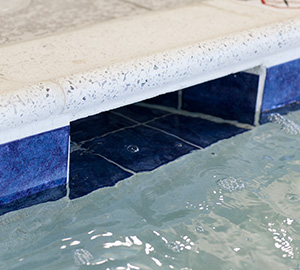
Pool skimmers, which are the rectangular openings on the sides of underground pools, help keep pool water clean by skimming the surface of the water, where most contaminants dwell, and capture floating debris before it can sink to the pool’s bottom.
The health departments continue to investigate whether there are any commonalities between the other 15 reported cases. No information was released on the condition of the 19 individuals infected with the disease.
About 25,000 cases of Legionnaires’ annually in U.S.
The Centers for Disease Control and Prevention (CDC) estimate that the U.S. experiences 25,000 annual cases of Legionnaires’ disease, a severe type of pneumonia or lung infection caused by Legionella bacteria (Legionella pneumophila). Only 5,000 cases, however, are reported because of the disease’s non-specific signs and symptoms.
Legionella bacteria are contracted by inhaling microscopic water droplets, usually in the form of mist or vapor. The bacteria thrive in warm water and are found primarily in human-made environments, such as cooling towers, air-conditioning systems, hot tubs, and spas, to name just a few.
Legionnaires’ disease complications can be deadly
Anyone can get the disease, but those at the greatest risk of infection include:
- people 50 or older
- smokers (current or former)
- heavy drinkers of alcoholic beverages
- people with chronic lung disease
- people with weakened immune systems.
After Legionnaires’ disease has been diagnosed, hospitalization is often necessary. In the most severe cases, complications can include respiratory failure, kidney failure, septic shock, or even death.