

North Carolina Governor Josh Stein recently signed the State’s budget act (Senate Bill 257) into law, which includes the State’s new Water Safety Act. It authorizes a sweeping, two-phase sampling effort designed to identify sources of per- and polyfluoroalkyl substances
Latest from American College of Environmental Lawyers - ACOEL - Page 2
The Great Power Secession: Texas Air Permitting and the Data Center Boom
What happens when an emerging industry decides to secede from the power grid? In Pecos County, deep in West Texas’ Permian Basin, a data center developer claims to hold the largest power-generation air permit in the United States. According to
Appalachia Invites NEPA Along Its Country Roads, Again
The Federal Energy Regulatory Commission (FERC) issued an order on June 18, 2026, granting the Eastern Gas Transmission and Storage, Inc. application requesting authorization to construct, operate and maintain certain facilities located in western Pennsylvania and eastern Ohio (Appalachian Reliability
Oregon Wants Better Buildings
Just down the block from my office in Portland, an enormous set of jaws has been steadily devouring an elegant, slightly time-worn building. Very soon, the 1906 Governor Building, until recently the home of performance artists, a tattoo parlor and
Whither Goest Offshore Wind Projects in the United States?
It’s 2007—The American College of Environmental Lawyers is founded by 23 attorneys, including me. George W. Bush, Jr., is President. It’s 2008—I begin working on offshore wind development, and Barack Obama is elected President. I also become President-Elect of the
Digging Ourselves Out of a Hole: Enabling Beneficial Uses of Dredged Material
Dredging of navigational channels is an essential function of the Corps of Engineers, supporting national security and maintaining shipping and other commercial and recreational uses of our waterways. Pursuant to its authority under Section 404 of the Clean Water Act
ACOEL Announces Newly-Elected Fellows for 2026
ACOEL welcomes the class of 2026 to the College with the election of 19 new fellows, each a prominent environmental practitioner in private practice, academia, a not-for-profit organization, or the government.
The post ACOEL Announces Newly-Elected Fellows for 2026 appeared
Keeping Secrets Under TSCA Has Never Been Easy and it is Getting Harder
Keeping confidential business information (CBI) secret and protected from disclosure has long been a bedrock principle of the Toxic Substances Control Act (TSCA). TSCA Section 14 provides broad protection for proprietary information about chemicals in commerce and reflects a clear
Are State Legislatures Artificially Intelligent or Humanly Thinking?

posted on February 23, 2026 by Kathy Beckett
Image credit: Panumas Nikhomkhai
State legislatures across the country are wrangling with how to manage development of data centers. A myriad of stakeholders have many messages to deliver to thought leaders, but
Burning Down the House (and Planet): Trump’s Torching of the Endangerment Finding
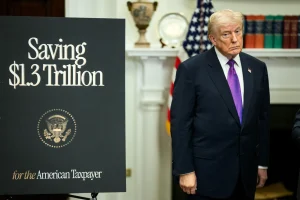
posted on February 18, 2026 by Victoria Arroyo
Image courtesy of The White House (public domain)
As anticipated, the Trump Administration repealed EPA’s 2009 endangerment finding and EPA’s vehicle standards. The final rule didn’t actually attack the underlying science showing