

On September 16, the Securities and Exchange Commission proposed to rescind Rule 14a-8, the SEC rule that lets a shareholder holding as little as $2,000 of stock place a proposal in a company’s proxy statement, at the company’s expense, for
Latest from Columbia Law School - Page 6
Skadden Discusses New SEC Framework for Trading Tokenized Stocks
On September 17, 2026, the U.S. Securities and Exchange Commission (SEC) took a significant step toward integrating tokenized securities into the U.S. equities market by issuing the long-awaited “Innovation Exemption.” The exemption creates a temporary framework that allows certain tokenized
Scrutinizing the Achievement of Climate Targets, Part II: Emerging Trends and Challenges in Implementation Litigation
This is the second of two posts exploring the evolution of climate change implementation litigation. Part I detailed how governments’ duties to monitor and meet their climate commitments, and have transparent and attainable climate plans, are well-defined by international, regional,
Sports Financial Indexes: When Your Favorite Team Becomes a Ticker
This week, professional sports crossed a threshold it had never crossed before. CME Group, the world’s largest derivatives exchange, began listing futures contracts on all 32 National Hockey League (NHL) teams.[1] These are not bets on who wins a
Latham Discusses SEC Proposal to Rescind Political Contribution Rule for Investment Advisers
On September 3, 2026, the Securities and Exchange Commission (SEC) issued a proposal (the Proposal) to rescind Rule 206(4)-5, commonly referred to as the Pay-to-Play Rule (the Rule), in its entirety, eliminating the two-year time-out on compensated advisory services to
Scrutinizing the Achievement of Climate Targets, Part I: The Widening Reach of Implementation Litigation
As temperatures continue to rise at alarming rates, it is undeniable that current climate policies are not enough to meet the 1.5°C temperature limit of the Paris Agreement. According to the United Nations Environment Programme, global warming is currently
Does Loss of Natural Assets Raise Public Borrowing Costs?
Forests, fisheries, freshwater, and biodiversity are not only environmental resources. They also support economic activity and growth. When these natural assets deteriorate, the consequences can ripple through the economy and potentially affect the cost of government financing.
Governments are central
Sullivan & Cromwell Discusses California Bill on Lawyers’ Use of Generative AI
On August 31, 2026, the California Legislature unanimously passed Senate Bill 574, a “first-in-the-nation” law that would establish statutory requirements governing the use of generative artificial intelligence by attorneys, arbitrators, judicial officers, and alternative dispute resolution providers.[1] The bill
Wachtell Lipton Discusses SEC Enforcement Division’s Signal of Faster Investigations
Gladstone Place Discusses Where AI Is Adding Value in Investor Relations
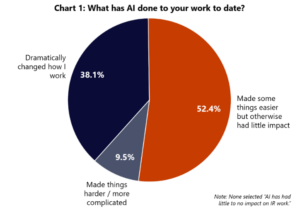
AI is having a clear impact on investor relations as corporate issuers tap AI for stress-testing messaging and benchmarking shareholder proposals, while taking a gradual approach before handing over IR to HAL.
This is according to a new survey by