

Data has become one of the most critical assets of the European digital economy. From artificial intelligence and platform markets to public services and industrial innovation, access to and sharing of data increasingly determine competitive dynamics, market entry, and the
Latest from EU Law Enforcement - Page 3
More Power to the President? The U.S. Supreme Court is Poised to Restrict Congress’ Power to Create Independent Agencies
Since 1887, (and arguably before that), the United States Congress has created regulatory agencies with a certain degree of independence from the President. The Supreme Court unanimously upheld that model as constitutional in 1935 and again in 1958, but
The First Steps of the Aruban Fair Trade Authority as an Antitrust Enforcer
*A conversation with Director Kross and Dr. Wessel Geursen
Earlier this year, one of the editors of eulawenforcement.com had the chance to discuss the interesting topic of the gestation of a competition authority and the challenges it faces in its
When Seeing Isn’t Believing: Deepfakes, Financial Markets, and the Limits of EU Enforcement
In finance, trust is everything, but what happens when even our eyes and ears fail us? Recent cases show this is no longer a theoretical concern. Deepfake technology, powered by neural networks trained on massive datasets, can analyze audio, video,
Mental Accounting and Market Definition in Antitrust: How Behavioral Biases Reshape Competitive Boundaries
In the intricate world of antitrust law, the definition of a relevant market stands as a cornerstone of competition analysis, yet its foundational assumptions are increasingly being questioned. This process, which identifies the boundaries of competition between firms, has traditionally
[REPOST] From coordination to cooperation, a step change in EU competition law enforcement
As markets become increasingly cross-border, the landscape for EU competition enforcement is evolving. The review of Regulation 1/2003 offers a unique chance to take the next step: from coordination to genuine cooperation, through joint investigations and joint decisions.
The success
Practitioner Networks complementing the Compliance Assurance Toolkit in EU environmental law
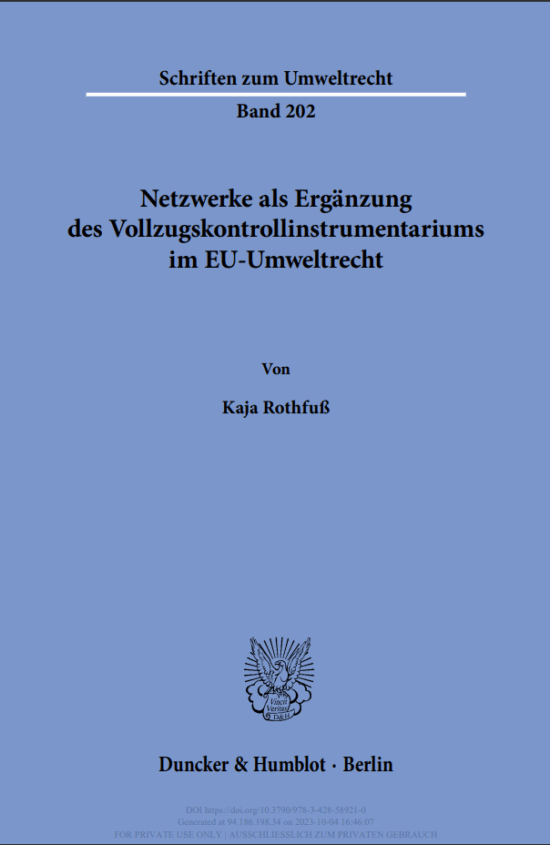
EU environmental law forms the foundation of approximately 80% of all national environmental regulations. At the same time, national authorities are struggling with significant difficulties in enforcing EU environmental law, one reason being that violations of environmental law rarely
Can the Public Be Trusted? Navigating the Complex Terrain of Voluntary Compliance in Modern Regulation

In the evolving landscape of regulatory governance, few concepts generate as much enthusiasm—and skepticism—as voluntary compliance. Across jurisdictions and different regulatory domains, policymakers increasingly champion the notion that citizens and regulated entities should comply with the law not through coercion,
Regulation as Agreement: Rethinking the Hard–Soft Divide
Introduction
It is common to view agreements between regulators and regulated entities, such as enforcement settlements, voluntary compliance agreements, and even permits and licenses, as a specific regulatory tool grounded in negotiation, exchange, and consensus. In a forthcoming article in
Data Protection Rights Born of Recent Reform in Georgian Law
Introduction
On June 14, 2023, the Parliament of Georgia took a significant step toward safeguarding personal privacy by adopting a new Law “On Personal Data Protection”. Entering into force on March 1, 2024, the legislation marks a transformative shift