

On 18 August 2026, the Aylla Rewe del Ngen Mapu Kintuantü, an autonomous political, social, spiritual and cultural alliance bringing together ancestral authorities and more than 150 communities of the Mapuche Williche Indigenous people in southern Chile, filed a complaint
European Journal of International Law Blogs
Latest from European Journal of International Law
Announcements: CfS Cyber Law Toolkit; GLAR Ghandhi Research Seminar Series; ESIL Conversations Webinars
1. Call for Submissions: Cyber Law Toolkit. The Cyber Law Toolkit, an online resource on international law and cyber activities, is inviting proposals for new scenarios for its next general update, scheduled for September 2027. The Toolkit features a
Serious Misconduct Cost the ICC Its Prosecutor. Its Judges Face a Vote No Character Report Reaches.
The ICC removed a Prosecutor for misconduct. This December it elects six judges — after its own Advisory Committee reported that it could not complete the moral-character check the Rome Statute requires, and while the report that would complete it
Changing the Map, Reframing the World?
When we talk about international law, we talk about how the world is ruled. When doing so, we speak of States, territories and borders, often picturing them against a world map familiar from school geography lessons. Yet that apparently straightforward
Announcements: Attribution of Non-State Actor Conduct Event; CfP The Netherlands as Host State of the ICJ and ICC; CfA Symposium in Memory of Theo van Boven; Bingham Centre for the Rule of Law Vacancy; Levan Alexidze International Law Moot Court Competition; Mainz Masterclass in International Adjudication
1. Attribution of Non-State Actor Conduct During Armed Conflict Panel Discussion: University of Reading. Global Law at Reading will host a panel discussion on Attribution of Non-State Actor Conduct During Armed Conflict on Tuesday, 29 September 2026, 16:30–18:00 UK time (HBS G13,
AI and International Law’s Algorithmic Geographies
For much of the last decade, international lawyers have approached artificial intelligence (AI) primarily, if at all, as an object of legal regulation. The central questions have become familiar: How should international law regulate AI? Which existing legal rules apply
Can We See Generative AI in International Law Blogging?
Gen AI and its Contributions
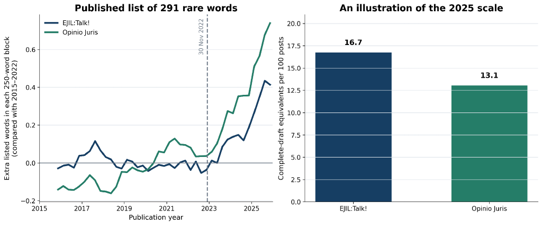
In July 2026 EJIL published its ecosystem-wide generative artificial intelligence (Gen AI) policy. The policy is carefully worded and wisely narrow. While it also addresses a series of concerns which would merit discussion individually, such
879 Cases Struck Out in Lebedeva: An Unfortunate Swan Song for Russia at the European Court
In Lebedeva and others v. Russia, the European Court of Human Rights (“the Court”) issued a short judgment with sweeping effects – striking out 879 potentially meritorious applications alleging Russia’s human rights violations. Many of these cases concern harrowing
A Map Is Not a Memorial: Brazil’s Former DOPS and the Legal Content of Non-Recurrence
Twenty-six years after Minas Gerais enacted a law creating a Human Rights Memorial in the building that housed the state’s Department of Political and Social Order (DOPS), a political police body central to dictatorship-era repression, the site has still not
Access to the Logbook: How Autonomous Ships Complicate the Flag State’s Ability to Fulfill its Article 94 UNCLOS Obligation
On 1 July 2026, the IMO’s non-mandatory International Code of Safety for Maritime Autonomous Surface Ships took effect. The Code provides guidelines for maritime autonomous surface ships (MASS), or ships that, to various extents, operate independently of direct human control