

By Dominik Krell
Introduction
Saudi Arabia has a reputation for harsh criminal punishments. In 2025, a record number of 356 people were executed in the Kingdom.[1] Apart from the extensive use of the death penalty, Saudi judges regularly impose
Latest from Program in Islamic Law | Harvard Law School - Page 3
The New Grand Mufti and the Future of Islamic Law in Saudi Arabia
By Dominik Krell
Introduction
In 2016, a short video clip circulated on the internet, in which the Saudi scholar Ṣāliḥ b. Fawzān al-Fawzān answered questions in a TV broadcast. A viewer asked whether it was permissible to post selfies with
Is Saudi Arabia’s Legal System Still ‘Islamic’?
By Dominik Krell
Introduction
Over the last decade, the Saudi government has introduced foreign law on a large scale. In many areas, legislation borrowed from Europe and North America now dominates to the extent that Islamic law sometimes appears to
Welcome to our April Guest Bloggers: Dominik Krell and Muhammad Zubair Abbasi
Dominik Krell is a Leverhulme Early Career Fellow at the Centre for Socio-Legal Studies, University of Oxford, and a Junior Research Fellow at Wolfson College. His research focuses on the contemporary application of Islamic law. His first book, Islamic Law
Thank you, Roundtable Contributors!
In February and March, we hosted a roundtable on “Knowledge in the Islamic Court.” We thank the contributors for their essays. In case you missed one, here they are (in order of publication):
- Ari Schriber, Knowledge in the Islamic Court
::Roundtable:: Murder in Mandate Palestine: The Case of Young Offenders
By Irene Schneider
I. The Case: The Murder of Mayer Lubovitch in 1924 Mandate Palestine
At noon on 29 June 1924, Mohammed Saleh El-Ahmed[1] and Mahmud Mohammed Hamad were sitting in a shelter in the countryside somewhere near Qalqīliyya,
::Roundtable:: Modern Forensic Technology and the Evolution of Islamic Criminal Law in Saudi Arabia
By Dominik Krell
1. Introduction
It might be difficult for us to imagine how criminal offenses could be prosecuted without the technical possibilities we take for granted today. DNA and blood tests are relatively recent inventions, made possible by the
::Roundtable:: Material Proof: Some Notes on Legal Documents in Morocco as Physical Objects
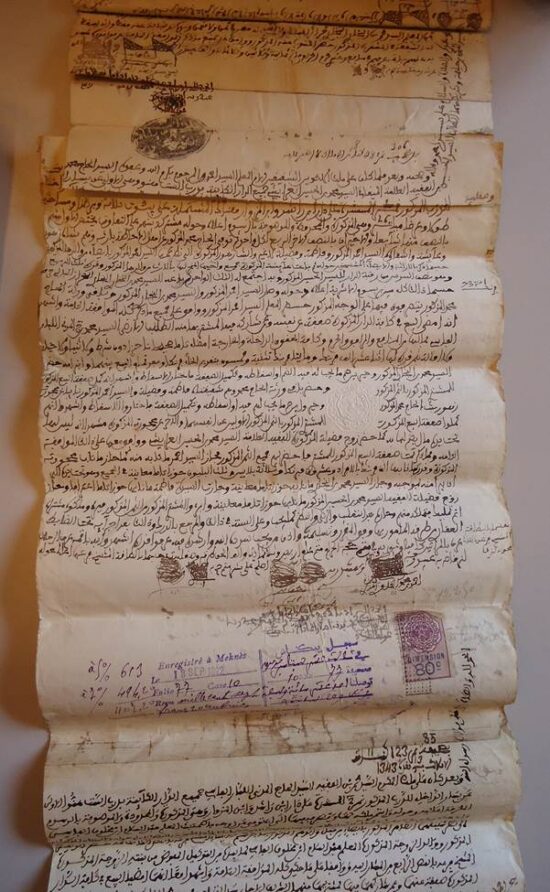
By Léon Buskens[1]
Changes in the physical appearance of legal documents from twentieth-century Morocco offer important clues to reconstruct a “biography” of their social life.[2] Their appearance in the souvenir market in Morocco from the end of the
::Roundtable:: Kashf ṭibbī: Forensic Expertise as Probative Knowledge in Ḥajr Decisions of 20th-Century Egypt
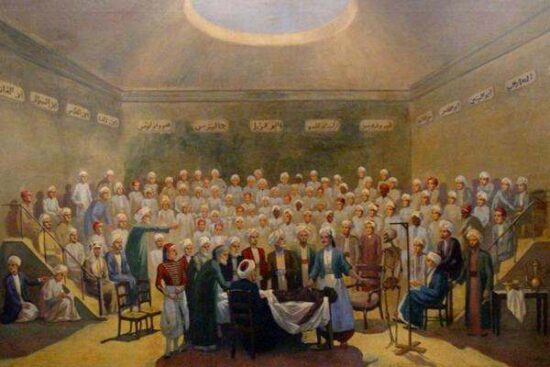
By Aya Bejermi
In most Muslim-majority countries, Islamic normativity underwent a process of “positivization” that reshaped both the content of norms and the modes of their production.[1] In Egypt, two intertwined developments drove legal transformation: the construction of a
::Roundtable:: Evidence for the Laity but not the Courts: Dreams and Blasphemy in Contemporary Pakistan
By Mashal Saif
In late 2010, many Pakistani ʿulamā’ publicly declared that Salman Taseer, the governor of Pakistan’s largest province, had insulted the Prophet Muḥammad and Islam.[1] In January 2011, Governor Taseer was shot dead by his own bodyguard,