

The global antitrust wave over Big Tech’s artificial intelligence deals has reached Brazil. The question is whether Brazil’s competition authority is paddling into a real breaker—or mistaking regulatory chop for a swell.
Last month, Brazil’s antitrust authority, the Administrative Council
Latest from Truth on the Market - Page 7
Fit for Purpose, Unfit for Review: Why the DMA’s First Evaluation Could Never Find Failure
The first review of the Digital Markets Act (DMA) reads less like an evaluation than a wellness check performed by the patient’s proud parent. The pulse is strong. The color is good. Any lingering symptoms? Too early to tell.
Act First, Learn Later: AI Antitrust and the Error Costs of Regulation at Machine Speed
Competition enforcers appear to have discovered their own version of artificial intelligence: act first, learn later. In the span of a week, agencies across four continents moved to reshape how AI products are built, distributed, and integrated—mostly before anyone has
California’s Other Wealth Tax
California is once again testing how much punishment capital will tolerate before it packs a bag. The state’s impending ballot proposition imposing a “billionaire’s tax” has drawn plenty of attention for precisely that reason: If the tax drives
If at First Consumers Don’t Switch, Regulate Again
Under the Digital Markets Act (DMA), consumers are apparently sovereign—right up until they choose the wrong thing.
When Mozilla reports that Firefox is now selected through a DMA browser-choice screen once every 10 seconds—more than 6 million selections in total,
Bolted to the Floor, Not Written in the Clouds
Europe wanted technological sovereignty. On June 12, it got a demonstration of technological dependence.
That day, the U.S. government cut non-Americans off from access to two of the world’s most advanced AI models. Brussels’ flagship response to precisely this scenario—the
Government by Raised Eyebrow: The JAWBONE Act and the Problem of Censorship by Proxy
The easiest way for the government to censor speech is not always to ban it. Sometimes, it is to find someone else with a hand on the switch.
That is the problem at the center of the current debate over
Europe’s Cloudy Judgment
Europe wants to become an AI continent. Fair enough. But it will not get there by turning the cloud into a customs checkpoint.
The European Commission’s new European technological-sovereignty package deserves close attention in Washington, Brussels, and boardrooms on both
EU Digital Omnibus Hands the Wheel to the Referee
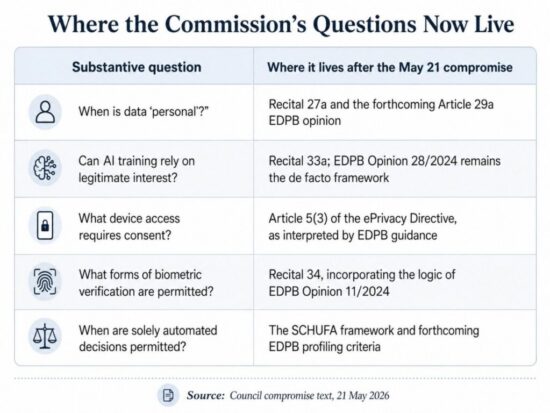
The Digital Omnibus was supposed to make European Union data law simpler, clearer, and less allergic to reality. Instead, the Council of the European Union appears to be turning it into something more familiar: a reform that trims the statute,
WarGames, Shopping Bots, and the Statute Trap: The CFAA and Amazon v Perplexity

When the 9th U.S. Circuit Court of Appeals hears oral argument later today in Amazon.com Services LLC v. Perplexity AI, Inc., it will confront a novel question: how should the Computer Fraud and Abuse Act (CFAA), a statute