

On August 20, 2021, China passed its first general data protection law, called the Personal Information Protection Law (“PIPL”). The law is set to take effect on November 1, 2021 (two months away), and it applies to both (1) in-country

On August 20, 2021, China passed its first general data protection law, called the Personal Information Protection Law (“PIPL”). The law is set to take effect on November 1, 2021 (two months away), and it applies to both (1) in-country

At this point you have probably heard about one of the many incidents where an AI-enabled system discriminated against certain populations in settings ranging from healthcare, law enforcement, and hiring, among others. In response to this problem, the National Institute

In Van Buren v. United States, the Supreme Court resolved a circuit split as to whether a provision of the Computer Fraud and Abuse Act (CFAA) applies only to those who obtain information to which their computer access does
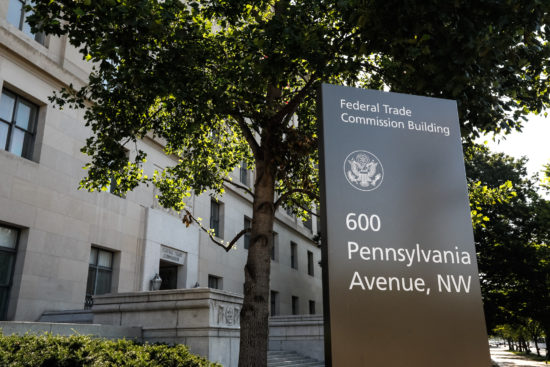
On April 22, 2021, the Supreme Court issued a unanimous decision finding that the FTC lacks authority to pursue equitable monetary relief in federal court under Section 13(b) of the Federal Trade Commission Act (the “FTCA”). The result means that

As part of its three-part series on the future of human-computer interaction (HCI), Facebook Reality Labs recently published a blog post describing a wrist-based wearable device that uses electromyography (EMG) to translate electrical motor nerve signals that travel through the

Yesterday, Virginia passed the Virginia Consumer Data Protection Act (VCDPA), making it the second state (behind California, with its California Consumer Protection Act (CCPA) to enact a general consumer privacy law. The VCDPA will take effect on January 1, 2023,

In December 2020, Apple started requiring Apps to display mandatory labels that provide a graphic, easy-to-digest version of their privacy policies. They are being called “privacy nutrition labels,” presumably a reference to the mandatory FDA-required “Nutrition Facts” labels that have

While Europe is leveraging hefty fines against violators of the EU General Data Protection Regulation (GDPR) (here is a tracker of recent fines: https://www.enforcementtracker.com/), the United States Supreme Court heard oral arguments last month on whether the FTC –

A recent article from CNN reported on SpaceX and Amazon sparring over their competing satellite-based internet business. The article reports that at the center of the dispute is “a recent attempt by SpaceX to modify its license for Starlink, a

Website operators can consider a host of potential legal claims against entities that scrape their sites’ content without authorization, such as breach of a well-crafted terms of service agreement, copyright infringement, trespass, conversion, common law misappropriation, unfair competition, violations of