

The National Transportation Safety Board doesn’t have the engineering expertise or financial resources to investigate an accident on its own. So it asks industry representatives for help. In almost every case, it turns to the manufacturer of the aircraft component that failed or malfunctioned. In other words, the NSTB asks the entity most likely to have caused the crash for 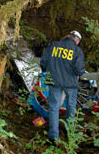 help investigating it. The NTSB calls this method of investigation the “party system.”
Can we really expect a manufacturer to point out to the NTSB evidence suggesting that it may have been at fault? Of course not. Asking industry representatives to help determine the cause of an accident is like asking the fox to help figure out what happened to the chickens.
Victims’ families are not allowed to participate in the NTSB’s accident investigations. Nor are experts hired by the families or by the families’ attorneys. So the investigation is necessarily one-sided, with the NTSB’s final report heavily “influenced” by the very corporations whose products or services are being investigated. The NTSB has recognized the conflict of interest inherent in its “party system” but, unfortunately for victims and their families, continues the practice in just about all of its investigations.