

On the morning of the Fourth of July in 1850, President Zachary Taylor strolled out of the White House and into the summer heat of Washington DC. He stopped to watch a Sunday school program, chomped on a couple of green apples, then attended a groundbreaking ceremony for the pending construction of the Washington Monument.
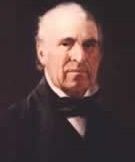
After the ceremony, he took a walk along the Potomac River, then back to the White House. Overheated and thirsty, he is said to have eaten a huge bowl of cherries, along with cold water and milk.
Later, after dinner, he didn’t feel well. The next day he felt even worse. At some point, he started having bouts of diarrhea, some of it bloody. His doctor diagnosed his ailment as cholera, and treated it with calomel and opium. The doc may also have sliced open a vein and bled the President.
Four days later, on July 9, the celebrated war hero known to the nation as “Ol’ Rough n’ Ready,” a grizzled veteran of violent conflicts ranging from the War of 1812 to the Mexican War, died in bed at the age of 64.
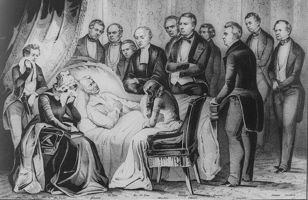
Nobody can say with certainty what killed him. Like all 19th century Presidents, Taylor preceded any knowledge of the microbes that cause Salmonella and other foodborne illnesses. At the time, Louis Pasteur was still in his 20s, and the world was still 50 years from pasteurization and other crucial developments in sanitation and public health.
But medical historians can look back and speculate based on symptoms, incubation periods and timing.
In Taylor’s case, the timing appears to suggest contamination by Salmonella or some similar microbe. If it wasn’t in the cherries, then perhaps the water used to wash them. Or the unpasteurized milk. Or the green apples. Or the previous day’s lunch. Whatever the source, it probably was aggravated by the hot weather, by Washington’s open, fly-infested sewers.
And, like other Presidents, Taylor’s fate was probably sealed by his doctor’s ill-conceived “treatments.”
In any event, Taylor is probably not the only American President felled by foodborne illness. His predecessor, James K. Polk, died of cholera and “debilitating diarrhea” a few weeks after leaving the White House. Thomas Jefferson appears to have died of amoebic dysentery. Several Presidents, including James Monroe and Andrew Jackson, are believed to have succumbed to tuberculosis, which can be transmitted via air or food.
Given all this, US Presidents have proven to be remarkably durable. Most lived into their 70s. John Adams, James Madison and John Quincy Adams made it to their 80s, and died of “heart failure.”
The short-lived Presidents were those who were assassinated, and Ulyssess Grant, who smoked far too many cigars.
Taylor’s death, however, remained something of a mystery, kept alive by descendants and others who insisted he must have been poisoned by southerners who were angered by Taylor’s moderate stance on slavery.
Finally, in 1991, Taylor’s body was exhumed from his Kentucky tomb and analyzed for signs of arsenic – the poison of choice. Tests showed arsenic levels far below what would have killed him.
So Ol’ Rough and Ready was re-interred to rest in peace with the knowledge that, whatever we conclude about life, death is like a bowl of cherries.