

Administering antibiotics to animals via feed leads to inconsistencies in how much of the drugs they intake, thus contributing to the growth of antibiotic-resistant strains of bacteria, according to a new commentary.
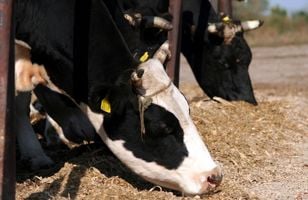 In a paper published this month in Environmental Health Perspectives, experts from Johns Hopkins University and Animal Welfare Approved argue that letting animals “choose” how much of an antibiotic they take by putting it into their feed can pose a severe health risks to humans by allowing drug-resistant bacteria to develop.
“We know a lot about antibiotic resistance in animals, but one thing that really hasn’t been covered very well is medicated feed, and what are the issues surrounding it that make resistance more likely,” says Dr. David Love, project director of Johns Hopkins’ Center for a Livable Future and co-author of the paper.
According to the authors, studies show that when an animal’s drug intake depends on its eating habits, the animal can either fall short of its required dosage, overdose, or receive sporadic amounts of the antibiotic, all of which can spur the growth of drug-resistant microbes.
“If they don’t get all their food, they don’t get all the medicine, and if they don’t get all the medicine, then the whole bacteria population isn’t wiped out, and that leads to antibiotic resistance,” Love says.
Love explains that, as with human antibiotics, a course of animal antibiotics has to be taken regularly until complete. “Your doctor will say, finish the bottle,” Love says. The same goes for animal antimicrobials, which must be maintained at a certain concentration in the bloodstream in order to be effective.
Drugs cannot maintain this consistent level, however, if animals are eating every other day, or are being pushed aside at the feed trough, says Love. Ironically, he says, the sick animals who might need medication the most are the ones who are often too weak to access it.
When livestock are ineffectively treated like this, the harmful bacteria left in the animal can produce a drug-resistant strain by natural selection. Bacteria most immune to the drug will survive and multiply, producing a strain that is difficult or impossible to treat with antibiotics.
Love says an overdose of antibiotics, on the other hand, can lead to toxicity in animals, which causes sickness or death.
Other inconsistencies that result from the practice of using medicated feed include:
— Quality control problems: Drugs not included on labels can be included in feed. One study showed that 44 percent of feeds labeled as unmedicated actually contained antimicrobials, and over one third of feed labeled as medicated contained undeclared antimicrobials.
— Improper administration of drugs by workers: No veterinary oversight is required in the purchasing or administering of medicated feed.
— Drug-resistant strains in wild animals: Wild animals living near animal production facilities may eat medicated feed and may themselves develop antibiotic-resistant strains of bacteria.
Efforts are underway to revise the use of antibiotics in animals. The FDA released draft guidance on the issue last summer, and is set to release a finalized version in the near future. The draft guidelines discourage antibiotics used for animal growth purposes, and advocate the responsible use of other drugs, including reducing those with a clinical use.
However, Love and the other authors of the paper think more needs to be done. “What I’d like to see is something that’s enforceable, and goes beyond guidance, but provides something that’s binding and enforceable,” says Love.
If passed, the Preservation of Antibiotics for Medical Treatment Act (PAMTA), introduced by Rep. Louise Slaughter, D-NY, would provide such binding legislation. It would eliminate the use of antibiotics in food animals for disease prevention (as opposed to treatment) and for growth.
However, the paper argues that more oversight is still needed on the use of antimicrobials for animals, as “no federal requirements currently exist for reporting animal antimicrobial drug use by animal production facility staff or veterinarians.”
Right now, 685 antimicrobials have been approved for use in animal feed, but there’s a lack of information exists on many of these are also medically important antibiotics for humans, says Love, and little is known about when and in what quantities these drugs are administered.
The commentary argues that, “Understanding the extent, nature, and distribution of antimicrobial use in industrial food animal production will strengthen the impetus for policy interventions aimed at eliminating unnecessary administration of antimicrobials.”
And, according to the paper, antimicrobials in feed are unnecessary. For animal producers worried about the spread of disease, the authors recommend alternative methods, such as reducing animal stress and practicing good hygiene and husbandry in facilities. They recommend that antibiotics be used only on sick animals, and applied through injection to provide the proper dosage.
Love knows that feed free of medication may be a distant goal, but he has more practical hopes for the near future. “In the short-term, I’d like to see veterinarians play a larger role and get more stake in treating diseases in animals,” he says.