

Experts like to remind us of what people get from their pets — exercise, love, less depression, lower blood pressure, less heart disease….

And, now and then, Salmonella.
Often, and especially at Easter time, the culprit is an impossibly cute baby chick, which happens to be carrying Salmonella or some other potentially toxic microbe. The Oregon Health Department reported such a case just this month.
Sometimes the carriers get a bit stranger. Two weeks ago, the Centers for Disease Control and Prevention (CDC) reported more than 200 people in 41 states sickened by Salmonella carried by pet African dwarf frogs. Most of the victims were children under 10.
And sometimes, they get downright weird. In late 2009, the Minnesota Department of Health (MDH) detected a cluster of Salmonella infections that briefly stumped the epidemiologists.
The case is reported in the April 11 edition of Zoonoses and Public Health.
Nineteen people were sickened, and they all had attended the same potluck dinner. On further investigation, officials learned they all had eaten turkey gravy. Samples of the Salmonella Labadi outbreak strain showed up on a bathroom door knob, in the kitchen and bathroom sink drains, in a vacuum cleaner bag.
And on a bearded dragon.
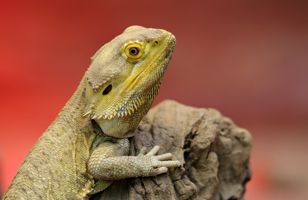
The MDH and CDC eventually learned that the gravy was prepared in a home where two of the not-so-cute lizards were kept. Investigators figured the reptiles were carrying the microbes. Their owner acknowledged the gravy could have been contaminated and that it wasn’t sufficiently heated.
Bearded dragons are large agamid lizards from central Australia. They are popular pets, despite the fact they can grow to nearly two feet long and live up to 10 years.
Health officials at CDC and MDH report that outbreaks linked to bearded dragons and other reptiles are rare. In fact, the Minnesota case is only the third report found in medical literature.
But outbreaks linked to chicks and other pets, and to petting zoos, remain fairly common. Health officials don’t recommend keeping baby chicks (or frogs or bearded dragons) in households with small children. But they add that, if you must, then thoroughly wash your hands after handling animals, cages and equipment.