

Homeowners associations are often faced with the challenge of enforcing covenants when that enforcement is not politically popular. Recently, an association in Louisiana directed a couple to remove a large, bright banner from their front yard. The association’s covenants only permit the display of real estate signs.
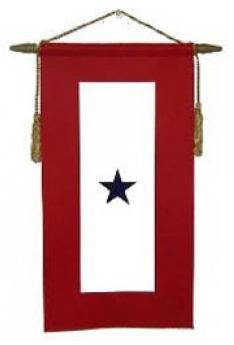
Unfortunately for the association, the banner expresses support for the couple’s son, who is a Marine in Afghanistan.
We often see associations forced to take unpopular positions when enforcing covenants. Associations have prohibited Medal of Honor winners from erecting flagpoles, shut down childrens’ lemonade stands, and denied a pregnant woman’s request to install an air conditioner during the height of summer heat. While these enforcement actions are probably valid under the documents governing the individual associations, news stories about such enforcement do nothing to help the common negative perception of homeowners associations. Enforcement is unpopular and makes for a great news story, but it is the association’s obligation to enforce the covenants.
The Louisiana association has offered to change the covenant if the owners obtain the consent of 90% of the other owners. In Colorado, the Common Interest Ownership Act prohibits amendment provisions that require the consent of more than 67% of the votes in the association. Beyond this, Colorado’s laws could have prevented this from ever becoming an issue.
While Colorado associations may prohibit signs, associations may not prohibit the window display of a service flag bearing a star denoting the service of the owner or the owner’s immediate family member during times of war or armed conflict. Associations may adopt reasonable rules and regulations regarding the size and display of these flags. If this dispute had occurred in Colorado, the display of a service flag may have presented a compromise acceptable to all parties.
The Louisiana association may explore granting a variance to the couple whose son is in Afghanistan. This allows the association to fulfill its obligation to enforce the covenants, while protecting it from claims of uneven enforcement. It also helps to defuse an emotionally-charged situation, and shows that even homeowners associations can act reasonably in times of war.